

 (1)_1777442575043.jpg)
Commercial Brown Bar Stools Designed for Cafes and Restaurants
When searching for durable seating that balances aesthetic appeal with commercial-grade performance, procurement buyers consistently choose commercial brown bar stools tailored specifically for hospitality environments. These elevated seating solutions serve as more than functional furniture—they define the visual identity of cafes and restaurants while withstanding the rigorous demands of high-traffic venues. A well-selected brown bar stool delivers on ergonomics, maintenance ease, and brand alignment, making it an essential investment for importers, wholesalers, and project contractors serving competitive markets across the United States.
Understanding Commercial Brown Bar Stools: Styles, Materials, and Features
Distinguishing Commercial-Grade from Residential Seating
The building standards and performance goals for commercial seating are very different from those for private furniture. For occasional use, home-use stools might be fine, but hospitality places need units that meet ANSI/BIFMA X5.1 standards, can hold more than 300 pounds, and can handle thousands of sitting cycles per month. Over the past 14 years, our factory in Anji, Zhejiang—the center of China's furniture production region—has improved these specifications. They now make stools with stronger joints and tested structural integrity that are designed for restaurants, cafes, bars, and commercial kitchens.
Exploring Style Variations for Hospitality Applications
Brown-colored furniture is flexible enough to fit a wide range of design styles. For a modern country look, wood frames with a walnut finish look great with neutral fabric. For an industrial look, metal bases with cognac leather seats look great. Mid-century modern settings often ask for wooden legs that are curved and have simple shapes. Our production team works closely with sourcing managers to find out which style versions are most popular with our target market. This could mean backless designs to save space or full-back models to make guests more comfortable during long dining sessions.
Material Engineering for Durability and Maintenance
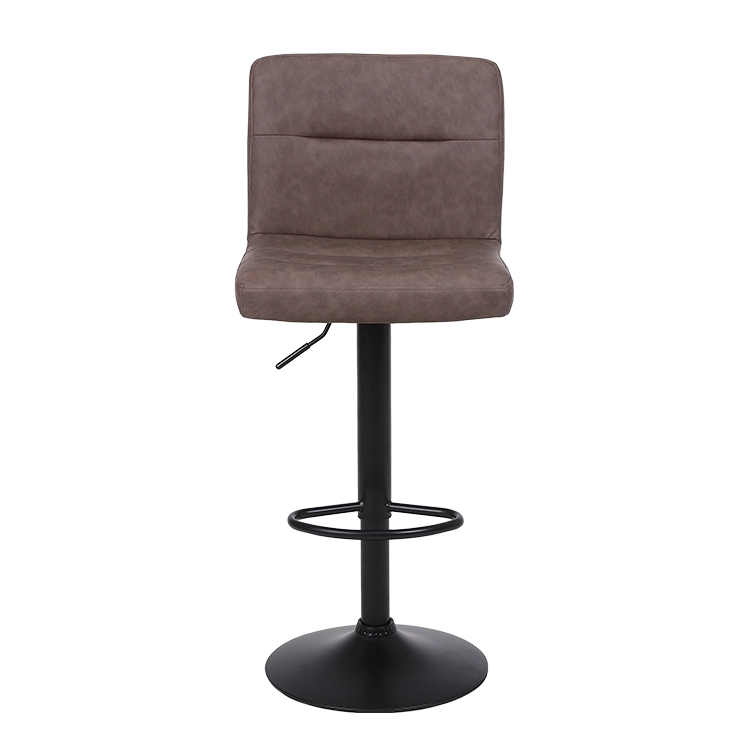
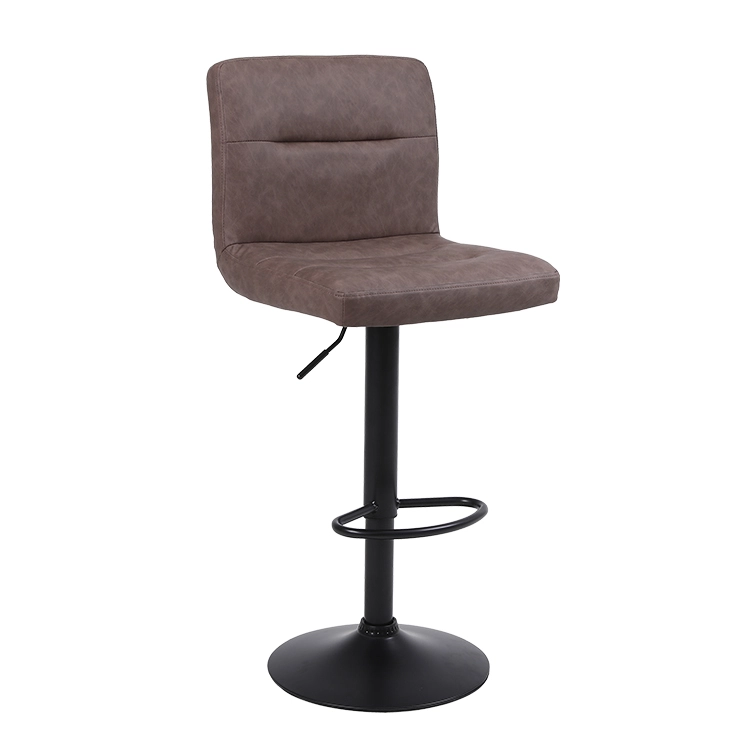
High-quality commercial stools are made from carefully chosen combinations of materials. Our Brown bar stool is made from Siamese plywood that is 1.0 to 1.2 cm thick, which gives it strength without adding too much weight. The seat has 3.8 cm of high-density sponge filling that provides ease and doesn't shrink even after years of regular use. Upholstery options include 0.8mm half-PU material, which was chosen because it doesn't show spills, is easy to clean, and can hide minor wear and tear, all of which are important in places that serve food and drinks. When compared to regular PVC, this material works better and is more resistant to breakdown, which keeps it from peeling like cheaper fake leathers do.
Functional Features That Enhance Operational Efficiency
Knowing which features are useful for real-world operations helps buyers make smart specifications. The swivel feature lets people enter and leave the seating area without having to move the stool, which protects the floor and lowers noise. Different counter heights can be accommodated by mechanisms that let you change the height, but fixed-height models are more durable in commercial settings. Footrests that are 10 to 12 inches below the seat surface help with blood flow during long times of sitting, which has a direct effect on customer satisfaction numbers. Our engineering team makes sure that these parts fit together perfectly. They are easy to install and only need four 6x14mm screws, which cuts down on the time it takes to put together big orders.
Comparing Brown Bar Stools for Optimal Decision-Making
Color Psychology and Brand Identity Alignment
Choosing brown over black or chrome finishes for Brown bar stool creates distinct atmospheric effects. Earth-toned seating conveys warmth and approachability, particularly effective in establishments emphasizing handmade craftsmanship or restaurants featuring organic ingredients. Brown upholstery naturally conceals patina development and minor stains from coffee, chocolate, or sauce contact, making wear significantly less noticeable than lighter colors. This functional benefit translates directly into reduced replacement frequency and sustained appearance between deep-cleaning cycles. Procurement professionals working with venues possessing strong brand aesthetics appreciate how brown shades—ranging from light tan to deep espresso—can be customized to match existing interior color schemes precisely.
Backrest Presence and Customer Comfort Dynamics
Choosing between stools with or without backs affects both how guests feel and how space is planned. Backless designs make the most of the space under the bar and make it easy to move things around, so they work well in fast-casual restaurants with a lot of customers. Backless stools make people stay longer, which is good for businesses that want to make more money per customer. We can make both types, and the backed models have lumbar support geometry that makes them more comfortable for meals that last an average of 45 to 90 minutes. This is especially important to think about when choosing seats for hotel breakfast areas or airport bars, where comfort has a direct effect on how many times people come back.
Evaluating Fixed Versus Adjustable Height Mechanisms
Fixed-height stools are clearly better for commercial durability. Because they have fewer working parts, they don't have the usual weak spots that come with gas lift cylinders or screw mechanisms. Our standard 30-inch seat height fits 42-inch bar counters perfectly, leaving 10 to 12 inches of space around the body for good posture. Even tho adjustable models give you more installation options, they also add care variables that may worry operators who are in charge of multiple places. Buyers in procurement often choose fixed-height units so that they are consistent across venue chains. This makes it easier to order replacements and keep track of inventory.
Investment Analysis: Budget Models Versus Premium Construction
Differences in the quality of commercial seating have a direct effect on the total cost of ownership. As low-cost options, thin board (less than 0.8 cm), low-density foam, and PVC upholstery that is likely to crack may be used. When used for business, these compromises usually need to be replaced every 18 to 24 months. With our commercial-grade construction, which includes thicker Siamese hardwood, the right foam density, and long-lasting half-PU material, the service life is extended to five years or more, which lowers ongoing costs even tho the initial investment is higher. This calculation is especially strong for orders at the container level, where bulk pricing makes ROI much better. Our experienced sales team makes it easy to compare specifications, which helps procurement professionals make smart buying decisions based on performance data.
Sourcing and Procuring Commercial Brown Bar Stools
Navigating the Supplier Landscape for Commercial Furniture
Finding makers who know about export rules and business standards is the first step to successful buying. Our building is more than 6,000 square meters and has separate production lines for bar stools, dining chairs, and other types of seating that go well with them. Because we're specialists in this area, we can keep quality control high while still making enough to meet container requests. Unlike trade companies that collect goods from different suppliers, direct manufacturer ties make it clear where materials come from, when they will be made, and who is responsible for quality. Every month, we ship several containers to importers and wholesalers in the U.S., keeping the dependability that procurement pros need to meet project schedules and plan their inventory.
Custom Manufacturing Versus Ready Stock Solutions
Customization and stock orders both have pros and cons that should be carefully thot thru. Ready-stock units have faster lead times—usually 15 to 20 days to port—so they can be used to finish projects quickly or test out new market areas. Custom orders, in which buyers indicate exact sizes, colors for upholstery, name embossing, or package arrangements, take 30 to 45 days to complete but provide uniqueness that improves brand positioning. Both of these methods can be used with our OEM and ODM services. The dedicated R&D team uses client samples or drawings to make prototypes that buyers can test to make sure the designs work before committing to full production runs. This freedom is especially helpful for private label projects where having a unique product gives them an edge in local markets.
Logistics Optimization and Packaging Efficiency
Efficient shipping directly impacts landed cost and inventory turnover for Brown bar stool. Our packaging specification—two pieces per carton, each 55x49x44cm occupying 0.118 cubic meters—maximizes container utilization while maintaining product protection during international transit. This space-efficient approach fits approximately 480–500 stools per 40-foot high-cube container, significantly reducing per-unit freight costs compared to less optimized designs. We work with established freight partners familiar with U.S. customs procedures who can assist with documentation to minimize clearance delays. Buyers managing just-in-time inventory appreciate our tracking tools and communication protocols, providing shipment visibility throughout the supply chain.
Negotiating Terms That Protect Procurement Interests
To make good purchasing agreements, you need to know what the manufacturer can do and how they position themselves in the market. For custom specs, the minimum order quantity is usually one container, but buyers can try more than one product line with mixed containers. Payment terms balance the buyer's need for cash flow with the manufacturer's need to manage risk. A common structure is a 30% deposit with the balance due upon receipt of a copy of the bill of lading. These steps have been improved over 14 years of exporting, and our sales team answers all questions within 24 hours with detailed quotes that take into account current material costs, production capacity, and shipping factors. This openness makes it easier for procurement workers to make correct budgets and get internal approvals without fear.
Maintenance and Longevity of Commercial Brown Bar Stools
Material-Specific Cleaning Protocols
To do proper maintenance, you must first understand how the material works. The best way to clean the half-PU fabric on our stools is with pH-neutral cleaners and microfiber cloths. This will get rid of surface dirt without damaging the protected finish. Harsh chemicals or rough scrubbing hurt the finish and make it wear off faster. Furniture polish with UV inhibitors should be used on wood parts on a regular basis. This is especially important near windows, where sun exposure could otherwise cause fading. Metal frames only need to be cleaned with a damp cloth, but users who live near the coast should check for rust every three months. With every order, we include detailed maintenance instructions that are translated into clear language for staff training. This way, venue owners can protect their investment by taking care of it properly.
Addressing Common Wear Patterns Proactively
In hotel settings with a lot of foot traffic, stress points are bound to appear. When shoes rub against the edges of the footrests, they wear down more quickly, and seat bolts may come loose after being loaded with weight over and over again. Regular inspections every three months, which include checking the tightness of the joints, the integrity of the floor glides, and the appearance of the upholstery seams, keep small problems from getting worse and needing to be replaced. Our design for building takes these patterns into account: stronger stitching at high-stress seams, extra-large washcloths that spread bolt tension, and removable floor glides that protect both the floor and the stool. Buyers in the procurement process like this engineering method because it increases service intervals and lowers the number of working interruptions.
Extending Service Life Through Preventative Measures
Strategic decisions about placement have a big effect on longevity. Putting stools out of direct sunlight will keep brown tones from fading caused by UV light, and putting floor covers under heavy-traffic units will keep the bases from wearing out. Setting up rotation schedules—exchanging stools between high-use and moderate-use areas on a regular basis—evens out the wear on all the seats. When these operational practices are paired with good building, service lives of five years or more are common in demanding business settings. This trust is strengthened by our guarantee coverage and the fact that we have certifications like ISO 9001 and BIFMA compliance that show we follow international quality standards.
Why Choose Our Commercial Brown Bar Stools for Your Cafe or Restaurant?
Manufacturing Excellence Rooted in Regional Expertise
Our facility in Anji County—recognized globally as the "Hometown of Chairs"—provides access to generations of furniture-making expertise and a comprehensive supply chain ecosystem, and Brown bar stool production benefits from this regional advantage. This regional advantage translates to easier material sourcing, specialized labor skills, and continuous manufacturing innovation. Our team includes ten or more dedicated R&D staff who study market trends across the 70 countries where our products are sold, ensuring our designs keep pace with evolving hospitality design trends. This accumulated experience enables us to help procurement professionals develop specifications that balance current aesthetics against practical requirements.
Customization Capabilities That Strengthen Brand Differentiation
Suppliers are often chosen based on their ability to make goods fit the needs of specific markets. Our OEM and ODM services include more than just changing the color. They also include changing the size, using different materials, adding your own logo, and making packaging for retail or white-label programs. Recently, I've been working on projects like making lower-profile stools for Asian-fusion ideas, stronger models for sports bars, and powder-coated finishes that match company color schemes. This gives buyers the freedom to make product lines that perfectly match their brand positioning and the tastes of their target customers, instead of having to settle for general specs that hurt their market strategy.
Quality Assurance and After-Sales Support
Buying with confidence comes from clear quality processes and helpful customer service. Every production batch goes thru strict testing procedures, including tests to make sure the structure stays stable over years of use, checks to make sure the color stays the same from batch to batch, and tests to make sure the coating lasts. These steps, which have been confirmed by third-party certifications, give proof that goods meet standards for business use. During the whole duration of a product, our sales team is always available to answer questions and help with any service problems that come up. This dedication to long-term partnerships rather than one-time deals has helped build relationships with importers and distributors who value dependability as much as product quality.
Demonstrated Success in Real-World Applications
Right now, our business seating options are used in places of hospitality all over North America, from small cafes in Portland to restaurant chains with dozens of sites. Buyers always say good things about how long it lasts, how many different looks it can have, and how easy it is to install, which cuts down on work costs during venue buildouts. These validations in the real world give people faith that the standards will work as promised in real business situations, not just in the lab. We actively ask end-users for feedback and use that information to make continuous product changes that keep our offers in line with the changing needs of operations and design trends that are shaping the U.S. hospitality market.
Conclusion
When choosing industrial Brown bar stools for cafes and restaurants, you have to think about how long they will last, how they look, and how much they will cost. When you use the right materials and build something well, like our Siamese plywood frames, high-density foam, and long-lasting half-PU upholstery, it will last for a long time in harsh commercial settings. Style, height, and functional features should be chosen strategically so that they fit with the brand's identity and meet operational needs. Working with experienced manufacturers who know about quality standards, export logistics, and customization options makes the buying process easier and lowers the risk. Proper care practices increase the value of an investment, so choosing the right specifications is very important for the long-term success of a place and for making sure customers are happy.
FAQ
What weight capacity should commercial bar stools support?
ANSI/BIFMA testing procedures show that commercial-grade seats must be able to hold at least 300 pounds of static force. These standards are met by our chairs, which are built to last and safely fit people of all types. Higher weight ratings, like those around 500 pounds, protect you from more risk and allow for changes in future use cases. This standard is especially useful for places that serve a wide range of people or those that are planning long-term deployments where safety margins keep things from needing to be replaced too soon.
How does brown upholstery perform compared to lighter colors in hospitality settings?
Brown tones are much better than lighter ones at hiding patina growth, light stains, and normal wear and tear that happens in food service settings. This feature makes things look younger between deep-cleaning cycles and makes them seem fresher for longer. The practical benefit means lower upkeep costs and longer periods between replacements, which lowers the total cost of ownership even if the product is priced higher. When choosing colors, you should finally find a mix between how the brand looks and how easy it is to keep up.
What lead times should buyers expect for custom orders?
Custom specifications usually need 30 to 45 days from the time an order is confirmed until it is shipped. This is to allow time for getting materials, planning production, inspecting for quality, and loading containers. With ready-stock options, wait times are cut down to 15 to 20 days, but customization options are limited. Depending on production capacity, rush orders may get priority ordering, but this usually comes with extra fees. To make sure venues open on time, we suggest planning procurement timelines around project milestones and taking into account the time it takes for international shipping and customs clearance.
Partner with YIBO for Your Commercial Seating Needs
YIBO is a specialized maker of Brown bar stools that has been exporting for 14 years. They offer the quality, customization, and dependability that hospitality buyers need. At our Anji plant, we use both high-tech production tools and skilled labor to make commercial-grade seating that meets international standards and stays affordable. We support OEM and ODM needs with dedicated R&D resources, offer space-saving packaging that cuts down on shipping costs, and offer quick sales support that responds to questions within 24 hours. Our team at yb@ajyibo.com is ready to talk about how our Brown bar stool solutions can meet your needs, whether you're looking for stools for a single venue project or setting up long-term supply agreements. You can see our whole selection of products at ajyibo.com. That's why importers, dealers, and project workers from over 70 countries choose YIBO to make their furniture.
References
1. Furniture Today, "Commercial Furniture Durability Standards: A Buyer's Guide to BIFMA Testing Protocols," 2023.
2. Hospitality Design Magazine, "Material Selection for High-Traffic Restaurant Seating: Longevity and Maintenance Considerations," 2022.
3. International Journal of Hospitality Management, "Impact of Seating Comfort on Customer Dwell Time and Revenue in Casual Dining Environments," 2021.
4. National Restaurant Association, "Furniture Investment and Replacement Cycles: Cost Analysis for Independent and Chain Operators," 2023.
5. Wood Products Council, "Engineered Wood in Commercial Furniture: Performance Characteristics and Sustainability Metrics," 2022.
6. Contract Magazine, "Color Psychology in Hospitality Interiors: How Seating Choices Influence Brand Perception," 2023.