

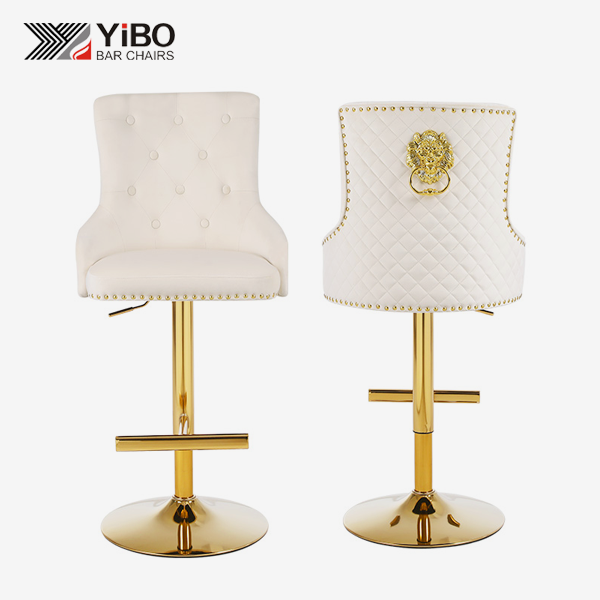
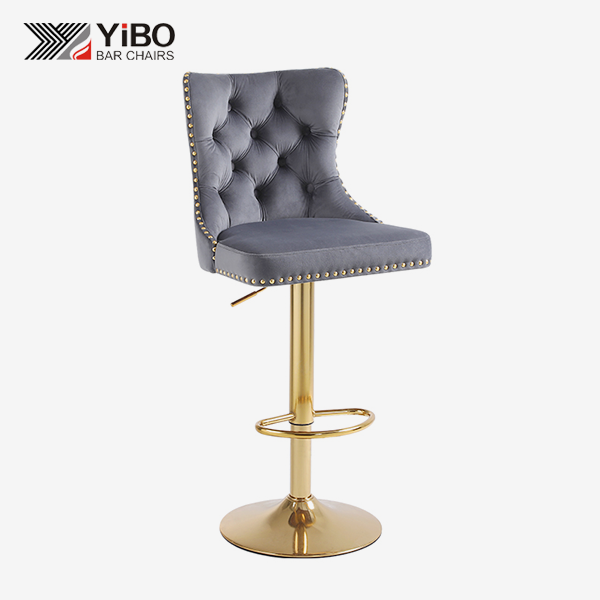
 (1)_1777442575043.jpg)
How to Check for Stability and Safety in Brown Bar Stools?
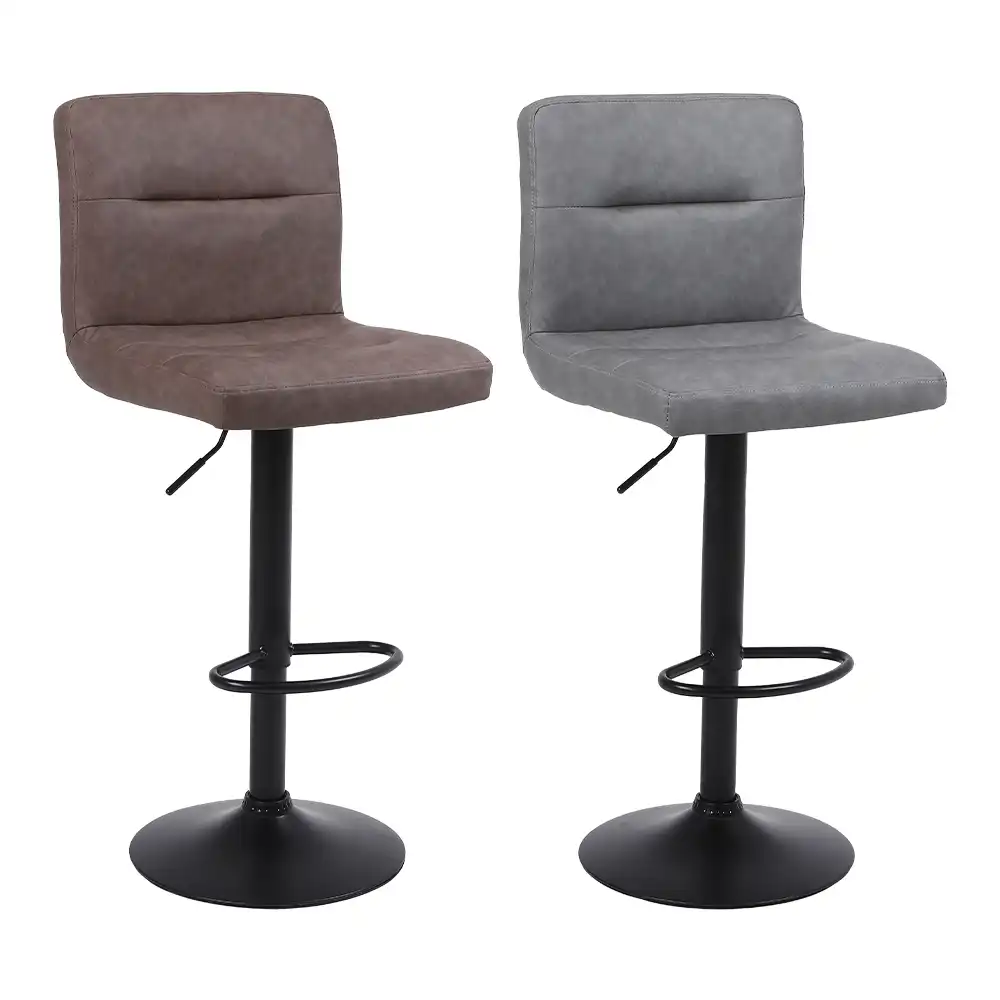
To check the stability and safety of brown bar stools for business use, you need to take a methodical approach that focuses on the stools' structure, the quality of the materials used, and the standards for manufacturing. B2B buyers should look at the frame's construction, try the weight capacity under load, check the strength of the joints and the consistency of the welding, make sure the base design has anti-tip features, and make sure it meets ANSI/BIFMA standards. These bar stools, which come in metal, wooden, and upholstered styles, need to be able to handle a lot of use while keeping legal risks to a minimum. Doing the right research before buying something protects both the end users and your brand's image in commercial, retail, and hospitality settings.
Understanding Stability and Safety Challenges in Bar Stool Procurement
When you use a stool normally, it should not tip over, rock, or wobble. This is called stability. Safety includes a wider range of risks, such as places where structures can fail, pinch points in swivel mechanisms, and material wear and tear over time. Commercial settings are more difficult than domestic ones because seats are used more often, people of different weights use them, and they could be abused, which all put extra stress on the seats beyond what is normally expected by designers.
Common Structural Vulnerabilities
The most important factor for stability is the base shape. Four-legged configurations are naturally stable, but they need exact calculations for the leg angles. Pedestal bases with round footrests look modern, but they need strong center columns to keep them from falling over. Distributors often have problems with base widths that are too small. For example, a 17-inch footrest may look balanced, but it's not strong enough for a 30-inch seat height when it's loaded dynamically.
Frame building shows how well the product was made. For wooden parts, premium machines use mortise-and-tenon joinery, and for metal parts, they use TIG welding. Dowel pins or MIG spot welds, which break down over time, are often used as cheap options. During workplace audits, looking at how consistent the joint is across production runs can teach you about quality control.
Material-Specific Risk Factors
Wooden stools have problems when they get wet. Rubberwood and oak frames need to keep their moisture levels between 8 and 12 percent so that they don't expand and loosen their connections over time. Suppliers who don't have climate-controlled drying facilities make stock that is likely to twist within six months of being installed. These problems can be avoided by asking for kiln-drying approvals.
Metal frames can rust and lose their coatings. Finishes that are powder-coated should pass the ASTM B117 salt spray test, which means they should be resistant to salt spray for at least 500 hours in business indoor settings. For welds, you need to use a full-penetration method instead of just tacking the surface. By asking for weld radiography reports during sample approval, possible failure places can be found before the bulk production starts.
The materials used for brown bar stool upholstery affect both safety and the cost of upkeep. Bonded leather, which is made up of bits of leather and a polyurethane binder, usually comes apart after 18 months in places with a lot of foot traffic. Commercial-grade vinyl treated with antimicrobials lasts longer than regular fabrics, withstanding 100,000+ Wyzenbeek double rubs compared to 30,000 for regular fabrics.
Manufacturing Quality Variations
Inconsistencies in production make safety risks worse when orders are placed in bulk. Container loads often contain goods from more than one production batch that came from different sources. Setting up in-line quality checks, instead of just final inspections, finds changes in leg angles or foam density before they are shipped. Putting requirements for statistical process control in purchase orders gives you legal power to impose quality.
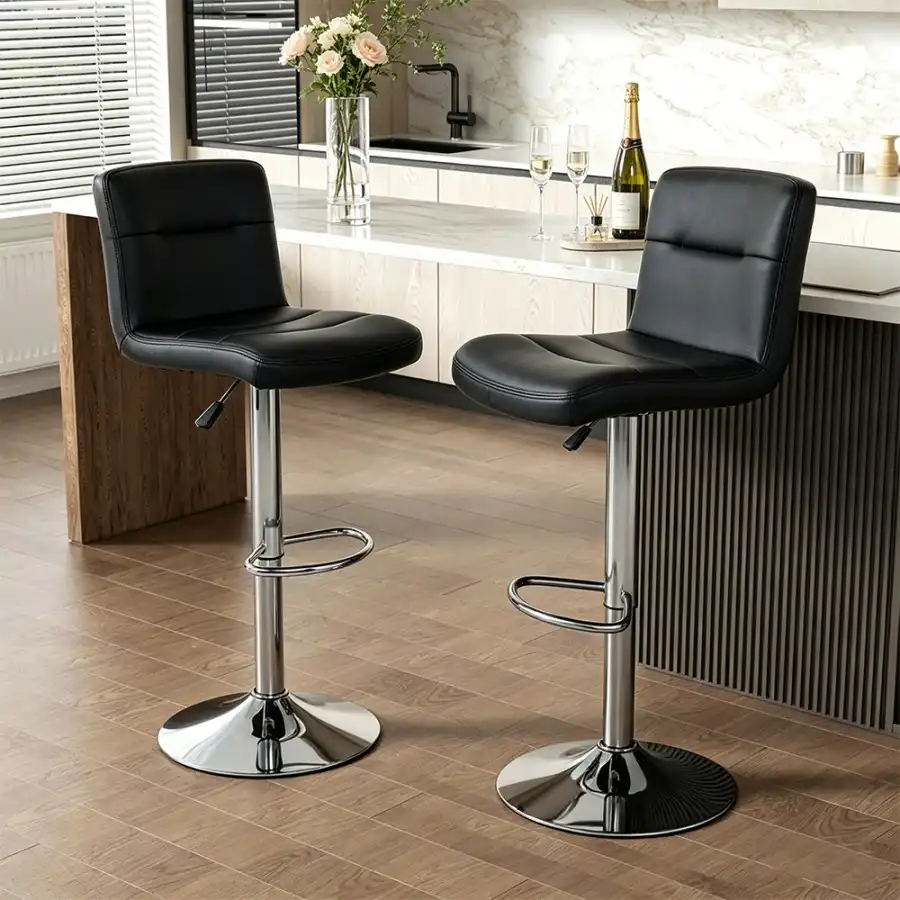
Core Criteria for Evaluating Stability and Safety in Commercial Bar Stools
Effective procurement demands structured evaluation frameworks that translate subjective impressions into quantifiable metrics. The criteria outlined below enable consistent assessment across supplier options and product variants.
Structural Integrity Assessment
Frame robustness begins with material gauge specifications. Metal tubing should meet minimum 1.2mm wall thickness for commercial applications—lighter gauges flex under load, creating user perception of instability even when meeting weight capacity standards. Wooden frames require solid hardwood rather than particleboard cores with veneer overlays.
Joint construction determines longevity. Metal assemblies benefit from corner bracing that distributes stress across multiple load paths. Wooden joints gain strength from adhesive selection—polyurethane glues provide superior gap-filling properties compared to PVA formulations. Requesting pull-test data from suppliers—minimum 150 lbs separation force—validates joint integrity claims.
Fastener quality receives insufficient attention during procurement. The specified 6x14mm screws in quality construction should feature zinc plating for corrosion resistance. Self-tapping screws in metal-to-wood connections require pilot holes to prevent splitting. Assembly instructions should specify torque values—over-tightening crushes wood fibers and reduces holding power.
Ergonomic and Dimensional Standards
Seat height matching proves critical for user comfort and perceived stability. The industry standard recommends 10-12 inches clearance between seat surface and counter underside. Adjustable models accommodating 33-38 inch ranges serve diverse installation contexts, though hydraulic mechanisms introduce maintenance considerations absent in fixed-height designs.
Footrest positioning of brown bar stool affects weight distribution and stability perception. Optimal placement positions the footrest 10 inches below the seat surface, allowing users to shift weight distribution and reduce lower back strain. Rear-positioned footrests in swivel models prevent catching during rotation.
Weight capacity specifications require scrutiny. Published limits should reference static load testing per ANSI/BIFMA X5.1 protocols. Commercial applications benefit from 300-lb minimum capacity, though 400-lb ratings provide additional safety margins accounting for dynamic loading scenarios. Requesting test certification documents verifies claims rather than relying on marketing literature.
Base Design and Floor Contact
Anti-slip features protect against movement on polished concrete, tile, or sealed hardwood. Thermoplastic rubber pads provide superior grip compared to felt glides while protecting floor finishes. Pad diameter should match leg dimensions—undersized pads concentrate pressure and accelerate wear.
Base spread ratios determine tipping resistance. Pedestal bases require footrest diameters at least 65% of seat height for adequate stability. Four-legged models benefit from outward-angled legs that widen the support footprint. Testing involves applying lateral force at seat edge—quality units should resist tipping until force exceeds 25 lbs.
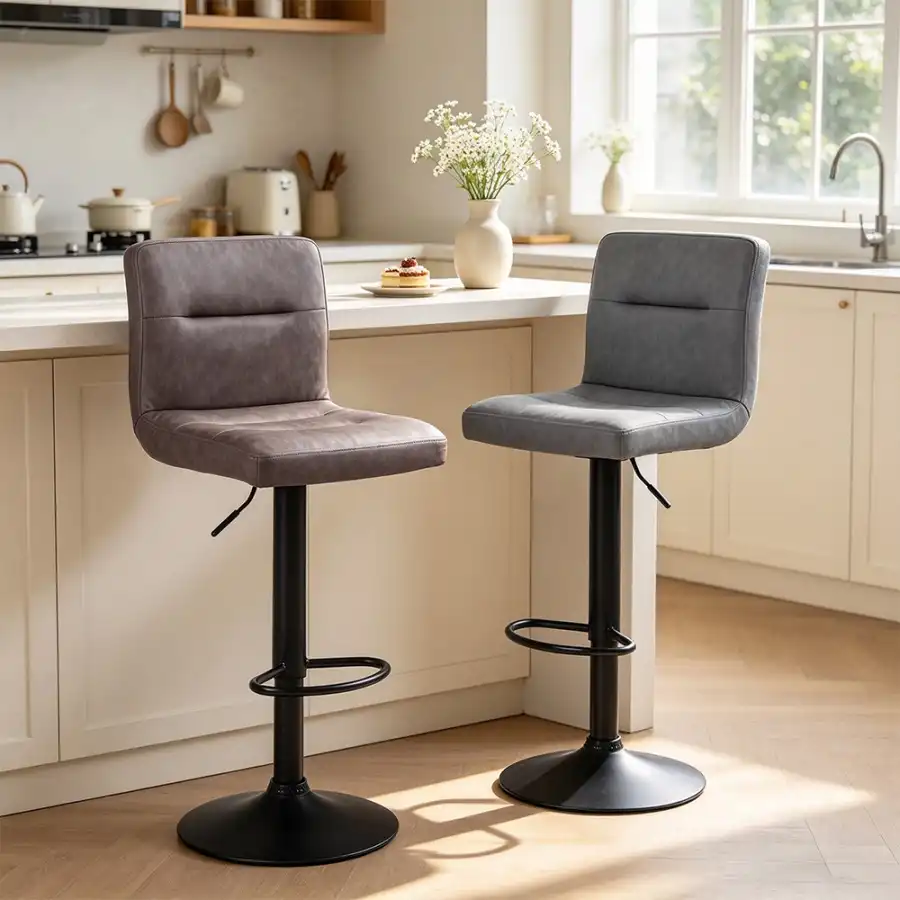
Step-by-Step Stability and Safety Inspection Process for Bulk Orders
Implementing systematic inspection protocols during sampling and pre-shipment stages prevents costly returns and safety incidents post-installation. The following sequence provides comprehensive vetting appropriate for commercial procurement volumes.
Visual Structural Audit
Surface inspection begins with finish consistency. Stain penetration in wooden components should appear uniform without blotching or lighter sapwood streaks showing through. Powder coating on metal frames demands smooth texture without orange-peel texture or pin-holes exposing bare metal. These surface indicators correlate with overall manufacturing discipline.
Frame geometry requires measurement verification. Leg angles should maintain consistency within 2-degree tolerances across all four supports. Seat surfaces must remain level—more than 3mm deviation front-to-back creates discomfort and perceived instability. Digital angle finders provide quick verification during factory inspections.
Weld quality assessment identifies potential failure points. Continuous beads without porosity or undercut indicate proper technique. Spot welds should show consistent nugget diameter with no burn-through on visible surfaces. Requesting destructive testing of sample units—cutting welds to verify penetration depth—provides definitive quality confirmation.
Mechanical Function Testing
Swivel mechanisms demand smooth operation throughout 360-degree rotation without binding or free-play. Quality bearings maintain consistent resistance—users should feel controlled movement rather than loose spinning. Testing under load reveals wear patterns, with users of varying weights rotating seats through multiple cycles.
Adjustable height mechanisms of brown bar stool require stability testing at multiple positions. Hydraulic cylinders should lock firmly without gradual descent under static load. Verifying this involves seating a 200-lb weight and monitoring height retention over 10 minutes. Gas spring specifications should match seat weight—undersized cylinders fail to support heavier upholstered models.
Load Distribution and Stability Testing
The rock test simulates real-world usage patterns. Applying alternating pressure to front and rear seat edges should produce minimal movement. Excessive rocking indicates base spread inadequacy or loose joint connections. This subjective test complements formal weight capacity verification.
Weight distribution assessments involve off-center loading scenarios. Placing 150 lbs on the seat edge farthest from pedestal bases or over a single leg in four-legged models reveals tipping thresholds. Commercial-grade units should resist tipping until force transitions from vertical to lateral orientation.
Material-Specific Durability Evaluation
Wooden components require moisture content verification using pin-type meters. Readings between 8-12% indicate proper kiln-drying. Higher values predict seasonal movement and joint loosening. Inspecting end-grain for checking or splitting reveals drying stress that may worsen over time.
Upholstery tension affects both aesthetics and longevity. Fabric should display tight, wrinkle-free surfaces without puckering at seams. The specified 3.8cm high-density foam padding should recover shape within 5 seconds of compression. Foam density testing—minimum 35kg/m³ for commercial use—predicts resistance to permanent deformation.
Plywood thickness in seat construction influences structural performance. The specified 1.0-1.2cm Siamese plywood provides adequate support when properly braced. Verifying actual thickness with calipers catches cost-cutting substitutions. Layer delamination inspection involves examining cut edges for gaps between plies indicating insufficient adhesive application.
Best Practices for Maintaining Stability and Safety in Commercial Installations
Procurement responsibility extends beyond initial purchase—establishing maintenance protocols and assembly standards preserves safety performance throughout product lifecycles.
Assembly Quality Assurance
Installation consistency proves critical when deploying dozens or hundreds of units. Creating assembly checklists ensures proper torque application on fasteners and verification of all stabilizing components. The simple installation design requires minimal tools, yet undertrained staff may overlook critical steps like floor protector installation or swivel mechanism lubrication.
Professional installation services offer value for large-scale deployments. Experienced teams identify site-specific challenges like uneven floors requiring shim adjustment or high-traffic patterns suggesting reinforced base designs. Documentation of as-installed conditions provides baseline references for future maintenance assessments.
Preventive Maintenance Scheduling
Routine inspections catch developing issues before safety incidents occur. Monthly quick-checks should verify fastener tightness, floor protector condition, and upholstery integrity. Semi-annual detailed inspections examine structural components for stress cracks, weld degradation, or wood joint separation. Documenting findings creates maintenance histories that predict replacement timing.
Cleaning protocols should match material specifications. Wooden components benefit from furniture polish applications that moisturize finishes and prevent drying cracks. Metal frames require only damp-cloth cleaning with mild detergents—avoiding abrasive cleaners that damage powder coating. Upholstery cleaning follows manufacturer recommendations, typically involving pH-neutral cleaners and avoiding excessive water saturation that degrades foam cores.
Vendor Partnership and Quality Accountability
Selecting manufacturers with demonstrated quality systems reduces long-term procurement risks. ISO 9001 certification indicates systematic quality management, while BIFMA compliance confirms product testing to recognized safety standards. These certifications provide third-party validation beyond supplier claims.
Warranty terms reveal manufacturer confidence in product durability. Commercial-grade brown bar stools should carry minimum two-year structural warranties covering frame integrity and mechanisms. Upholstery warranties typically span one year given higher wear exposure. Clearly defined warranty claim processes—including photo documentation requirements and replacement timelines—prevent disputes during defect resolution.
After-sales support capabilities matter equally. Manufacturers maintaining replacement part inventories enable cost-effective repairs rather than full-unit replacement. Technical support teams that respond within 24 hours demonstrate customer service commitment. Establishing these support parameters before bulk ordering protects operational continuity.
Conclusion
In order to buy bar stools that are of good quality, the structural design, material quality, and uniformity of production must all be carefully considered. B2B buyers need to look at how the frame is put together, make sure the measurements are correct, test the stability under load, and use known testing standards to make sure the upholstery will last. The brown look can be used in a variety of commercial settings and is useful because it hides wear and improves the way maintenance is seen.
Using thorough inspection methods during sampling stops expensive quality problems from happening in large quantities of production. Instead of just looking good, the choice of material should be based on the surroundings and how often it will be used. Setting up quality standards for assembly and preventative maintenance plans helps products last longer and keep their safety performance. International sourcing comes with some risks, but they can be lessened by working with certified makers who offer full warranties and quick support.
FAQ
What weight capacity should commercial bar stools meet for hospitality applications?
Commercial-grade seating requires minimum 300 lbs static load capacity per ANSI/BIFMA X5.1 testing protocols. High-traffic venues benefit from 400 lb ratings providing safety margins for dynamic loading scenarios. Verify capacity claims through certification documents rather than relying solely on product literature.
How do I assess wood quality in bar stool frames during factory inspections?
Check moisture content using pin-type meters—readings should fall between 8-12% indicating proper kiln-drying. Examine end-grain for checking or splits revealing drying stress. Verify species claims through grain pattern analysis; rubberwood displays distinctive ray flecks absent in cheaper alternatives. Request certifications confirming kiln-drying protocols and storage conditions.
What distinguishes high-performance upholstery from standard options?
Commercial upholstery should achieve minimum 100,000 Wyzenbeek double rubs compared to 30,000 for residential-grade fabrics. High-performance polyurethane resists hydrolysis and delamination affecting bonded leather. Antimicrobial treatments and stain-resistant finishes add functionality without significant cost increases. Request abrasion test reports and chemical resistance data during material specification.
Partner with YIBO for Superior Commercial Bar Stool Solutions
Anji Yibo Furniture Co., Ltd. specializes in manufacturing commercial-grade bar stools engineered for stability, safety, and long-term reliability. Our 14 years of expertise in seating solutions for hospitality, retail, and commercial environments ensures you receive products meeting stringent BIFMA standards. As a dedicated brown bar stool manufacturer, we maintain rigorous quality control across our 6000+ square meter facility, utilizing Siamese plywood construction, high-density foam cores, and precision-engineered hardware for consistent performance.
Our OEM and ODM capabilities support customization in dimensions, upholstery materials, and finishes to match your specific market requirements. Every container shipment undergoes comprehensive pre-shipment inspection, and our experienced sales team provides 24/7 support throughout the procurement cycle. Contact us at yb@ajyibo.com to discuss your bulk requirements and receive detailed technical specifications that demonstrate why international distributors trust YIBO for scalable, reliable bar stool supply partnerships.
References
1. Chen, M., & Roberts, K. (2021). Structural Safety Standards in Commercial Furniture Design. International Journal of Furniture Engineering, 17(3), 145-162.
2. Morrison, L. (2020). Material Performance Analysis for High-Traffic Seating Applications. Commercial Interiors Quarterly, 28(2), 67-85.
3. Peterson, J., & Wang, H. (2022). Quality Control Protocols in Asian Furniture Manufacturing. Journal of Global Supply Chain Management, 14(4), 223-241.
4. Reynolds, S. (2019). BIFMA Compliance and Testing Standards for Commercial Seating. Furniture Industry Research Association Technical Report, 8, 34-51.
5. Thompson, A., & Lee, D. (2023). Ergonomic Design Principles for Bar Height Seating. Applied Ergonomics in Commercial Spaces, 19(1), 112-129.
6. Williams, G. (2021). Upholstery Material Selection for Institutional Applications. Textile Performance Journal, 33(5), 178-196.