

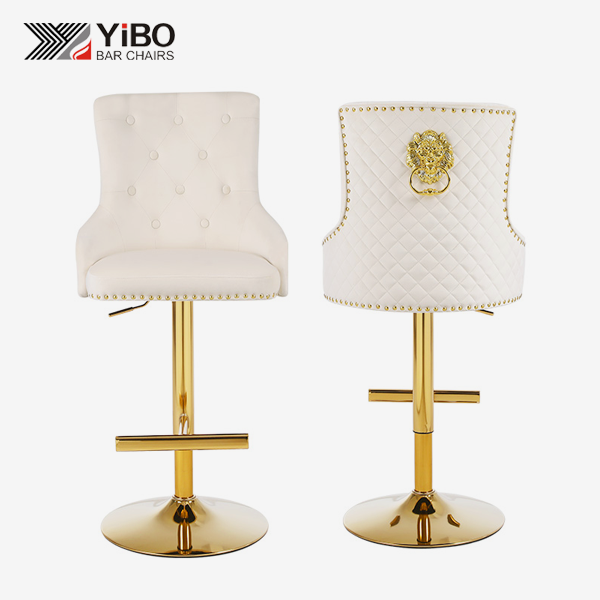
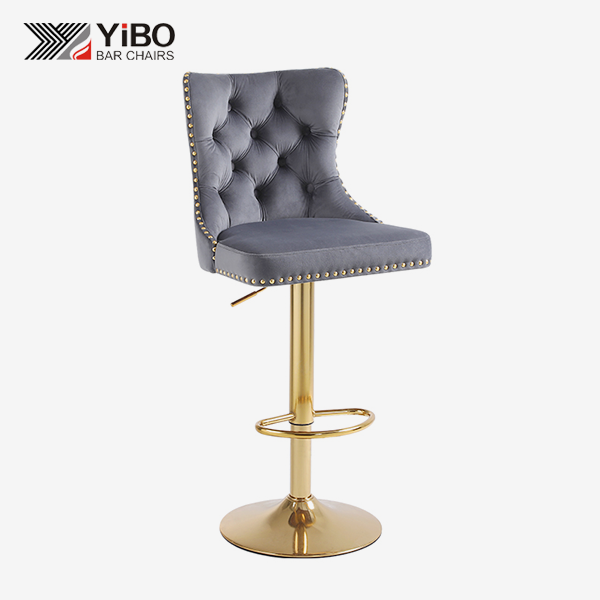
 (1)_1777442575043.jpg)
Supplier Checklist: Ordering an OEM height adjustable swivel bar stool
Picture this: you've received a shipment of 500 height adjustable swivel bar stools for your new restaurant chain, only to discover that the gas lift mechanism fails after two weeks, the chrome base peels within a month, and the seat cushions compress unevenly. The financial loss is devastating, but the damage to your brand reputation is even worse. This nightmare scenario happens more often than you'd think when buyers skip essential verification steps during the OEM ordering process. Whether you're a hospitality business owner, interior designer, or furniture retailer sourcing best adjustable bar stools for your commercial projects, having a comprehensive supplier checklist is your insurance policy against costly mistakes and ensures you receive high-quality height adjustable swivel bar stools that meet your exact specifications.
Understanding OEM Manufacturing for Height Adjustable Swivel Bar Stools
When sourcing comfortable adjustable bar stools through OEM manufacturing, you're partnering with a factory to produce furniture according to your specific design requirements and brand standards. Unlike purchasing ready-made products, OEM allows you to customize every aspect of your height adjustable swivel bar stool from the plywood thickness and upholstery materials to the swivel mechanism and base diameter. This manufacturing approach is particularly valuable for businesses seeking to differentiate their offerings in competitive markets, whether you're looking for stout adjustable barstool options for heavy-duty commercial use or elegant blue adjustable bar stools that match your brand aesthetic. The OEM process for height adjustable swivel bar stools involves several critical stages that determine the success of your order. First, you provide technical specifications including seat dimensions, height range adjustability, weight capacity requirements, and material preferences. The manufacturer then creates prototypes based on your drawings or samples, allowing you to test functionality, comfort, and durability before committing to full production. This iterative development phase is where many businesses discover potential issues with their initial designs, such as inadequate foam density for long-term comfort or insufficient base stability for heavier users. Throughout production, quality control checkpoints ensure each batch of comfortable adjustable bar stools meets the agreed-upon standards before shipping.
Understanding the difference between OEM and ODM is essential when ordering height adjustable swivel bar stools. With OEM, you bring complete technical drawings and specifications to the manufacturer who produces exactly what you've designed. ODM partnerships involve the manufacturer's design team developing products based on your concept or market requirements, which can be valuable if you lack in-house technical expertise. For height adjustable swivel bar stools with specific features like 360-degree swivel mechanisms, gas lift systems, and ergonomic contouring, working with an experienced OEM partner who understands these mechanical components is crucial for achieving reliable performance.
Key Considerations Before Placing Your Order
Before contacting potential suppliers for your best adjustable bar stools project, clarify your exact requirements to streamline the evaluation process. Define your target price point, minimum order quantity capacity, timeline expectations, and quality standards. Consider whether you need certifications like BIFMA compliance for commercial furniture or specific fire safety ratings for hospitality applications. For height adjustable swivel bar stools, technical specifications should include the height adjustment range typically between 24 to 33 inches, seat dimensions, base diameter for stability, weight capacity often 300 pounds or more for commercial use, and upholstery options that balance comfort with durability and ease of maintenance. Material selection significantly impacts both the performance and cost of your stout adjustable barstool production. The base structure typically uses chrome-plated steel for corrosion resistance and aesthetic appeal, while the seat foundation employs Siamese plywood with thickness ranging from 1.0 to 1.2 centimeters for structural integrity. Upholstery choices include half-PU leather at 0.8mm thickness offering a balance of durability and cost-effectiveness, while filling materials like 22-density foam provide long-lasting comfort without excessive compression. Hardware components such as 6x14mm screws for assembly and handrail tubes with 1.0mm thickness ensure structural stability. Understanding these technical specifications helps you evaluate whether a supplier's standard offerings align with your quality expectations for comfortable adjustable bar stools.

Essential Supplier Qualification Criteria
Verifying supplier qualifications is the foundation of successful OEM partnerships for height adjustable swivel bar stools. Start by confirming the manufacturer's business licenses, export certifications, and factory location to ensure you're dealing with a legitimate operation. Request detailed information about their production facility size, equipment capabilities, and daily output capacity. A qualified China height adjustable swivel bar stool factory should operate a facility of at least 3,000 square meters with specialized equipment for metal fabrication, upholstery work, and furniture assembly. Ask about their years of experience specifically in chair manufacturing, as expertise in height adjustable swivel bar stools requires understanding of gas lift mechanisms, swivel bearings, and ergonomic design principles that differ from stationary furniture production. Quality certifications provide objective evidence of a supplier's commitment to standards and continuous improvement. For height adjustable swivel bar stools destined for international markets, look for ISO 9001:2015 Quality Management System certification demonstrating systematic quality control processes. BIFMA certification is particularly important for commercial applications, as it verifies that furniture meets rigorous safety and durability standards through independent testing. If you're targeting European markets with your blue adjustable bar stools, CE marking indicates compliance with EU safety regulations. Additionally, environmental certifications like FSC for sustainable wood sourcing or CARB compliance for formaldehyde emissions become increasingly important as buyers prioritize sustainability alongside functionality.
Manufacturing capabilities extend beyond basic production to encompass design support, customization flexibility, and technical problem-solving. Evaluate whether the China height adjustable swivel bar stool supplier maintains an in-house research and development team capable of translating your concepts into manufacturable designs. Ask about their prototyping process, including how many iterations they typically allow and what the timeline looks like from initial sample to production approval. A supplier with robust R&D capabilities can suggest material substitutions that reduce costs without compromising quality, recommend design modifications that improve manufacturability, and troubleshoot issues that arise during sample testing. For specialized requirements like custom color matching for blue adjustable bar stools or unique swivel mechanisms for stout adjustable barstool applications, technical expertise becomes even more critical.
Evaluating Production Capacity and Flexibility
Production capacity directly impacts your ability to scale orders and meet market demand for best adjustable bar stools. Request specific information about the supplier's monthly output for height adjustable swivel bar stools, current capacity utilization, and peak production capabilities. A China height adjustable swivel bar stool manufacturer producing several thousand units monthly indicates established processes and experienced workforce capable of handling large orders efficiently. However, also assess their flexibility for smaller initial orders, as many businesses prefer testing market response with moderate quantities before committing to full container loads. Understanding minimum order quantity requirements upfront prevents misalignment between your purchasing needs and the supplier's economic production runs. Lead time management becomes particularly important when launching new products or meeting seasonal demand for comfortable adjustable bar stools in hospitality markets. Distinguish between sample production time, typically 15 to 25 days for height adjustable swivel bar stools with custom specifications, and bulk production time which can range from 30 to 60 days depending on order size and complexity. Factor in additional time for quality inspection, packaging, and international shipping when planning your procurement timeline. Reputable China height adjustable swivel bar stool suppliers provide realistic timeframes and communicate proactively about any potential delays, whereas unreliable manufacturers often promise impossible delivery schedules only to disappoint later when deadlines slip.
Supply chain transparency helps you understand potential risks and plan contingency strategies for your stout adjustable barstool procurement. Ask suppliers about their raw material sourcing, particularly for critical components like gas lift mechanisms, swivel bearings, and chrome-plated bases. Vertically integrated manufacturers who produce their own metal frames often offer better quality control and more competitive pricing compared to those outsourcing major components. For height adjustable swivel bar stools, inquire whether they maintain adequate inventory of long-lead-time items like gas lifts to prevent production delays. Understanding their supplier relationships and backup sourcing options gives you confidence in their ability to fulfill orders consistently even when supply chain disruptions occur.
Material and Construction Specifications
Technical specifications for height adjustable swivel bar stools require precision to ensure consistent quality across production runs. Begin with structural components that determine durability and safety. The base diameter typically measures 17.5 inches for standard commercial applications, providing stability for users up to 300 pounds while fitting comfortably under standard counter heights. The gas lift mechanism should offer smooth height adjustment within the specified range, typically 24 to 33 inches for bar height applications, with secure locking positions that prevent unexpected dropping. Chrome plating on metal components should meet minimum thickness standards to resist corrosion and maintain appearance through years of commercial use, particularly important for best adjustable bar stools in high-traffic hospitality environments. Seat construction details significantly impact both comfort and longevity of your comfortable adjustable bar stools. The plywood base should utilize Siamese plywood between 1.0 and 1.2 centimeters thick, providing a rigid foundation that prevents sagging and maintains the seat's shape over time. Foam cushioning density matters tremendously for commercial applications where seats endure constant use throughout operating hours. Specify 22-density foam or higher to ensure cushions maintain their shape and comfort level even after thousands of sitting cycles. The upholstery material, whether half-PU leather at 0.8mm thickness or fabric options like those from Abner, Jaegar, Galotti, or Case collections, should be tested for abrasion resistance, colorfastness, and ease of cleaning to meet the demanding requirements of commercial spaces.
Mechanical components represent the most critical functional elements of height adjustable swivel bar stools and deserve careful specification. The swivel mechanism should provide smooth 360-degree rotation without excessive play or binding, using quality bearings that maintain performance through tens of thousands of rotation cycles. Handrail tubes, when included in your stout adjustable barstool design, should have wall thickness of at least 1.0mm to prevent denting or deformation from normal handling. Assembly hardware including screws, typically 6x14mm for seat attachment, should be appropriately sized and made from materials that won't strip or corrode. Footrests welded or attached to the base structure provide added comfort and should be positioned at heights that accommodate users of various statures while maintaining structural integrity.
Quality Control and Inspection Protocols
Implementing comprehensive quality control measures protects your investment in OEM height adjustable swivel bar stools and ensures customer satisfaction. Establish clear quality standards before production begins, including dimensional tolerances, finish quality expectations, mechanical performance requirements, and acceptable defect rates. For blue adjustable bar stools with specific color requirements, provide physical color samples or specify industry-standard color references to eliminate ambiguity. Create detailed inspection checklists covering all critical dimensions, such as seat width and depth, height adjustment range, base diameter, and weight capacity verification through load testing. These documented standards become the objective criteria against which each production batch is evaluated. Pre-production inspection of materials and components helps identify issues before they become expensive problems in finished height adjustable swivel bar stools. Request that your China height adjustable swivel bar stool manufacturer verify plywood thickness, foam density, upholstery material grade, chrome plating thickness, and gas lift mechanism quality before assembly begins. This upstream quality control is particularly important for comfortable adjustable bar stools where material substitutions could significantly impact performance and durability. Consider engaging third-party inspection services for material verification, especially for large orders where the financial risk is substantial. Independent verification adds credibility and provides documentation you can reference if quality disputes arise later.
During-production and pre-shipment inspections represent your final opportunity to catch defects before products reach customers. Schedule inspections when approximately 80% of production is complete, allowing time to address any systemic issues discovered without delaying the entire shipment. Inspectors should randomly select samples for detailed examination, testing all functional features including swivel operation, height adjustment smoothness, base stability, and overall structural integrity. For height adjustable swivel bar stools, perform weight capacity testing on representative samples to verify they meet specified limits safely. Document all inspection findings with photographs and detailed reports, clearly communicating any deficiencies to the supplier and establishing correction requirements before accepting the shipment.

Packaging and Logistics Considerations
Proper packaging protects your best adjustable bar stools during international shipping and reduces the risk of damage that leads to customer complaints and costly returns. Specify packaging requirements that balance protection with cost-effectiveness and sustainability. For height adjustable swivel bar stools, individual boxing provides maximum protection with each unit wrapped in protective film and placed in a corrugated cardboard carton reinforced with five layers rated for 200 pounds stacking strength. The packaging should include foam corner protectors for metal base components and plastic caps for exposed chrome surfaces to prevent scratching. Interior packaging materials should secure all loose components like screws and assembly instructions while preventing movement that could cause component-to-component damage during transit. Space-saving packaging becomes particularly important when importing large quantities of comfortable adjustable bar stools where container capacity directly impacts per-unit shipping costs. Work with your China height adjustable swivel bar stool supplier to optimize package dimensions for efficient container loading. Flat-pack designs that allow the base to nest inside the seat area can significantly reduce package volume compared to fully assembled units. However, balance packaging efficiency against assembly complexity, as excessively complicated assembly procedures frustrate end users and increase the likelihood of incorrect installation that could compromise safety. Provide clear, illustrated assembly instructions in the destination market's language, ideally with QR codes linking to video demonstrations for complex procedures.
Shipping logistics planning should begin early in the OEM process to avoid surprises that delay product availability or inflate costs. Determine whether you'll arrange shipping independently or rely on the supplier's logistics partners. Many experienced China height adjustable swivel bar stool manufacturers maintain relationships with reliable freight forwarders who understand furniture shipping requirements and can offer competitive rates. Clarify Incoterms to establish exactly when responsibility and risk transfer from seller to buyer. FOB terms require you to arrange and pay for shipping from the departure port, giving you control over carriers and routes but requiring more logistics expertise. DDP terms with the supplier handling all shipping, import duties, and delivery to your destination provide convenience but typically at higher cost. Factor in customs clearance requirements for your destination country, particularly for wooden components that may require phytosanitary certification or treatment documentation.
Documentation and Compliance Requirements
Comprehensive documentation ensures smooth customs clearance and provides evidence for quality verification of your stout adjustable barstool shipments. Request complete commercial documentation including detailed packing lists specifying contents of each carton, commercial invoices with accurate product descriptions and declared values, and certificates of origin when required for preferential tariff treatment. For height adjustable swivel bar stools containing wooden components, USDA APHIS compliance documentation may be required for importation into the United States, including heat treatment certificates or fumigation reports demonstrating the wood has been properly treated to eliminate pests. Your China height adjustable swivel bar stool factory should be familiar with these requirements and capable of providing necessary documentation without delays. Product compliance certifications protect you from liability and ensure your blue adjustable bar stools meet safety standards in your target market. For commercial furniture in the United States, BIFMA certification provides third-party verification that products meet durability, safety, and structural adequacy standards through rigorous testing protocols. European markets require CE marking demonstrating conformity with EU safety and environmental requirements. California's Proposition 65 requires warnings for products containing certain chemicals, so verify that your comfortable adjustable bar stools either avoid listed substances or that appropriate warnings are included. Request copies of all relevant test reports and certifications before shipment, and verify they correspond to the actual products you're receiving rather than similar but not identical items from the supplier's product line.
Quality assurance documentation provides evidence of inspection results and creates accountability for meeting agreed specifications. Require your supplier to provide detailed inspection reports with photographs documenting that your height adjustable swivel bar stools meet all dimensional, functional, and aesthetic requirements. These reports should include measurements of critical dimensions, results of mechanical tests like swivel operation and height adjustment, and confirmation that samples passed weight capacity testing. For upholstered products, request documentation of fabric specifications including composition, abrasion resistance ratings, and colorfastness test results. This documentation becomes valuable evidence if disputes arise regarding product quality or specification compliance, and it provides assurance that your China height adjustable swivel bar stool manufacturer maintained quality standards throughout production.
Pricing and Payment Terms Negotiation
Understanding cost structures helps you negotiate fairly for height adjustable swivel bar stools while ensuring your supplier remains financially healthy and motivated to deliver quality products. Material costs typically represent 50 to 60 percent of total production costs for metal-frame furniture, including steel for bases, foam for cushions, upholstery materials, and mechanical components like gas lifts and swivel mechanisms. Labor costs account for 15 to 25 percent depending on the complexity of your comfortable adjustable bar stools design and the level of handcrafted details. Factory overhead including equipment depreciation, facility costs, and management expenses adds another 10 to 15 percent. The supplier's profit margin, typically 10 to 20 percent for OEM production, provides their incentive for accepting your order and maintaining quality standards throughout delivery. Strategic negotiation focuses on optimizing specifications rather than simply demanding lower prices for best adjustable bar stools. Explore whether adjusting material thicknesses within acceptable tolerances, simplifying design elements that don't impact core functionality, or modifying hardware specifications can achieve cost targets without compromising essential quality. For example, reducing Siamese plywood thickness from 1.2 to 1.0 centimeters may offer modest savings while still providing adequate structural support for your stout adjustable barstool application. Consolidating color options or limiting upholstery choices can reduce setup costs and material inventory requirements for your supplier. Volume commitments substantially impact pricing, as larger orders allow manufacturers to optimize production runs and spread fixed costs across more units, potentially reducing per-unit costs by 10 to 20 percent for container-load quantities versus smaller orders.
Payment terms significantly impact your cash flow and risk exposure when ordering height adjustable swivel bar stools from international suppliers. Standard terms often involve a 30 percent deposit upon order confirmation to cover material procurement, with the 70 percent balance paid before shipment or against bill of lading presentation. For first-time orders or when working with unfamiliar China height adjustable swivel bar stool suppliers, consider using letters of credit that protect both parties by ensuring payment only occurs when specified conditions are met. Established relationships may allow more favorable terms like 60 to 90 day payment periods after delivery, though these typically require demonstrating creditworthiness and order history. Negotiate inspection rights explicitly into payment terms, ensuring you can verify quality before final payment is released and establishing clear procedures for addressing deficiencies discovered during inspection.
Long-Term Partnership Development
Building sustainable relationships with your China height adjustable swivel bar stool manufacturer creates value beyond individual transactions through improved communication, priority scheduling, and collaborative product development. Demonstrate commitment by sharing your business roadmap and growth projections, helping the supplier understand your long-term volume potential and plan capacity accordingly. Provide constructive feedback after each order, highlighting both successes and areas for improvement in a collaborative rather than confrontational manner. For blue adjustable bar stools or other specialized products, involve your supplier's design team early in the development process to leverage their manufacturing expertise and identify opportunities to optimize designs for production efficiency without compromising your vision. Continuous improvement programs formalize quality enhancement and cost reduction efforts for comfortable adjustable bar stools through regular reviews and goal-setting. Establish quarterly business reviews where you analyze quality metrics, delivery performance, and customer feedback together with your supplier. Set joint objectives for reducing defect rates, shortening lead times, or developing new features that differentiate your height adjustable swivel bar stools in the marketplace. Share market intelligence about emerging trends, competitor offerings, and customer preferences that can inform your supplier's R&D investments and help them serve your needs proactively. These collaborative approaches transform transactional relationships into strategic partnerships where both parties are invested in mutual success.
Risk management strategies protect your business from supply chain disruptions while demonstrating reasonable expectations to your China height adjustable swivel bar stool factory. Maintain modest safety stock to buffer against transit delays or temporary quality issues without creating excessive inventory carrying costs. Consider qualifying a secondary supplier for your stout adjustable barstool products, not to play manufacturers against each other but to ensure business continuity if your primary supplier experiences capacity constraints, natural disasters, or other disruptions. Communicate openly about potential risks you foresee, whether seasonal demand spikes, regulatory changes, or material cost fluctuations, and work together to develop mitigation strategies. This transparent approach builds trust and positions both parties to respond effectively when challenges inevitably arise.
Conclusion
Sourcing high-quality height adjustable swivel bar stools through OEM manufacturing requires systematic evaluation of suppliers, clear specification of requirements, rigorous quality control, and collaborative relationship development to ensure products that meet your standards arrive on time and within budget.
Cooperate with Anji Yibo Furniture Co., Ltd.
As a leading China height adjustable swivel bar stool manufacturer with 14 years of specialized expertise, Anji Yibo Furniture Co., Ltd. delivers exceptional value through our integrated manufacturing capabilities. Our 6,000-square-meter facility in Anji, Zhejiang—China's renowned furniture capital—houses our own iron frame factory, advanced production equipment, and dedicated warehouse ensuring complete control over quality and timelines. We offer comprehensive OEM and ODM services backed by our professional R&D team of over 10 personnel who provide full-process support from concept through production, enabling personalized customization of height adjustable swivel bar stools precisely matching your specifications. Our products are exported to 70 countries worldwide, specializing in European and American retro and light luxury styles, with competitive pricing that reflects our efficient space-saving packaging and local manufacturing advantages.
As a trusted China height adjustable swivel bar stool supplier and China height adjustable swivel bar stool wholesale partner, we support diverse fabric options from Abner, Jaegar, Galotti, and Case collections, ensuring your comfortable adjustable bar stools achieve the perfect aesthetic for your brand. High Quality height adjustable swivel bar stools with warranties demonstrate our confidence in durability and craftsmanship, while our experienced sales team provides comprehensive service with any questions answered within 24 hours. Whether you need best adjustable bar stools for hospitality projects, stout adjustable barstool options for heavy commercial use, or elegant blue adjustable bar stools for distinctive interiors, our height adjustable swivel bar stool for sale at competitive height adjustable swivel bar stool prices delivers unmatched value. Contact us today at yb@ajyibo.com to discuss your project requirements and discover why leading brands worldwide choose Anji Yibo as their preferred China height adjustable swivel bar stool factory partner.
References
1. "Tips When Changing Your Furniture Supplier - Understanding OEM & ODM Partnerships" - Pijar Sukma Furniture Industry Analysis
2. "Standard B2B Furniture Supplier Checklist for International Procurement" - Aurora Craft Manufacturing Guidelines
3. "OEM Furniture Services: Custom Manufacturing Standards and Best Practices" - Ace Craftique Industry Research
4. "Quality Assurance Protocols for Commercial Furniture Manufacturing" - BIFMA International Furniture Standards
5. "International Furniture Trade: Compliance, Logistics and Supply Chain Management" - Global Furniture Sourcing Association