

 (1)_1777442575043.jpg)
Tips For Choosing The Perfect Bar Stools
When choosing bar stools for a business setting, you need to think about more than just how they look. When purchasing chairs for hotels, restaurants, or stores, procurement managers have to make choices that balance sturdiness, comfort, and design flexibility. As a trendy option, grey velvet bar chair have become a stylish choice that offers both luxurious feel and long-lasting durability. These chairs are made of strong materials and plush padding, so they can be used in high-traffic areas where style doesn't have to sacrifice function. This guide gives you useful information about material requirements, evaluating suppliers, and buying methods that will help you make sure that the bulk purchases you make get the best return on your investment and make your business places look better.
Understanding Grey Velvet Bar Stools: Materials, Styles, and Benefits
What Defines a Quality Grey Velvet Bar Stool
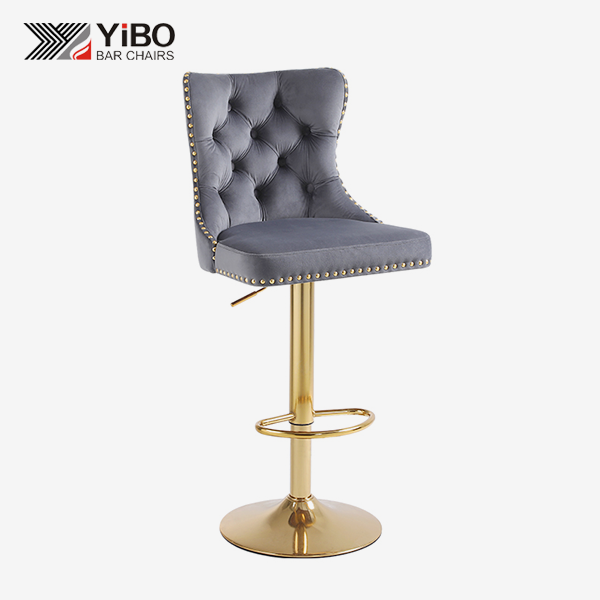
The material that a bar stool is made of is the first thing that makes it reliable. Premium velvet bar stools are made of polyester-blend fabrics that weigh between 280 and 450 GSM (grams per square meter). This makes sure that the fabric stays opaque and the structure stays strong even after years of use. The particular grey pigment has useful benefits: it hides small lint and dirt better than stark black or white options, and it keeps the warmth of different color schemes inside. Our grey velvet bar chair at Anji Yibo Furniture have 280g velvet padding and black-painted iron feet, which makes them both elegant and long-lasting. The metal frame design makes it stable for weights up to 150 kg, which is important for business uses where different body types and usage patterns need consistent performance.
Velvet's Unique Advantages in Commercial Settings
Velvet has natural qualities that make it useful in business settings because they solve common practical problems. The high-pile structure of the cloth soaks up sound waves, which lowers echo in bars or eating rooms with open floors. During busy times, this soundproofing makes the listening experience better for customers. Unlike leather alternatives that can crack when the temperature changes or fabric blends that feel cold to the touch, velvet stays the same temperature all the time, so guests are instantly comfortable no matter what the temperature is outside. The softness makes people want to stay seated longer, which according to studies in the hotel industry leads to more food and drinks being ordered. With hydrophobic coats, modern velvet fabrics can keep liquid spills from setting in for long enough for staff to clean up the mess before they become lasting stains. This is a very important feature for busy bars.

Style Variations and Dimensional Considerations
There are three main types of bar stool styles, each with its own set of functions. Backless types save room in small bars because they can be tucked under counters when not in use. Low-back designs support your lower back without getting in the way of your view in open spaces, so you can see clearly while staying comfortable for long periods of time. High-end bars use chairs with backs and seats because customers' comfort directly affects how they feel about the service. Standard counter stools are 24 to 26 inches high and fit 36-inch tables. Bar-height stools, which are 28 to 30 inches high, fit 40 to 42-inch surfaces. Adjustable systems make things more flexible, but they also add mechanical parts that need to be maintained, so keep that in mind when planning your purchases. Our grey velvet bar chair models can be adjusted to different heights between 65 and 85 cm, so they can be used with a variety of desk layouts in hospitality settings.
Comparing Grey Velvet Bar Chairs with Other Popular Options
Velvet Versus Leather and Fabric Alternatives
The choice of material has a big effect on the total cost of ownership and how well it works. Leather bar stools look nice and are easy to clean, but real leather patinas and cracks after 3 to 5 years of heavy use, and fake leather can feel plasticky and uncomfortable after long periods of contact. Standard cloth mixes let air flow and are cheaper, but they don't have the visual depth and high-end feel that velvet does. In terms of style, velvet is similar to leather, but it breathes better than fake materials and has a more luxurious look. The grey tone solves a specific problem in procurement: colored fabrics fade when they are exposed to UV light near windows, but neutral grey keeps colors brighter for longer. In tests of wear and tear, commercial-grade grey velvet bar chair can handle more than 40,000 Martindale cycles, which is the same as mid-level leather performance but costs less when bought in quantities.
Ergonomic Considerations: Backrest Designs and Comfort
In business settings, customer happiness and loss rates are directly affected by how comfortable customers are. Backless chairs make people sit down for shorter periods of time, which is good for fast-casual restaurants that want to keep tables moving quickly but bad for restaurants that want people to take their time while they eat. Low-back designs give your lower back enough support without making the chair look too big, so they're good for mild sitting for 45 to 90 minutes. High-back models with ergonomic contouring support stays longer than two hours, making them perfect for drink clubs or wine bars where long-term customer interaction is key to making money. Our grey velvet bar chair have a comfortable backrest with a gentle curve that supports the natural position of the spine. This makes it easier on the lower back during the 60–90 minute meals that are popular in mid-range restaurants.
Price and Value Analysis for Bulk Procurement
When you do effective buying, you compare unit cost to lifecycle value instead of just looking at the original purchase price. A lot of cheap bar chairs (those that cost less than a certain amount) have thin foam padding (density below 25 kg/m³) that breaks down in 12 to 18 months, making the stool uncomfortable and needing an early replacement. Mid-range choices with high-resilience foam (35 kg/m³ density) and reinforced metal frames last 4-6 years, which means lower yearly costs even though they cost more at first. Premium models with wooden frames and high-quality fabrics can last up to eight years or more, but they may be too expensive for big orders. Total cost should include how often units need to be maintained, how often they need to be replaced, and the amount of time lost when units break down during work hours. When you buy in bulk from well-known companies that can also do OEM work, you can often get volume discounts and customization choices that lower the cost per unit while still meeting your unique business needs.

Selecting Reliable Brands and Suppliers for Grey Velvet Bar Chairs
Evaluating Manufacturer Credentials and Reputation
The long-term success of procurement depends on the supplier chosen after the original deal is completed. Established companies show that they are durable by running their businesses continuously for many years. For example, Anji Yibo Furniture has been making chairs exclusively for 14 years, which shows that they have built up a lot of technical knowledge and market stability. Verification of production capacity makes sure that providers can meet the deadlines for large orders. Our 6,000-square-meter plant sends multiple containers every month, so we can handle large order numbers without affecting delivery times. Certification portfolios prove that quality management systems and compliance standards are being followed. For example, ISO 9001:2015 certification proves that quality control processes are being followed in a structured way, and BSCI recognition proves that factories are following ethical practices that are becoming more important to Western buyers. FSC approval for wood parts is appealing to purchasing strategies that care about the environment. Customer reviews and case studies show how well a provider really does in real life when it comes to responding to communications, fixing problems, and making sure orders are correct.
The Value of Showroom Visits and Digital Platforms
Having access to a store in person lets you do evaluations that you can't do through digital means alone. By visiting manufacturer sites in Anji, China's well-known furniture manufacturing hub, you can test the hand-feel of the cloth, the durability of the frame, and the quality of the finish while also seeing how production works and how quality control is done. Our factory store shows off best-selling models that are sent to 70 different countries. These models are real examples of how flexible our designs are and how well they are built. Digital platforms are helpful because they are more convenient and offer more options than in-person trips. For example, thorough product photos, detailed specification sheets, and video consultations let you do some preliminary research before you decide to travel. Reliable providers keep their websites up to date with technical documents, copies of certifications, and clear contact information that makes conversation easy. The best way to evaluate suppliers is to use both digital and physical methods. Digital research narrows down the possibilities, while physical verification proves their skills before finalizing partnership terms.
Sustainability and Luxury Positioning in Premium Markets
Businesses are buying more sustainable furniture because they care more about the earth. Responsible material sources (like recycled textile fabrics and wood that is cut down in a way that doesn't harm the environment), low-VOC adhesives and finishes, and energy-efficient production methods are all parts of eco-friendly manufacturing. Suppliers who show they care about the environment through third-party certificates stand out in competitive bids, especially for LEED-certified hotel projects or business clients who require sustainability. Luxury positioning works well in high-end settings where the look of the furniture has a direct effect on how people think of the brand. Premium grey velvet bar chair with fine details like hand-finished frames, precision stitching, and ergonomic shaping are perfect for high-end restaurants and small hotels where guests expect the best quality. These high-end groups are usually okay with paying more per unit because they know that the quality of the furniture makes the service stand out and the customer happiness numbers go up.
Final Checklist and Expert Tips for Choosing the Perfect Bar Stool
Aligning Product Selection with Operational Requirements
A thorough needs assessment that connects product specifications to real usage trends is the first step to successful procurement. Priority traits depend on the type of venue. For example, fast-casual restaurants value durability and ease of cleaning over long-term comfort, while drink bars value aesthetic appeal and customer comfort to encourage longer visits. The type of material used is based on how much traffic is expected. For example, places that expect 200 or more seating cycles per day need commercial-grade fabrics and frames that are stronger than home standards. Dimensional standards for ADA compliance include the height, size, and amount of space needed for the stool. Style choices are affected by how the brand is positioned. For example, modern venues look good with sleek metal frames and modern shapes, while traditional venues look good with classic designs with artistic touches. Climate is also important. For example, metals that don't rust and fabrics that wick away moisture to stop mold growth are needed in wet seaside areas.
Budget Balancing and Quality Determinants
When allocating procurement funds, it's important to think about how to balance short-term costs with long-term benefits. Setting budget limits for each unit gives you a starting point for negotiations while still allowing for quality improvements that give you measurable long-term benefits. Quality signs include more than just how something looks. For example, welded metal joints are better at resisting vibrations than bolted parts, and mortise-and-tenon wood joinery is better than simple corner brackets. Specifications for foam density keep cushions from collapsing too soon, and high-resilience foam at 35 kg/m³ or higher keeps its support structure even after years of repeated compression cycles. The GSM weight and wear scores of a fabric directly relate to how long it will last. Warranty terms show how confident the maker is in the product's quality. Full coverage for two or more years is a sign of quality security, while limited warranties or exclusions can be a sign of reliability issues. Asking for full guarantee terms before buying shields against the costs of failure before they happen.
Avoiding Common Procurement Pitfalls
A number of mistakes that keep happening hurt the results of buying and raise overall costs. Not following fire safety rules can leave you open to legal trouble. For example, business venues in California need fabric that meets certain flammability ratings, like CA TB117-2013 for California markets or UK Crib 5 for British hospitality uses. If you don't prepare for enough maintenance, things will break down faster than they need to. To make sure things last, you need to include money for cleaning supplies, staff training, and professional repair every so often. Ignoring the facts of wait times causes projects to be late. For example, shipping foreign containers from Chinese manufacturers usually takes 30 to 45 days, including time for customs clearing. This means that new openings or renovations need to be planned ahead of time. If samples aren't checked before big orders, design mistakes might not be found until after the bulk delivery can't be returned. Not checking out suppliers enough could lead to inconsistent quality, contact problems, or orders not being met. These risks can be reduced by setting clear requirements, asking for samples before production, and keeping records of interactions.
Conclusion
To choose the best bar stools for business use, including a grey velvet bar chair, you need to think about a lot of things, like the quality of the materials, how well they work, how reliable the seller is, and how much they cost overall. Grey velvet choices have a lot of great benefits, like looking luxurious and lasting a long time, so they're great for a wide range of dining settings. For procurement to go smoothly, there must be clear specs that match practical needs, careful screening of suppliers that includes checking their abilities and image, and strategic budgeting that puts lifecycle value over low beginning costs. By planning ahead, trying samples, and communicating clearly, you can avoid common mistakes and build long-term supplier relations that offer consistent quality. Putting money into the right selection processes pays off in the form of happier guests, fewer replacements, and more efficient operations that help your business reach its goals in competitive commercial markets.

FAQ
What bar stool height works best for commercial hospitality environments?
Standard counter-height bar stools are 24 to 26 inches high and fit 36-inch counters that are common in casual eating places. Bar-height models, which are 28 to 30 inches high, fit 40 to 42-inch surfaces that are common in drink bars and clubs. The best measurement keeps 10 to 12 inches of space between the top of the seat and the bottom of the counter, which allows for easy leg placement. Adjustable-height systems make counters more flexible, but they also add mechanical parts that need to be checked for wear and tear on a regular basis.
How can I verify velvet fabric durability for heavy commercial use?
Ask for Martindale wear test results that show how many times the velvet has been used. For restaurant use, it should last more than 40,000 cycles, and for heavy hospitality use, it should last over 100,000 cycles. Check the GSM (grams per square meter) values; fabrics below 280 GSM are too thin to be used in business settings for long periods of time. Ask about colorfastness grades that make sure the color won't fade in UV light and hydrophobic processes that stop liquids from absorbing. By asking for samples, you can feel them and try them on a small scale before committing to large sales.
What customization options exist for bulk grey velvet bar chair purchases?
Fabrics from reputable makers come in different styles, with different textures like crushed and panne, and can be customized in a range of grey tones, from charcoal to silver. Adjustments to the dimensions are made to meet specific height needs or size limitations. Frame finishes can be powder-coated in different colors, chrome-plated, or given special treatments that match the room's decor. With private labeling, your name is put on goods that are then sold by distributors. OEM capabilities let you make full changes to the design, turning your specs into unique grey velvet bar chair production runs.
Partner with YIBO: Your Trusted Grey Velvet Bar Chair Manufacturer
Anji Yibo Furniture is ready to help you buy industrial seating with their proven production skills and excellent customer service. For 14 years, our 6,000-square-meter Anji plant has been specializing in making bar chairs. It can handle container-level numbers and offer consistent quality at low bulk prices. As a seller of grey velvet bar chair with a lot of experience, we can do both OEM and ODM. Our focused R&D team can take your specs and turn them into production-ready designs within short sampling times. Our grey velvet bar chairs are made with 280g luxury upholstery and black painted iron frames that meet strict business standards. They are certified by ISO 9001:2015 and go through strict quality control procedures. We are a great company for importers, wholesalers, and project contractors to work with because we offer volume discounts, easy customization, and smooth foreign shipping. To talk about your needs, email our experienced sales team at yb@ajyibo.com. We answer all emails within 24 hours and offer custom solutions that will help your business succeed.
References
Anderson, M. & Roberts, P. (2021). Commercial Furniture Selection: A Guide for Hospitality Procurement Managers. International Hospitality Press.
Chen, L. (2022). "Material Science in Modern Upholstery: Durability Testing and Performance Standards." Journal of Furniture Engineering, Vol. 18(3), pp. 112-128.
Davis, K. (2020). The Complete Guide to Restaurant Design and Equipment Specification. Culinary Institute Publishing.
Hughes, R. & Thompson, S. (2023). "Ergonomic Considerations in Commercial Seating Design." Workplace Comfort Research Quarterly, Vol. 9(2), pp. 45-61.
Martinez, J. (2021). Global Furniture Supply Chain Management: Sourcing Strategies for B2B Buyers. Trade Publishing International.
Wilson, A. (2022). "Textile Performance in High-Traffic Commercial Environments: Comparative Analysis of Upholstery Fabrics." Materials & Design Studies, Vol. 34(4), pp. 287-304.