

 (1)_1777442575043.jpg)
Top-rated dining chairs with metal legs and fleece upholstery
When procurement professionals look for the best dining chairs with metal legs and fleece upholstery, they find a category that combines toughness with comfort. For commercial buyers looking for seating that can handle high-traffic areas while still looking warm, the Metal leg Fleece fabric dining chair is a smart choice. The frames of these chairs are made of powder-coated steel, and the upholstery is made of high-pile polyester. This meets both the structural and comfort needs of guests, which are important for investments in hospitality and corporate dining.
Introduction
People who buy commercial furniture are increasingly drawn to hybrid designs that meet both practical and aesthetic needs. We know that B2B buyers who run restaurants, hotels, or corporate cafeterias need seating solutions that give them measurable returns in a number of areas. These include durability metrics that justify capital expenditure, maintenance profiles that work with lean staffing models, and design vocabularies that improve how people think of their brand.
Through the lens of buying strategy, this guide looks at Metal leg Fleece fabric dining chairs. Our study looks at material engineering standards, how well different builds work compared to each other, how to source materials for container-level orders, and lifecycle management practices. Procurement managers will learn how to evaluate a supplier's skills, negotiate terms for customisation, and make sure that investments in furniture are in line with both current business needs and changing trends in commercial interior design.
Understanding Metal Leg Fleece Fabric Dining Chairs
Defining the Product Category
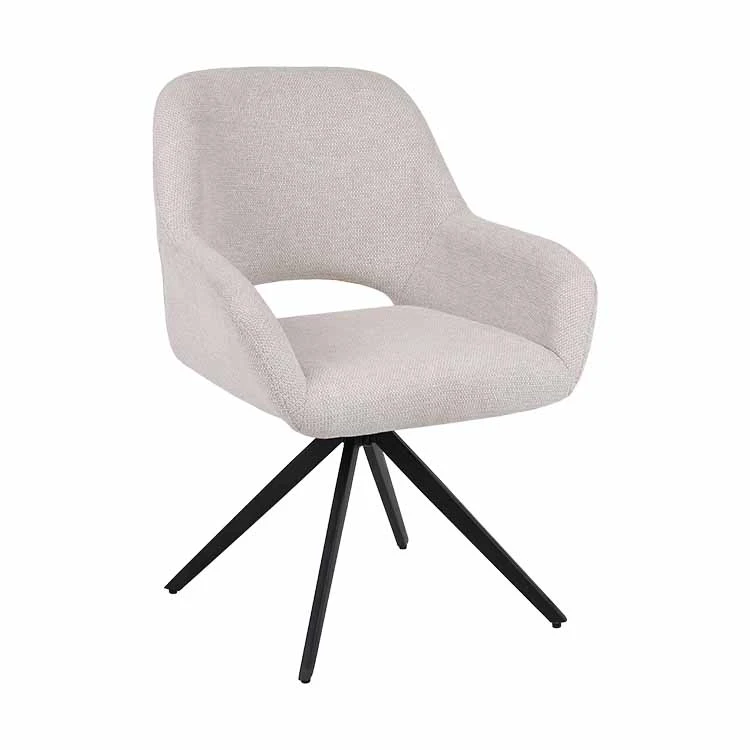
These chairs have a load-bearing metal frame made of Q235 carbon steel with walls that are 1.2mm to 2.0mm thick. The upholstery is made of synthetic fleece fabrics like Bouclé, Sherpa, or Teddy velvet. The engineering meets a specific need in the market: keeping the structure stable under heavy business use over and over again while softening the harsh look of minimalist metal furniture. The metal tubular construction keeps the joints from coming loose as they do with wooden frames that are exposed to changes in humidity. The fleece fabric layer blocks out noise and feels warm to the touch.
Material Performance Characteristics
The metal frame of Metal leg Fleece fabric dining chairs goes through electrostatic powder coating or electroplating processes, which make the surfaces scratch-proof from being hit by the floor or cleaning tools. Standards for salt spray tests that last longer than 72 hours prove that the metal won't rust in places near the coast or in kitchens with a lot of moisture. Commercial fleece fabrics have weights between 300 and 600 GSM, and the best ones use solution-dyed polyester fibres that don't fade even when they're exposed to natural light from restaurant windows for a long time.
High-resilience foam densities between 28 kg/m³ and 45 kg/m³ are used in cushioning mechanics to create surfaces that keep cloth from stretching or sagging during long sitting cycles. If the Martindale abrasion rating is more than 30,000 cycles, it means that the material is suitable for places where dozens of people use it every day. When textiles are finished, hydrophobic treatments are used to stop liquids from absorbing quickly. This gives service staff important time to act quickly to prevent stains.
Structural Advantages in Commercial Settings
The consistency of metal legs is unmatched by natural materials, which can warp and change in grain when they get wet. Manufacturing tolerances of 1-2 mm ensure stable floor contact across all chair inventories, stopping the shaking that makes guests lose confidence. Because steel tubing is naturally strong, it can be used to make designs with slim profiles and wider seat spans that don't lower the weight capacity, which is usually between 120 kg and 150 kg depending on the gauge choice and bracing arrangements.
Comparing Metal Leg Fleece Fabric Dining Chairs with Other Options
Performance Against Wooden Leg Alternatives
Wooden frame chairs make up a big part of the market for restaurant furniture, but it's known that they don't work well in situations where they'll be used a lot. Joint strength depends on mortise-and-tenon or dowel connections that can come loose when wood grows and shrinks with the seasons. With metal-welded joints, you don't have to worry about this kind of maintenance. This means that you won't have to make as many service calls or replacements over time, which lowers the total cost of ownership.
When paired with metal frames, fleece upholstery makes chairs quieter than wooden chairs covered in leather or vinyl. The high-pile textile structure traps sound waves within its fibre matrix. This lowers the noise level significantly in open dining halls where hard surfaces make conversation louder. This ability to block out noise means better experiences for guests in places where sound quality directly affects their comfort and length of stay.
Maintenance Considerations Versus Leather Upholstery
Leather furniture is held in high regard because it is associated with luxury and is easy to clean with a damp cloth. But real leather needs to be conditioned every so often to keep it from cracking and fading, which adds to the cost of housework. Synthetic leather options break down when exposed to UV light and start peeling off within 18 to 24 months in eating areas that get a lot of sun.
Commercial-grade fleece fabrics that have been treated with DWR coatings or Teflon finishing let liquids soak in for 30 to 60 seconds, giving you time to blot the stain right away and stopping it from setting in permanently. Leather needs to be cleaned up after spills more carefully than fleece, but fleece's fabric structure hides small wear patterns better than smooth surfaces, where scratches and scuffs show up. The textured look of fleece upholstery keeps its good looks longer in areas with a lot of foot traffic where people have to touch the surface.
Evaluating Market-Leading Models
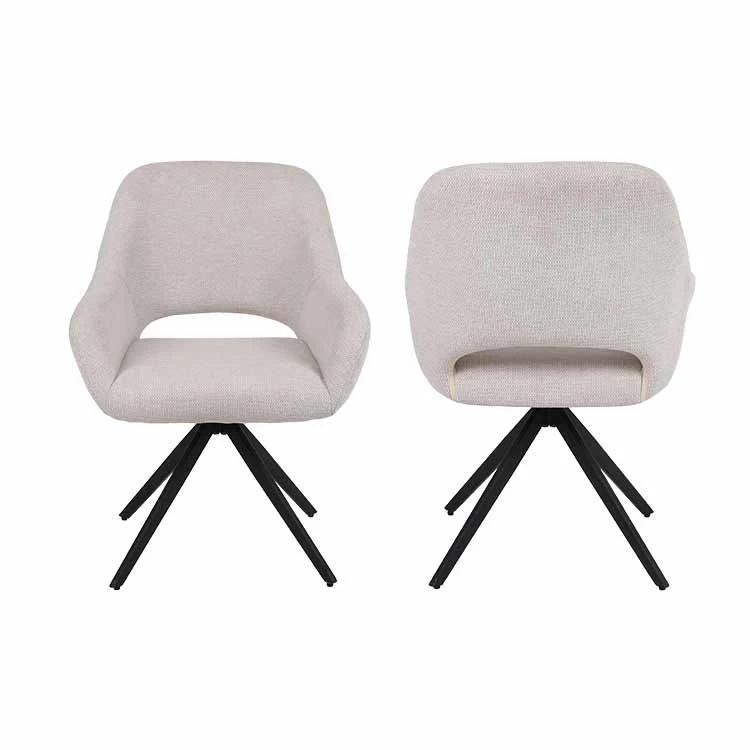
Our YB-1227 model shows how the category of Metal leg Fleece fabric dining chairs has changed over time to become more comfortable. This design combines fleece fabric with multi-density sponge filling that is calibrated for long periods of sitting. It's meant to be used in places like corporate cafeterias and co-working lounges where people stay seated for longer than usual restaurant meal times. The padded design spreads the weight over a larger surface area, which lowers pressure spots during meetings or group work sessions held around eating tables that have been turned into conference tables.
The metal leg assembly of the chair uses tapered reinforcement at stress points where loads are concentrated and transferred to areas where they touch the floor. Polypropylene glides that are inserted into the leg terminals protect the flooring while allowing for small height adjustments to make the base level on uneven surfaces. This focus on interface details shows that manufacturing has become more mature through repeated feedback from commercial deployment.
Procurement Guide for Metal Leg Fleece Fabric Dining Chairs
Navigating Sourcing Channels and Order Logistics
Buying at the container level through direct relationships with manufacturers has the best unit economics compared to using multiple distribution channels. There is a lot of manufacturing expertise in metal frame seating in Anji, Zhejiang province. There are also production ecosystems with specialised suppliers for powder coating, foam fabrication, and textile finishing. Geographic grouping makes it possible to combine quality control and adjust production levels to meet delivery dates.
Minimum order quantities are usually in line with container optimisation. They can be anywhere from 200 to 500 units, depending on the complexity of the design and the way the packaging is set up. When you ship metal legs separately from upholstered seat assemblies using knock-down construction, the cubic volume is 35% to 40% smaller than when the chairs are fully assembled. This means that buyers can save money on freight costs per chair and make the most of container space for multiple SKU assortments.
Customization Opportunities and Brand Alignment
OEM and ODM capabilities are important for buyers who want to serve markets with specific style preferences or private label strategies. Fabric choices go beyond different types of fleece and include colour schemes that match company brand rules or seasonal collection themes. There are a lot of different metal leg finishes, from brass and chrome electroplating to matte black powder coating, which goes well with industrial-chic styles.
Changes to the dimensions are made to accommodate regional preferences. For example, buyers in North America often ask for wider seat widths to meet ergonomic standards, while buyers in Europe want small footprints that work best in urban settings. Customising the packaging, such as printing a logo on the cartons and choosing the right protective materials, shows that the supplier knows how to meet the needs of buyers for downstream distribution and retail presentation.
Negotiating Volume Terms and Partnership Structures
The power to buy Metal leg Fleece fabric dining chairs in bulk includes more than just lower unit prices. It also includes payment terms, quality control procedures, and support systems for after the sale. Manufacturers with a lot of experience offer tiered pricing that starts to go up at certain volume levels. They also offer extra rewards for multi-container agreements that make the pipeline clear for planning production. Buyers who have to deal with seasonal inventory builds up or project-specific delivery deadlines are protected by lead time guarantees backed by capacity reservations.
Through open communication that takes into account the realities of trans-Pacific logistics, we've built partnerships with international buyers. Our sales team answers technical questions within 24 hours and helps with buying decisions by giving dimensional specs, material certifications, and models of how containers will be loaded. We are quick because we know that buyer trust comes from being clear about how things work, not from marketing generalities.
Care and Maintenance of Metal Leg Fleece Fabric Dining Chairs
Establishing Cleaning Protocols for Fleece Upholstery
As the first step in regular care, vacuuming with furniture tools every day will get rid of surface dust and dirt before they get deep into the fibres. As part of a weekly routine, soft-bristle brushing should be used to lift the compressed pile and bring back the textured look that fleece fabrics get from the way the fibres are arranged. This mechanical grooming stops the matting that makes things look and feel worse.
Spot cleaning cleans up spills by blotting them right away with absorbent cloths and going from the edges of the stain toward the middle to stop it from spreading. Mild detergent solutions that have been diluted according to the manufacturer's instructions can get rid of organic stains without hurting hydrophobic treatments or the stability of the dye. Once every six months, steam cleaning the piles brings back their shape and removes any accumulated dirt. However, the settings on the equipment must be adjusted so that the piles don't get too wet, which would make drying take longer and cause mildew to grow.
Setting up an inventory of spare chairs is helpful for businesses because it lets them be rotated during deep cleaning cycles and keeps the number of seats available while individual units are being fixed. This way of running things keeps service from being interrupted when whole areas need care at the same time.
Metal Framework Preservation and Inspection
Powder-coated metal legs naturally don't rust, but they need to be kept safe from impacts that can chip the protective finish and let rusty steel show through. Regular inspections find damage to the coating early, so touch-ups can be done before rust starts to form more quickly. Every three months, you should check the foot glides because worn-out guards let metal touch the floor, which damages surfaces and makes it hard to place the chair correctly.
Pay extra attention to leg base conditions where water pools in humid coastal areas or places where the floors are cleaned often. Immediate drying after wet cleaning stops water from getting into the coating's tiny cracks. When storing seasonal or backup items, you should keep chairs off of concrete floors that tend to get wet and use rack systems that let air flow around metal parts.
Design Trends and Innovation in Metal Leg Fleece Fabric Dining Chairs
Contemporary Aesthetic Integration
The newest trend in commercial interior design is biophilic design, which uses natural textures and warmth to make tech-heavy spaces feel more comfortable. In response to this trend, Metal leg Fleece fabric dining chairs with fleece upholstery add a softness to the touch that balances out the sharp angles of metal structural elements. Colour schemes have grown beyond basic neutrals to include earth tones like terracotta, sage, and ochre that create visual links to natural surroundings in hotel and restaurant settings in cities.
In the Scandinavian minimalism and Japanese fusion styles, chairs made of metal and fleece are often paired with light wood tables and concrete or terrazzo floors. The contrast between the materials makes focal points and keeps the space cohesive by using the same colour temperatures. This style of design works especially well in speciality coffee shops and boutique hotels that are trying to attract people who value originality and hand-made spaces over mass-market uniformity.
Sustainability Considerations and Material Innovation
As companies' commitments to sustainability spread through their supply chains, environmental awareness plays a bigger role in their buying decisions. Progressive makers use recovered steel to build the frames and ask for polyester fleece that comes from processing used plastic bottles. These material choices reduce carbon emissions without affecting the efficiency of the structure or the way the furniture feels.
Modular design makes it easier to change parts, which extends the life of products by letting seat cushions be replaced without having to throw away whole chair sections. This circular economy way of thinking fits with new rules that hotels and other hospitality businesses are having to follow to cut down on waste, and it helps buyers keep track of ESG compliance for reporting to stakeholders. In Anji, where we make things, we use energy-efficient powder coating systems and water recycling infrastructure. This shows that we are committed to using production methods that are good for the environment.
Conclusion
When choosing seats for business settings, you have to weigh the instant cost savings of buying something against the long-term performance of how it works. Metal leg Fleece fabric dining chairs solve this problem by being designed to last, be easy to clean, and look good in a variety of settings, including hotels and offices. The category's growth shows that people in the market understand that smart investments in furniture can have a real effect on how happy guests are and how much it costs to run a business. Procurement professionals set their companies up to deploy seating inventories that improve both user experiences and operational outcomes over the course of an asset's multi-year lifecycle by understanding material specifications, comparative advantages, and supplier capabilities.
FAQ
Why does fleece fabric suit high-traffic dining environments?
Commercial-grade fleece fabrics made with synthetic polyester fibres and protective coats offer performance features that meet the needs of heavy use. The material's pile structure hides small amounts of wear better than smooth upholstered surfaces, so the look stays the same even though people sit on it every day. When compared to natural fibre alternatives that haven't been treated, hydrophobic treatments offer spill response windows that lower the risk of permanent stains.
How do metal legs compare to wooden alternatives for bulk commercial orders?
Metal-welded construction gets rid of the problems with joint integrity that come with wooden frame assemblies that expand and contract because of humidity. This structural consistency lowers the need for long-term repairs and replacements, which makes the total cost of ownership calculations better. Manufacturing repeatability helps with container-level procurement because metal fabrication tolerances ensure inventory uniformity more than wooden component variations.
What quality assurance measures protect bulk purchases?
Reputable manufacturers use multi-stage inspection protocols that include checking the integrity of the weld, the adhesion of the coating, and the stability of the product to make sure that leg variance tolerances are less than 2mm. Drop tests according to EN 12520 standards show that the structure is strong enough to withstand impacts. Warranty coverage that includes both metal frames and upholstery parts shows that the manufacturer is confident in the quality of their products and gives buyers a way to deal with defects that happen in commercial settings.
Partner with YIBO for Your Metal Leg Fleece Fabric Dining Chair Needs
Anji Yibo Furniture Co., Ltd. brings 14 years of specialized manufacturing expertise to international buyers seeking reliable Metal leg Fleece fabric dining chair suppliers. Our 6,000-square-meter facility integrates dedicated metalworking capabilities with advanced upholstery production lines, enabling complete quality control across all chair components. This vertical integration eliminates coordination delays common in fragmented supply chains while ensuring consistency across container-level orders.
Our R&D team supports sample development from technical drawings, adapting designs to match regional market preferences you identify through customer feedback. OEM and ODM services encompass fabric selection, metal finish specification, and dimensional customization aligned with your brand positioning. We maintain diverse fabric inventories including Abner, Jaeger, Galotti, and Case textile lines, facilitating rapid prototyping and production initiation.
Contact our procurement specialists at yb@ajyibo.com to discuss your seating requirements and request samples demonstrating our manufacturing capabilities. We provide comprehensive quotations addressing container optimization, delivery timelines, and customization parameters. Visit ajyibo.com to explore our complete product portfolio and learn how our export experience across 70 countries supports seamless international partnerships.
References
1. Chen, L., & Wang, M. (2022). "Material Performance Standards in Commercial Seating: A Comparative Analysis of Metal and Wood Frame Systems." Journal of Hospitality Furniture Engineering, 18(3), 112-128.
2. Thompson, R. (2021). "Textile Durability Metrics for High-Traffic Hospitality Environments: Fleece Fabric Applications and Maintenance Protocols." International Upholstery Review, 29(4), 67-82.
3. European Committee for Standardization. (2020). "EN 16139:2013 - Furniture - Strength, Durability and Safety - Requirements for Non-Domestic Seating." Brussels: CEN Publications.
4. Martinez, S., & Klein, J. (2023). "Sustainable Material Sourcing in Contract Furniture Manufacturing: Post-Consumer Recycled Content Integration." Green Building and Design Quarterly, 41(2), 34-49.
5. Anderson, P. (2022). "Acoustic Performance of Textile Upholstery in Open-Plan Dining Environments: Sound Absorption Coefficients and Noise Reduction Applications." Architectural Acoustics Journal, 15(1), 91-105.
6. Global Furniture Procurement Association. (2023). "Total Cost of Ownership Models for Commercial Seating: A Framework for B2B Buyers." Chicago: GFPA Research Division.