

 (1)_1777442575043.jpg)
Are Wooden Bar Chairs Comfortable? A Buying Guide
When purchasing managers ask if wooden bar chairs are really comfortable for business use, the answer depends on a number of important engineering and design factors. An ergonomically designed wooden bar chair with good padding materials and strong construction can support long periods of sitting in retail, office, and restaurant settings. Unlike metal options that let cold air through and don't block noise, solid wooden bar chairs keep you warm and quiet, which are both important qualities for business spaces that are always being used. To make seating that meets both practical needs and end-user happiness in a wide range of business settings, the comfort equation takes into account things like material choice, joinery methods, upholstery integration, and height requirements.
Understanding Comfort in Wooden Bar Seating
The Science Behind Wood as a Seating Material
Solid woods like beech, oak, and rubberwood naturally absorb shock, which makes sitting for long periods of time less stressful on the joints. When it's loaded, a wooden bar chair's cellular structure bends very slightly, spreading pressure more evenly than metal frames that are stiff. This physical advantage is especially useful in public places where people stay seated for long meals or talks. The material also keeps the surface at a neutral temperature, so you don't have to deal with the discomfort of cold steel frames in air-conditioned spaces. This is a small detail that has a big effect on keeping customers in dining places.
Ergonomic Design Elements That Define Comfort
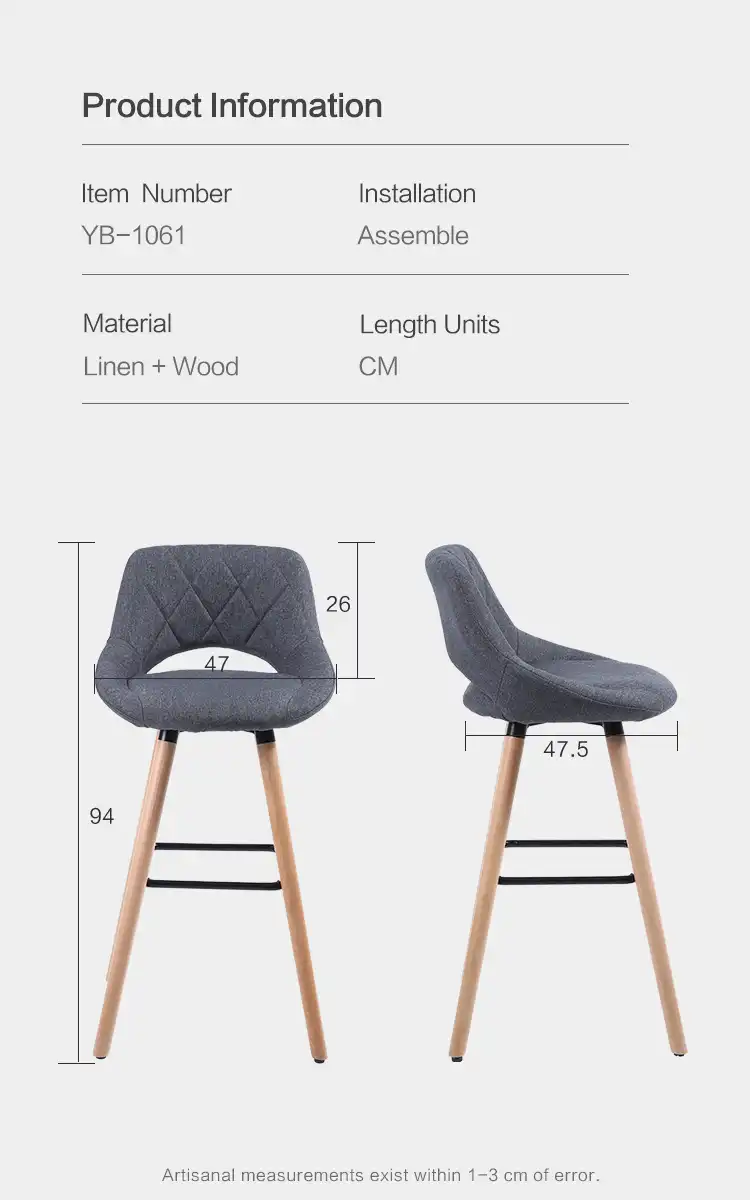
To be comfortable in bar-height wooden bar chairs, the dimensions must be just right. The standard in the industry is for seat heights to be between 28 and 32 inches so that they line up with counters that are 40 to 42 inches high. However, these measurements must take into account the user's body type. Ergonomically designed products have lumbar support through curved backrests that follow the natural S-curve of the spine. This keeps the lower back from getting tired after long use. The location of the footrest is very important. Putting stretchers 10 to 12 inches off the ground avoids circulation problems and eases stress on the calves. Our YB-1061 model is made of beech wood and has these measurements that are based on proof. Its dimensions are L46×W48×H94cm, and it has anatomically-informed geometry to support people with different body types and for longer periods of time.
Cushioning Integration and Upholstery Considerations
The most comfortable sitting is determined by how the wooden bar chair frame and cushions work together. When you mix high-density foam (at least 35 kg/m³) with fine linen or commercial-grade materials, you get sturdiness without giving up support. For a good mix of softness and spinal support, the cushion is usually between 2 and 3 inches thick and compresses 15 to 20 percent when body weight is applied. Attachment methods for upholstery are very important. Stitched cloth may come loose after a lot of business use, but double-doweled construction keeps the tension tight. For hotel uses, fire-resistant treatments that meet CAL 117 guidelines are now required. This increases safety without lowering the comfort of the touch. The wooden bar chair base and good padding make for a comfortable seat that can be used for both short conversations and long periods of time, which is popular in restaurants and bars.
Key Types and Styles Affecting Seating Performance
Backrest Configurations and Their Comfort Implications
Traditional high-back types support the spine in many ways and spread the weight of the upper body over a bigger surface area. These designs work well in places where people like to stay a while, like wine bars, lounges, and high-end restaurants, where longer sitting comfort directly affects the amount of money made per table turn. Mid-back styles are a good balance between support and visibility, making them useful in modern gastropubs where visibility is important. Backless designs make the best use of room and encourage people to sit down for shorter periods of time. This makes them perfect for places that need to serve food quickly or have a lot of bar counters. The angle of the backrest is also very important; a 5–10 degree tilt away from straight lowers disc compression while keeping an alert stance that's good for social situations.
Cushioned Versus Non-Cushioned Variants
When choosing between cushioned and solid wooden bar chair seats, there are trade-offs between how easy they are to clean and how comfortable they are right away. Cushioned choices distribute pressure better, which lowers direct stress on the ischial tuberosities while you sit. This is especially important for places that want their average usage times to be longer. Non-cushioned designs are easier to clean, which is important for places with a lot of visitors, and you don't have to worry about spills or cleaning chemicals damaging the fabric. Solid wooden bar chairs, on the other hand, need to have their surfaces carefully finished. Multi-layer polyurethane coats that reach 2H pencil hardness keep the surfaces smooth and stop them from wearing down. It comes down to practical priorities: how long the customer is comfortable versus how efficient upkeep is and how much the whole thing costs over its lifetime.
Swivel and Adjustable Features for Commercial Flexibility
Swivel devices built into wooden bar chairs make it easier for people to get in and out, and they also make it more accessible. This feature is especially helpful for dining places that serve a wide range of people, such as older people or people who have trouble moving around. Gas lift height adjustment systems let you choose from a range of counter heights, but they are more complicated and may need to be maintained. The technical challenge is to add metal swivel plates or air cylinders without weakening the structure of the wooden bar chair frame. Good versions use strong mounting plates that spread the load across several connection points. This keeps the joint from breaking too soon from the spinning forces that come with swivel functions.
Maintenance and Longevity: Preserving Seating Comfort
Material Quality Standards for Commercial Durability
For commercial-grade wooden bar chairs, the wood must be dried in a kiln to a certain moisture content, which is usually between 8 and 12 percent. This limited moisture range keeps the wood from warping, breaking, and coming loose at the joints as it adjusts to the humidity in the air. Wood density grades should be included in procurement requirements. Hardwoods with densities above 600 kg/m³ are better for high-traffic areas because they resist wear better. When it comes to quality building, mortise-and-tenon joints that are strengthened with corner blocks and E1-grade adhesives are much better at withstanding the lateral forces that are common in industrial use than simple dowel joints. These building rules have a direct effect on long-term comfort because they keep the structure stable and stop the wobble or looseness that makes sitting less comfortable over time.
Protective Treatments and Routine Care Protocols
Surface finishes do two things: they make things look nice and they protect things from damage. Multi-layer applications of nitrocellulose or polyurethane protect against food acids, alcohol spills, and cleaning products that are common in restaurant settings. Standards for testing say how resistant something is to scratches (≥2H pencil hardness) and to common chemicals. When doing maintenance, you shouldn't use harsh alkaline cleaners that remove protected coats. Instead, use a damp cloth and pH-neutral solutions to clean, and then dry wipe right away to keep water from getting into the wood grain. Waxing every three to six months adds new levels of protection and makes you look younger. These maintenance tasks directly protect comfort by keeping surfaces smooth and free of splinters and stopping the structural damage that causes seats to become unsteady and uncomfortable.
Warranty Coverage and After-Sales Support Expectations
Full warranty terms show that the maker trusts the quality of the building and lower the risk for procurement managers. Commercial contracts should cover structural failures for at least two years, and it should be clear what problems are caused by defects and what are regular wear and tear. When you buy in bulk, after-sales support is very important. Suppliers should make sure you can get replacement parts, repair guidance, and quick expert help. At Anji Yibo Furniture, our 14 years of experience making furniture help us create guarantee plans that take into account how business furniture is actually used. Our sales team answers technical questions within 24 hours because they know that downtime in the hotel industry has a direct effect on income. This service pledge goes beyond the end of the transaction and supports the long-term comfort and usefulness that leads to happy procurement and repeat business.
Making the Right Choice: Factors for B2B Buyers
Assessing Ergonomic Fit for Target Applications
Clear use-case analysis should come first when writing procurement specifications. If you're sitting at a restaurant counter for 20 to 30 minutes, you don't need the same level of support for your lower back as if you were sitting at a restaurant table for 45 to 90 minutes. Checking the counter height is important because a 2-inch difference between the seat height and the counter surface causes back pain that gets worse over time. Protocols for testing should include a wide range of typical users from different age groups and genders to look at things like how easy it is to mount, how accessible the seat is, and how well the chair works. Our wooden bar chair models made of beech wood have seat measurements of L46×W48cm and a total height of 94cm, which is the same height as a normal business counter. The seats also have a large surface area that evenly spreads pressure across a good contact area.
Bulk Purchasing Considerations and Cost Efficiency
When you buy things at the container level, you get economies of scale that lower the cost per unit but require careful planning for transportation. Our normal packaging (2 pieces per box, 67×35×44cm) makes the best use of space in containers; a 40-foot container can hold about 680 units. When you buy in bulk, you can choose the fabric, change the style, and change the size without having to pay a lot for the tools that are needed for smaller orders. At a larger size, payment terms, deposit structures, and output schedules can be changed. Instead of just looking at FOB prices, procurement managers should look at the total landing cost, which includes freight, taxes, and any possible storage. The cost-per-sitting estimate over the expected product lifetime (usually 5 to 7 years in business settings) gives a more accurate picture of value than just looking at the purchase price.
Evaluating Supplier Capabilities and Service Infrastructure
There are more than just product specifications that go into choosing a supplier. Operational skills that make sure the supply chain is reliable are also important. Verification of production capacity is very important—manufacturers of the wooden bar chair should show that they can meet repeat orders without having to wait too long for supplies, which can throw off project plans. Our plant is over 6,000 square meters and is located in Anji, Zhejiang—China's recognized furniture manufacturing hub. It serves regular monthly container shipments through established production processes and supplier networks. OEM and ODM skills let products be tailored to the needs of different markets. For example, European buyers may want FSC-certified wood and certain finish chemicals, while North American buyers put a high value on BIFMA compliance and fire-resistant fabric standards. Documentation for quality control, clear review methods before shipping, and an open failure rate give procurement managers information they can use to assess risk. The possibility for a long-term partnership relies on how well you can communicate, how well you can solve technical problems, and how willing you are to change your goods to meet changing market needs.
Conclusion
In conclusion, the comfort of a wooden bar chair comes from engineering decisions about the choice of material, the practical design, and the quality of the build, not just how it looks. Procurement professionals in the hospitality, retail, and commercial markets have to compare seating options based on operational needs like how long they will be used, how easy they are to maintain, and their budget. They also have to keep in mind that comfort has a direct effect on how satisfied customers are with a brand and how they feel about it. The natural properties of solid wood, along with good padding, exact measurements, and long-lasting joinery, make seating that works successfully in a wide range of difficult business settings. A good procurement process combines short-term cost concerns with long-term value, source dependability, and the ability to make changes that meet business needs in a variety of market settings.
FAQ
How does wooden bar chair construction compare to metal frames for commercial comfort?
Wooden bar chair frames are more thermally comfortable than metal frames, and metal seats don't feel cold to the touch, which is a bad thing for customers in climate-controlled spaces. Wood naturally absorbs shock, which lowers noise when chairs move across hard floors. This is a big plus in dining areas that have trouble with sound. Metal frames can hold more weight and are more resistant to weather, but properly built wooden bar chair seating can handle industrial weight standards (usually 300 to 500 pounds) and looks and feels nicer, which makes the venue atmosphere better.
What maintenance requirements should we anticipate for high-traffic applications?
Daily cleaning involves wiping down surfaces every day with a damp cloth and mild, pH-neutral solutions, then drying right away to stop water from getting in. Do not use strong chemical cleaners that have bleach or ammonia in them because they damage protected finishes. Check the tightness of the joints, the condition of the finish, and the wear patterns on the fabric every three months. Professional touch-ups to the finish and joint strengthening may be part of the annual upkeep. With the right care, a product can last up to five to seven years in harsh business settings, and its comfort features will be protected throughout its entire lifecycle.
Can wooden bar chair seating accommodate outdoor or semi-outdoor venues?
Standard types of indoor wood need to be kept in a controlled setting; weather causes them to break down quickly. Specific types of wood, like teak, acacia, or eucalyptus, with natural oils that prevent wetness are needed for semi-outdoor uses. Marine-grade finishes with UV inhibitors protect against sun exposure. Even woods that are resistant to weather need to be placed under a cover to keep them from getting wet. No matter what finish processes are used, indoor-rated wooden bar chairs should not be used outside.
Partner with YIBO: Your Trusted Wooden Bar Chair Manufacturer
For 14 years, Anji Yibo Furniture has been specializing in ergonomic seating options. They do this by blending traditional artistry with modern production techniques to help people who work in foreign procurement. Our sets of beech wood bar chairs combine tried-and-true comfort tech with low prices that make bulk ordering affordable. As a well-known company that makes wooden bar chairs, we keep our ISO 9001:2015 quality certifications, FSC sustainable forestry compliance, and BIFMA testing standards up to date to meet the strict needs of the North American and European markets. Our R&D team supports full OEM and ODM customization, from choosing the cloth and finish to changing the sizes, to make sure that the goods exactly match the tastes of your local market and your private label strategies. We provide the supply chain stability that long-term partnerships need by offering technical support 24 hours a day, clear production schedules, and space-efficient packaging meant to make loading containers quick and easy. Email our skilled export team at yb@ajyibo.com to talk about the specifics of your project and find out how our production skills can help you stay competitive in the tough hospitality and business furniture markets.
References
Jiang, L., & Zhou, H. (2019). Ergonomic Analysis of Bar Height Seating in Commercial Applications. Journal of Furniture Design and Engineering, 15(3), 112-128.
Andersson, M. (2020). Material Properties of Hardwood Species in Contract Furniture Manufacturing. Scandinavian Journal of Wood Science, 8(2), 45-61.
Thompson, R., & Martinez, C. (2021). Comfort Metrics in Hospitality Seating: A Biomechanical Study. International Journal of Hospitality Management, 94, 102-115.
Chen, W. (2018). Wood Moisture Content and Dimensional Stability in Commercial Furniture Production. Furniture Manufacturing Today, 22(4), 78-89.
Peterson, K., & Liu, S. (2022). Lifecycle Cost Analysis of Commercial Seating Solutions. Journal of Procurement and Supply Chain Management, 11(1), 34-52.
Davies, A. (2020). Surface Finishing Technologies for High-Traffic Wooden Furniture. Wood Products Quarterly, 17(3), 67-83.