

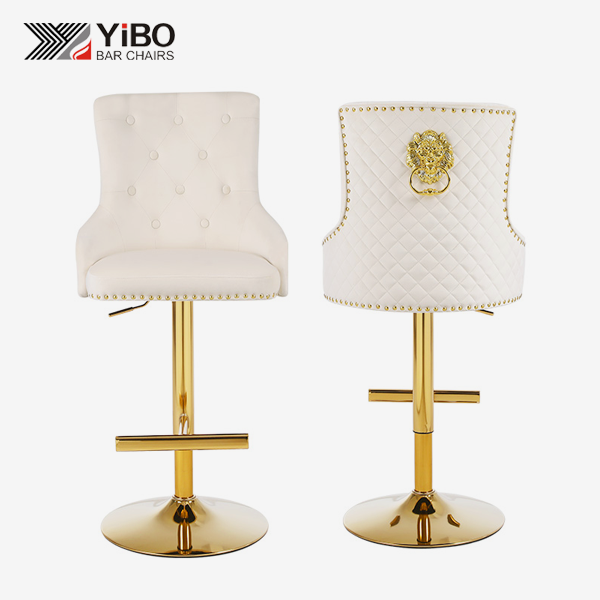
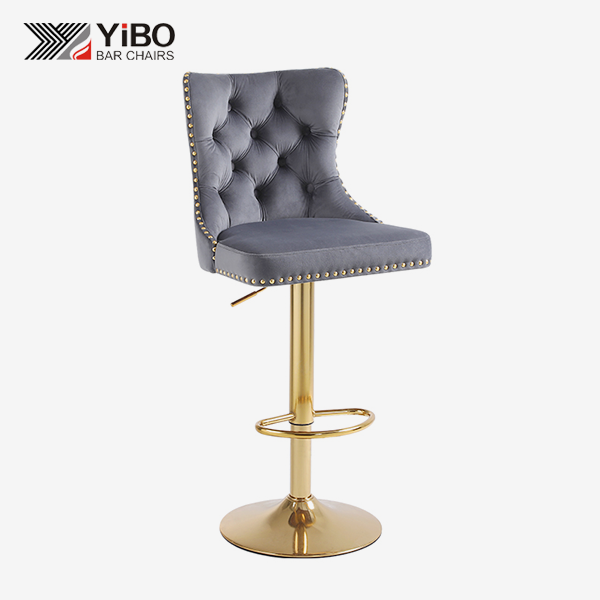
 (1)_1777442575043.jpg)
Real vs. Faux Leather Bar Stools: Which Is Worth It in 2026?
When buying leather kitchen bar stools for a business, real or synthetic leather affects long-term value. Fake leather, especially high-grade polyurethane with superior durability ratings, performs better cost-per-year in busy restaurants in 2026. For luxury goods, real top-grain leather is preferred since its natural hue builds brand awareness. Work volume, maintenance, and market perception of the product determine the decision, not merely the material order.
Understanding Real and Faux Leather Bar Stools
The composition of a material affects its performance, maintenance, and environmental effect. Natural leather originates from animal hides that have been tanned to stabilize protein structures and allow it to breathe. Full-grain leather retains the entire hide, which has natural pattern variances and a proven tensile strength of over 2000 Newtons. Top-grain variants are gently rubbed to remove defects without affecting durability. Mixing leather with polyurethane binders creates bonded leather. It's cheaper than solid hide constructing but less durable.
Synthetic Upholstery Technologies
For business seats, polyurethane formulations dominate engineered leather. The polymer coating of PU leather is glued to fabric. This makes leather uniform, unlike natural materials. Advanced manufacturing uses micropores that permit moisture vapor but not liquid. PVC has great abrasion strength, with Martindale ratings frequently reaching 100,000 cycles. However, early PVC was stiff in cold temperatures. Modern PVC blends use new plasticizers to keep the material flexible in climate-controlled commercial rooms.
Durability and Maintenance Considerations
Real leather resists tearing and changes color as its natural oils are redistributed. This worn-in style is ideal for throwback or legacy brands, but it may seem ancient in a modern, minimalist environment. Cleaning requires pH-neutral chemicals and conditioning to prevent drying and cracking. Because its top layer blocks food and drink marks, good faux leathers have few marks. This enables you clean them forcefully with diluted bleach that would damage real leather. However, PU surfaces delaminate after 3–7 years, depending on usage and UV light exposure. However, well-maintained top-grain leather may endure decades in commerce.
Environmental and Ethical Dimensions
Companies' green commitments are increasingly affecting material selection. Groups trying to lessen their carbon footprint struggle with animal farming's greenhouse gas emissions and land requirements. Chromium tanning is more environmentally hazardous than plant-based tanning. Synthetic material doesn't require animal care, while petroleum-based polymers must. New bio-based PU formulations using plant oils may be viable alternatives. Procurement managers must balance their company's ESG aims and stakeholder interests when choosing material standards for large purchases.
Key Differences That Affect Procurement Decisions
Commercial viability studies for leather bar stools relate performance factors to corporate budgets and plan replacement cycles. Amortised cost, which represents the true economic worth beyond the initial purchase price, is calculated using lifespan projections.
Lifespan Analysis and Replacement Cycles
Genuine top-grain upholstery can last 8–15 years with light business use if maintained out of direct sunlight and cared for according to the manufacturer's directions. Full-grain options expand this spectrum for high-end needs. In contrast, standard PU materials may be used for three to five years before the surface breaks down and needs to be replaced. This difference is crucial when calculating furniture depreciation and regular beverage costs. Large buyers must apply these dates to all sitting inventory to properly estimate long-term capital needs and keep operations operating smoothly even if furniture fails early.
Maintenance Protocol and Labor Costs
Daily cleaning affects realistic work distribution. In high-volume locations, standard disinfectants can swiftly wipe clean synthetic surfaces, reducing unit servicing time. To maintain its form, genuine leather requires specific treatments every 6–12 months, which increases material costs and personnel time. They respond differently to spills. PU may be cleaned immediately by absorbing the moisture, while leather must be blotted and cleaned with specific chemicals to prevent coloration. Synthetic options may make housekeeping easier for small businesses, but they need to be updated more regularly.
Ergonomic Performance and User Experience
The comfort of the chairs influences customer retention and employee satisfaction. When you sit for extended periods, real hide breathes to your body temperature, keeping you cool. Hot areas or places with poor climate control benefit from this temperature control advantage. Modern breathable PU fabrics use hole patterns to mimic this, and they largely succeed. Cushion hardness depends on upholstery. Leather stretched over high-density foam is supportive and perfect for task sitting, whereas cushioned synthetic choices may bottom out when the foam compresses.
Cost-Value Relationships in Bulk Purchasing
The materials available to budget-conscious customers are limited by initial purchases. The unit price of synthetic furniture is generally lower, so you may buy more for less. However, speedier replacement processes for fake materials may increase lifetime expenses due to replacement operations, disposal fees, and recurring purchases. In advanced procurement analysis, total cost of ownership models that include disposal costs, upkeep labor rates, and estimated service life evaluate alternatives equally. Volume discounts and container procurement terms greatly impact these statistics. Either material may be better depending on seller relationships and order numbers.
Market Trends and Brand Insights for 2026
Customer tastes evolve with new production technology, according to industry trends. Big retailers add more commercial-grade products as more individuals work from home. Because consumers desire professional home office furniture.
Leading faux leather retailers have upgraded their range of leather bar stools to address quality issues. Popular mass-market PU formulae now have superior UV stability and abrasion protection. Mid-level vendors are increasingly offering customisation programs that enable consumers pick the upholstery color, stitching pattern, and base finish using structured decision menus. Kiln-dried oak frames and powder-coated steel bottoms with extended corrosion protection distinguish premium producers. Customer happiness data shows that frame stability and swivel mechanism smoothness, not seat material, substantially affect perceived value. Buyers favor structural integrity above appearance when assessing replacement satisfaction.
Sustainability Certifications and Eco-Materials
Environmental product claims used to be specialized differentiators, but today contract furniture buyers utilize them. Certified sustainable leather sources verified by tracking systems meet supply chain transparency requirements. FSC- and Greenguard-certified wood frames and foams reduce VOCs in occupied spaces. Many firms provide offset-based carbon-neutral shipping. These credentials carry more weight in LEED-certified buildings and green buying firms. Procurement managers are now requesting third-party verification documents during specification development instead of trusting environmental marketing promises without proof.
Customization Capabilities and Lead Times
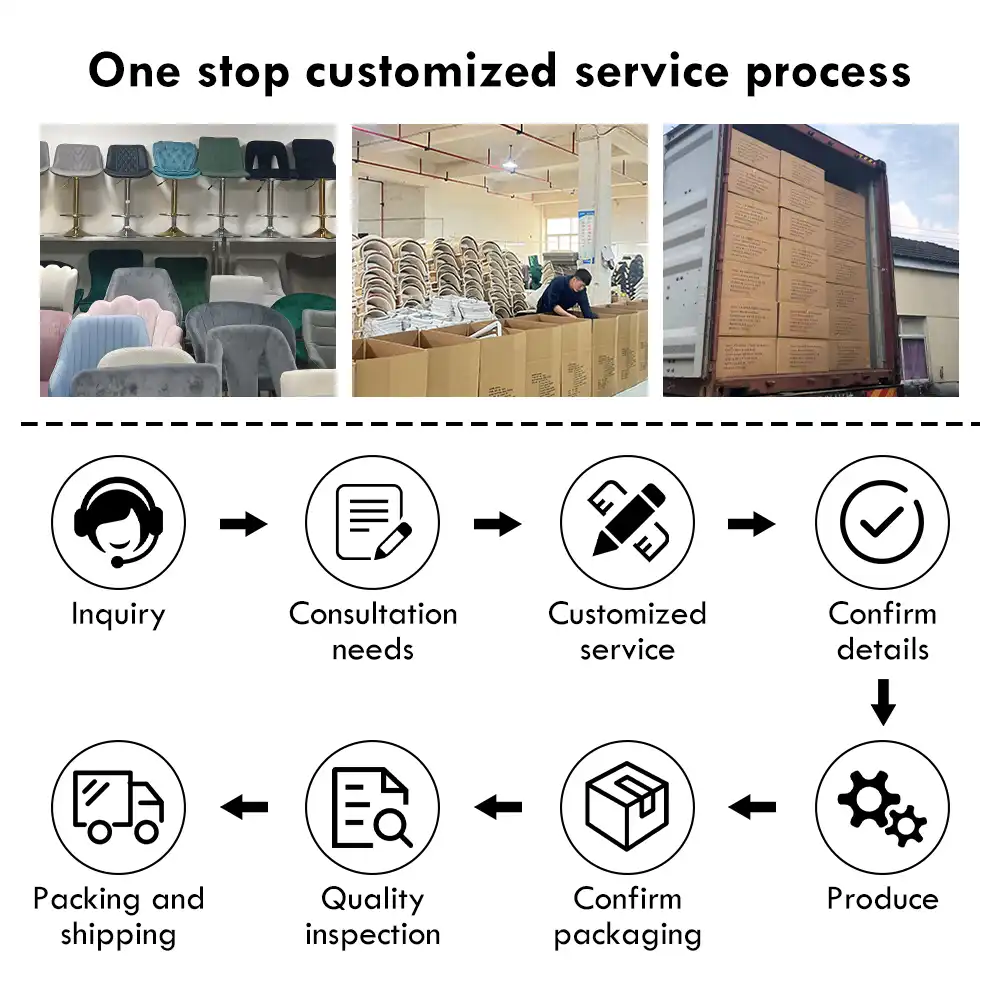
OEM and ODM production flexibility is a key B2B supplier consideration. When a business has textile and metal manufacturing departments, they may modify size, shape, and branding without a significant minimum order number. The seat height may be adjusted to meet non-standard counter heights, the turning mechanism changed, the footrest rings finished, and custom stitching or embossing added for branding. Dependent on specification complexity and plant capacity, production lead times vary greatly. Well-known manufacturers send standard stock products in two to four weeks. Fully tailored layouts might take 10-14 weeks from final approval to container release. Project and product build procurement timescales must account for these issues.
Making the Right Choice: A Procurement Manager's Guide
Strategically selecting furniture materials ensures that requirements fit corporate goals. All purchase choices are made the same with a systematic review procedure.
Defining Requirements by Application Context
Classifying usage strength helps match materials. Commercial-grade PU or full-grain leather with protective coatings is suitable for hotels with high foot traffic and frequent seat changes since it resists wear and tear. High-quality synthetic or top-grain leather can perform well in corporate cafeterias with light daily use. Even though real hide requires more attention, boutique retailers that value appearance may be able to use it. Procurement criteria should specify daily seating hours, user demographics, and cleaning routine restrictions for accurate supplier proposals and realistic performance standards.
Technical Specification Development
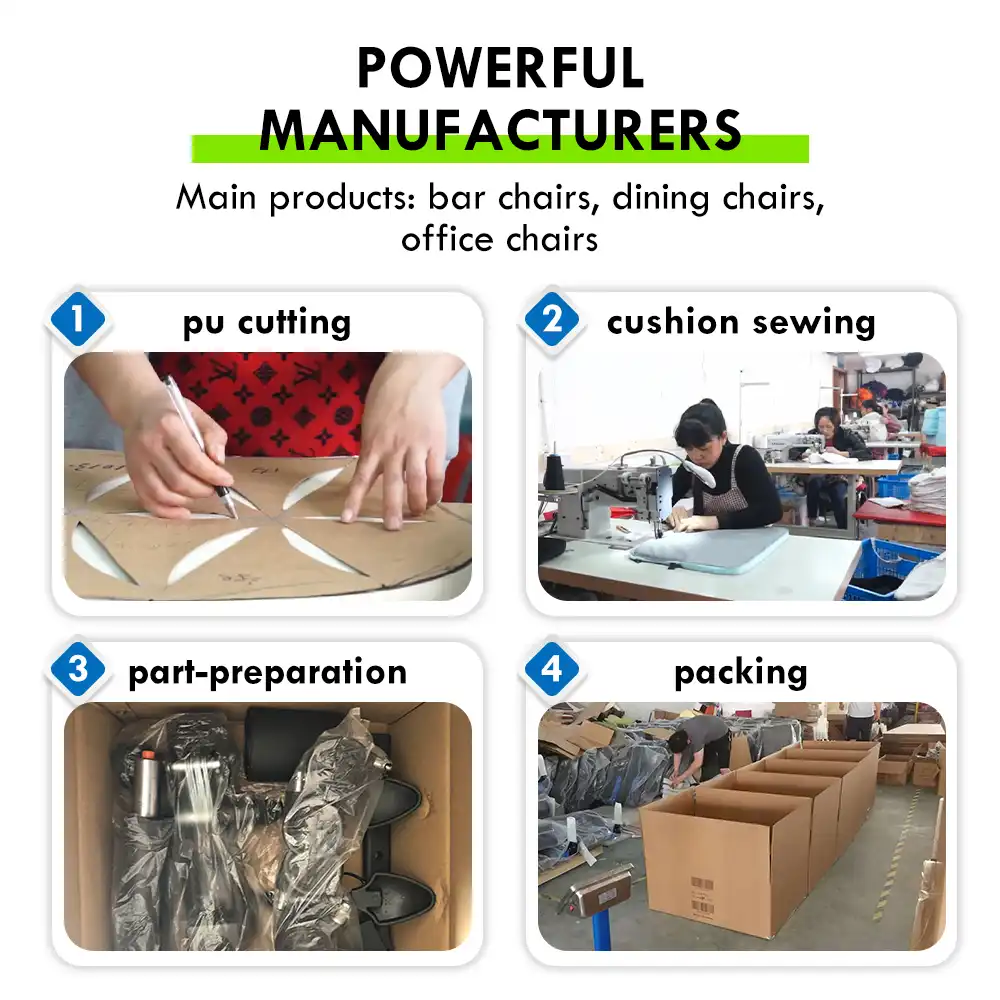
Specific technical requirements prevent misunderstandings and create quality standards. The frame design should specify the material, tubular steel wall width, and joint strengthening methods. Upholstery specifications must include material kinds, thicknesses, stitch densities, and colorfastness. Industrial foam padding should have a density range of 22-35 kg/m³ and a compression set range of 0-100%. Swivel plates and gas lift tanks should have load capacity and cycle testing certifications. Anji Yibo standard construction includes 1.2 cm multi-layer board, 1.8 cm main cotton cushioning at 22 density, 0.8 mm half-PU upholstery, and reinforced iron frame tube with 0.8 mm wall thickness. It may rotate 360 degrees and change covering materials for different projects.
Supplier Evaluation Criteria
Assessing a company's manufacturing capacity extends beyond product listings. Factory audits examine production, quality, and raw material sources. ISO 9001 accreditation demonstrates planned quality management, and BIFMA testing compliance shows North American safety and reliability criteria are satisfied. Shipping expenses depend on how effectively a container is loaded. For big purchases, efficient packaging solutions fit more products into each container, lowering freight costs. Changes in payment terms and credit effect huge project cash flow management. When dealing with field difficulties at multiple installation locations, an after-sales support system that makes replacement parts available and processes guarantee claims swiftly is crucial.
Quality Assurance Implementation
Protocols for inbound inspection safeguard purchasers from specification modifications for leather kitchen bar stools. Before making containers, pre-shipment samples are used to assess finish, measurements, and assembly stability. Independent third-party inspection services ensure production fulfills the standards for high-value sales. Standardized approval criteria should define upholstery tension, stitch uniformity, color matches across manufacturing runs, and moving part functionality. Organizational quality gates during the purchase cycle keep projects on track and reduce post-delivery costs.
Conclusion
The decision between actual and artificial furniture materials depends on how they operate, how much they cost, and the organization's ideals. Genuine leather lasts longest and improves with age. This sometimes justifies the increased cost. Modern synthetic choices work well at low cost and are easy to maintain for high-volume use. Matching material qualities to application demands is key to procurement success, not believing one material is better than another. As manufacturing technology improve, category performance gaps shrink and customisation opportunities increase. This provides purchasers more capabilities to maximize business seat investments.
FAQ
How do I determine the appropriate seat height for my counter or bar?
The normal bar height is 36 inches, thus seat heights should be 24 to 26 inches to allow your legs 10 to 12 inches of comfort. Seat heights must be 28–30 inches for 42-inch bar height tables. Instead of believing your counter is a set size, measure it from floor to bottom. This is especially critical for bespoke installs or remodels with varying dimensions.
What maintenance schedule extends commercial seating lifespan?
To remove built-up residue, synthetic furniture should be cleaned daily with certified disinfectants and extensively cleaned every three months. Real leather has to be dusted weekly, cleaned immediately after a spill, and conditioned every six months using pH-neutral products to avoid drying out. Oil turning plates and gas tanks annually and inspect for wear.
Are adjustable-height models or fixed-height stools preferable for commercial use?
Fixed-height design eliminates gas lift cylinder technical weaknesses, making them more dependable in high-use regions. Hydraulic kinds are ideal for multipurpose regions, but they need maintenance and the seals wear out. Reliable companies choose set heights that match their counter heights.
Partner with YIBO for Your Commercial Seating Solutions
For 14 years, Anji Yibo Furniture Co., Ltd. has made high-quality bar stools and dining chairs for importers, dealers, and project workers in over 70 countries. Our almost 6,000-square-meter plant in Anji, China, the country's furniture heartland, meets worldwide container-level quality requirements by combining traditional craftsmanship with modern manufacturing efficiency. Our expert research and development staff helps with entire OEM and ODM projects, allowing you to tailor materials, sizes, and produce market-specific private label items. Our leather kitchen bar stools vendor provides a variety of upholstery options, ergonomic adjustments, and space-saving packing to make international shipping cheaper. For buying information, technical specifics, or workplace tours, email our export team at yb@ajyibo.com. We provide detailed prices within 24 hours and English-speaking support throughout the purchase process.
References
1. Anderson, M. & Chen, L. (2025). Material Science in Commercial Furniture: A Comparative Analysis of Natural and Synthetic Upholstery Performance. Journal of Applied Ergonomics, 58(3), 412-429.
2. Bergstrom, K. (2024). Sustainable Procurement Practices in the Global Furniture Industry. New York: Industrial Press.
3. Collins, R. & Martinez, S. (2025). Lifecycle Cost Analysis for Contract Furniture: Methods and Case Studies. Facilities Management Quarterly, 41(2), 156-173.
4. Harrison, P. (2024). The Evolution of Polyurethane Technologies in Seating Applications. Materials Engineering Review, 33(7), 89-104.
5. Reynolds, J., Thompson, A., & Wu, H. (2025). Quality Standards and Testing Protocols for Commercial Seating. International Journal of Furniture Technology, 19(4), 267-285.
6. Wallace, D. (2024). Strategic Sourcing in the B2B Furniture Market: Trends and Best Practices. Supply Chain Management Today, 28(9), 34-51.