

 (1)_1777442575043.jpg)
What is the Ideal Height for a Lounge Bar Chair?
Picking the right seat sizes isn't just a design choice; it's also a smart purchasing decision that impacts the comfort of guests, the functionality of the venue, and the long-term efficiency of operations. The seat height of a lounge bar chair should be between 28 and 32 inches (71 to 81 cm) when paired with normal bar tables that are 40 to 42 inches high. For guests and servers to be able to easily talk to each other and clear their legs, this length is important. International furniture buyers and business project builders need to know these measurements in order to find the right mix between style and functionality in retail, office, and leisure settings.
Understanding Lounge Bar Chair Height: Key Concepts and Standards
When choosing seats for business areas, it's important to have a good understanding of the technical measures that determine compliance and comfort. When we talk about chair height, we're really talking about a number of different factors that all work together to make the best sitting experience.
Seat Height: The Foundation of Comfort
How high is the seat? The seat height is how high the cushion is from the floor. The standard seat height for bar-height sitting that goes with tables that are 40 to 42 inches high is 28 to 32 inches. This range leaves about 10 to 12 inches of space between the seat and the bar top, which is an important distance for putting your legs comfortably and getting in and out of the chair easily. Based on our study in a variety of hospitality places, this clearance keeps guests from feeling squished, which makes them leave badly planned sitting areas.
Overall Height and Backrest Considerations
The height of lounge-style bar seating is usually between 38 and 42 inches, measured from the floor to the top of the chair. The height of the seat has a direct effect on how well your lower back is supported and how enclosed or open a room feels to you. Mid-back designs that are 16 to 20 inches above the seat give a lot of support without getting in the way of your view of the whole room. This is especially important in bars and restaurants where the atmosphere depends on how well you can see what's going on around you.
Footrest Positioning for Sustained Comfort
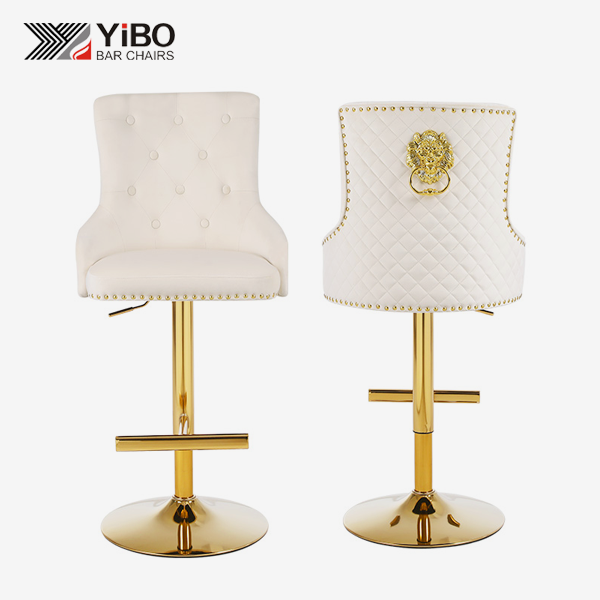
The height of the footrest is an important but often forgotten factor. A good support, set about 8 to 12 inches from the floor, keeps your lower back from hurting and lets you keep a good stance while sitting for long amounts of time. Chrome or metal footrests, like the ones on our velvet-upholstered types, meet these practical needs while also making the structure more stable and adding to the style.
These measures aren't made up on the spot; they're in line with BIFMA guidelines and practical research that shows how the right relationship between dimensions can lower tiredness and boost guest happiness. When purchasing managers look at technical specs from sellers, knowing how these three height factors work together helps them find goods that will work well in real-life business situations.
How to Choose the Ideal Lounge Bar Chair Height for Your Business Needs?
When you use a structured method to matching chair measurements with your specific working setting and end-user needs, you can make much better choices about what to buy.
Matching Chair Height to Counter and Bar Dimensions
There is no way to change the link between surface height and sitting height for a lounge bar chair. For areas that are 34 to 36 inches high, you need desk stools with 24 to 26-inch-high seats. If you have a table that is 40 to 42 inches high, you should use bar stools or lounge chairs with seats that are 28 to 32 inches high. Even a 2 to 3 inch misalignment makes people feel uncomfortable right away. Instead of trying to find a solution that works for all places, buying teams need to define two different types of seat height when looking for mixed-use spaces with both desk and bar areas.
Evaluating Seat Depth and Backrest Integration
For bar sitting, the seat width, which is the distance from front to back of the padded seat, is usually between 16 and 20 inches. Deeper seats make people stay longer and adopt more relaxed positions, which makes them perfect for places like hotel rooms and high-end drink bars where keeping customers interested for longer drives sales. In places with a lot of people, shallower seats help people move through the event faster. The angle and height of the backrest should match the depth of the seat. Our 22-inch wide lounge chairs with plush high-density foam padding are a great example of this balance because they have enough depth for comfort without taking away from the small size that buyers at the container level need for shipping that takes up as little room as possible.
Leveraging Supplier Data and Sample Testing
Before agreeing to large sales, professional buying needs to make sure the information is correct. Ask for specific measurement sketches that show not only the stated heights but also how the cushions will compress when the weight is put on them. Upholstered chairs can compress by 1 to 2 inches when they are loaded, which lowers the usable seat height. For user testing in your target setting, make sure you have real samples. Having real people, like employees or users, sit in the chairs at the height you want them to be at the bar shows you physical problems that specs alone can't see. At Anji Yibo Furniture, our sample room shows popular items that have been tested in 70 foreign markets. This lets buyers see if the sizes are right before committing to production.
Customization of dimensions is another important decision factor. Standard goods might not be able to handle special building features or design needs that are specific to a brand. Suppliers who are strong at OEM and ODM can change the height of the seat by 1 to 3 inches, move the footrests, or change the total size to exactly meet your needs. With this much freedom, buying goes from choosing products to making solutions.
Comparison of Lounge Bar Chair Heights and Their Impact
Knowing how the different types of seats stack up against each other helps buying professionals choose goods that meet useful needs instead of just looking good.
Lounge Bar Chairs vs. Standard Bar Stools
There is a difference between these two groups that goes beyond names. Standard bar stools usually have low backrests or none at all, and the seat height is usually between 28 and 30 inches. This is done to keep the area small and allow for quick change. Lounge bar chairs usually have thick backrests, bigger seat platforms, and bases that can turn. Seat heights can be anywhere from 28 to 32 inches, based on the general design philosophy. If you call something a lounge, it means you want to sit there for a long time and be relaxed, not just stand for a short time.
These differences in function show up in the way materials are made. Standard stools usually have frame shapes that are simpler so that they can be strong enough with lighter materials. Lounge chairs need stronger structural engineering. For example, our metal frame construction with strengthened joints can hold up to 300 pounds while also adjusting to the horizontal pressures that come from swivel mechanisms and deeper seat platforms. This level of technical difficulty affects how much it costs to make, how heavy it is to ship, and how much upkeep it needs over time.
How Materials Influence Achievable Height Ranges
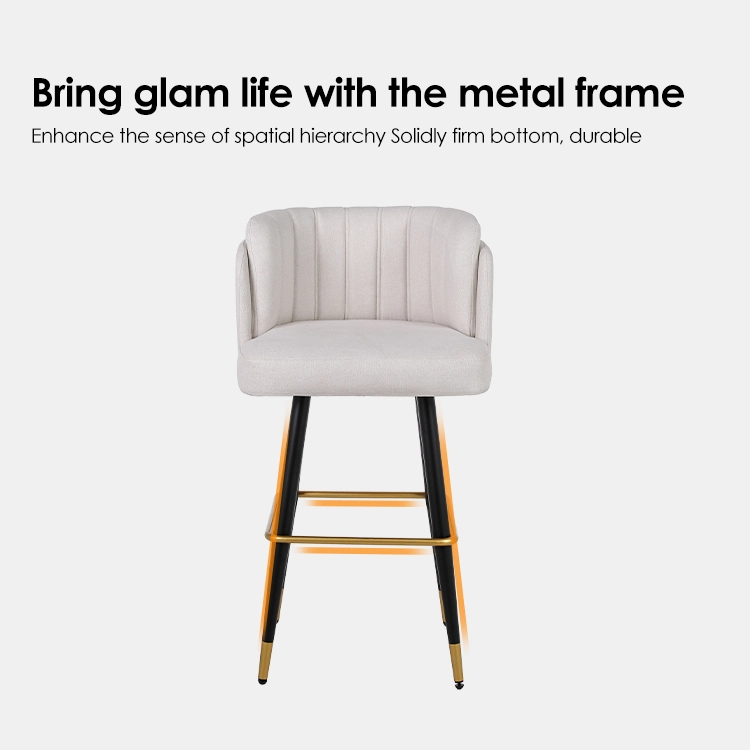
Choosing the right material for a lounge bar chair has a direct effect on both how it looks and how well it holds up in different height setups. Metal frames are very strong for their weight, and they can keep the same height throughout production runs, which is very important for buyers who need hundreds or thousands of units to be exactly the same. Our collection of sturdy metal frames stay the same size even in high-humidity dining settings where wood parts might grow or contract.
The choice of upholstery can also change the useful height. Instead of thin leather on hard bases, plush velvet fabric with high-density foam padding raises the seat height by 1.5 to 2.5 inches. This difference, which doesn't seem important at first, becomes important when figuring out the clearance measurements. To keep things from going wrong during fitting, the specifications for buying cushions must take into account whether they are squeezed or not.
The Interplay of Footrest and Backrest Height
How the footrest is placed in relation to the seat height decides whether the seat allows for natural positional change or locks people into set positions that may be uncomfortable. The 8- to 12-inch distance from the floor to the footrest works for most people because it lets them rest their feet on the footrest and extend their legs downward. If the chrome footrest is too high (above 14 inches), it forces people who are shorter to make odd leg angles. If the footrest is too low (below 6 inches), it doesn't give bigger people enough support.
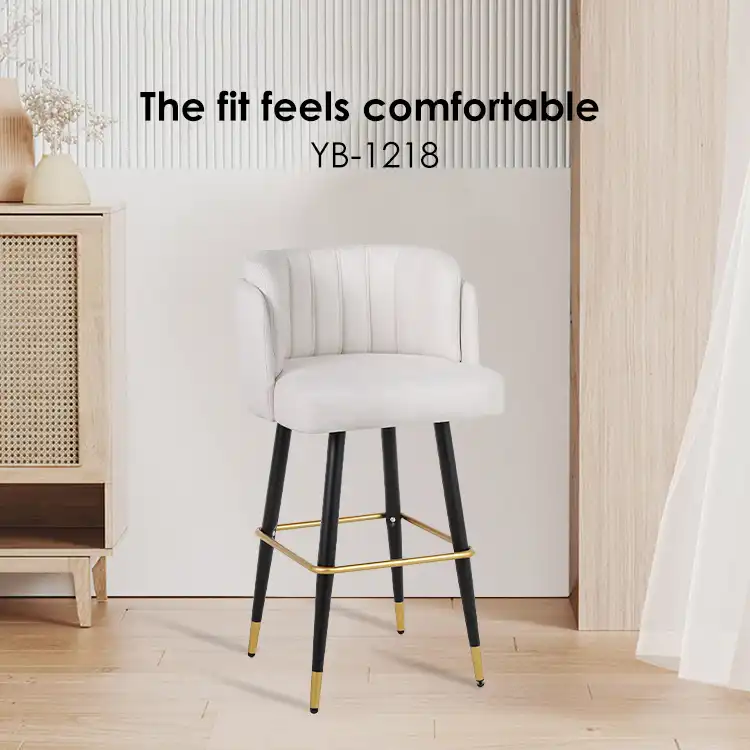
The height and slope of the backrest determine how people feel when they are sitting. When the back is between 12 and 15 inches above the seat, it looks like it was made for relaxed, short-term use. Mid-backs that are 16 to 20 inches long show that you want to be comfortable and stay engaged for longer. When the back is higher than 20 inches, bar chairs become lounge chairs, which are better for places where people want to talk and rest rather than get service quickly. When these proportions are right, the elegant legs and stylish shape of well-proportioned lounge chairs work together to create visual unity.
Practical Lounge Bar Chair Height Design Ideas and Case Studies
To turn dimensional theory into good buying results, we need to look at how different height patterns work in different business settings.
Scenario-Based Applications Across Venue Types
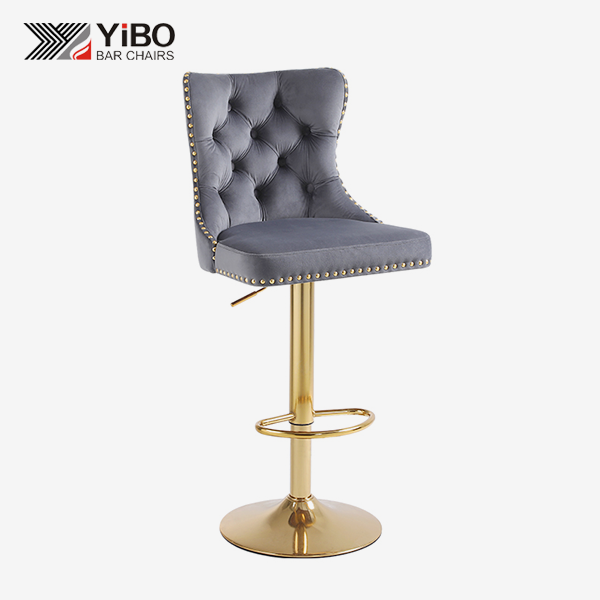
Lounge chairs with 30 to 32-inch seat heights and 41 to 42-inch bar tables look great in cocktail bars and high-end hotel rooms. This slightly raised setup gives the bar a sense of status and lets the bartenders interact with customers at eye level while working at normal bar-height prep tables. The extra 2 inches compared to required standards shows that the product is of higher quality and makes it easier for bigger customers to sit down. Our gray silk models with gold footrests are a good example of this set-up. The soft and smooth fabric adds to the feeling of luxury that drives high-priced tactics.
When restaurants have bar areas that are both waiting areas and eating options, the seat heights are usually set at 28 to 29 inches so that they look like the nearby dining chairs, which are usually 18 to 19 inches high, while still being able to be used as bars. This middle height method makes sitting easier for people of all ages and lowers the perceived barrier to entry for guests who are wary of high bar seating.
More and more, office break rooms and joint work areas have tables that are bar height and have lounge seating that is 29 to 30 inches high. This setup makes it easy for people to have casual talks and work on their laptops, but it's still official enough to show that they are working and not just having fun. The swivel base on performance lounge seating makes it easy to move around while talking and charge your devices, which are both useful features in the workplace.
Brand Benchmark Analysis
Taking a look at the measurement standards from well-known brands can help you with your buying of a lounge bar chair. IKEA's bar stool sets are mostly made for cost-conscious buyers who care most about how well they work. Most of the seats are 29 to 30 inches high, and the backrests are simple. Wayfair's large catalog has a wider range of heights, from 28 to 32 inches, which shows that they get their products from a lot of different places and sell to a lot of different types of people. Herman Miller's high-performance business seating usually comes with 30 to 31-inch seat heights and precision-engineered systems for adjusting them. The focus is on psychological efficiency over physical freedom.
Based on these standards, the 30-inch seat height is the middle ground for bar seating in the business. It allows for a wide range of users and works with normal counters. Buyers who want custom output should think about whether straying from this standard is actually useful or just adds extra complexity to the supply chain.
User Experience Testing Before Final Procurement
Physical checking stops design mistakes that cost a lot of money. Set up a mockup using sample chairs at the bar or table height you want. Get test subjects that are like your real guests—body proportions change a lot between age groups and populations. Watch how easy it is to get in and out of the chair, how comfortable it is for your legs to move, and how you sit for 15 to 20 minutes straight. Pay attention to small signs. For example, people who move their weight or position around a lot are telling you that the dimensions don't match, even if they don't say anything.
Write down these thoughts in a structured way. Find out how high the seat really is when the average person sits on it. Check to see if the height of the footrest allows for both resting your feet and extending your legs. Make sure that the height of the chair gives support without making it hard for people to move their shoulders when they want to get a drink or talk. With 14 years of experience making chairs, Anji Yibo Furniture has learned that this testing phase takes a lot of time but saves a lot of money compared to fixing mistakes in the specifications after mass production.
Maintenance Tips and Long-Term Considerations for Lounge Bar Chair Heights
Dimensional integrity isn't just about meeting the original requirements; it also means keeping those measurements even after years of business use in tough conditions.
Material Selection for Height Stability
When it comes to physical stability of a lounge bar chair, metal frame design is better than wood or plastic options. Changing temperatures, humidity, and repeated pressure cycles that gradually weaken less strong materials don't have much of an effect on metal buildings that were built correctly. Our plant that makes iron frames makes parts with soldered joins and strengthened stress points that stay the right height even after years of heavy use in dining settings.
There are different problems with how long cushion materials last. Compression set, the constant lowering that happens over time and lowers the effective seat height, can't happen with high-density foam padding. When used in heavy business settings for the first year, lower-grade foams can lose 0.5 to 1 inch of height, which is the same thing as standard drift. Request specs on foam density (in pounds per cubic foot or kilograms per cubic meter) and compression recovery data from suppliers when you are looking at their bids. Our soft fabric is made with foams that are approved for industrial use. This means that the cushion loft and seat height will stay the same during the guarantee time.
Addressing Wear Patterns That Affect Dimensions
Footrest wear is a regular upkeep problem that is often forgotten. Chrome footrests have scratches and finish wear, but they stay in place structurally. Stress cracks in wooden footrests can cause them to sag in place. When the plastic caps on the footrests wear off, the metal touches the floor, which damages the floor and changes the functional height relationship. Specifications for buying things should include information on how to get new parts for parts that wear out quickly, like footrests and glide feet.
The soundness of the leg joints decides how well the sitting stays stable and at the same height. Mechanical joints become less stable over time as users enter, leave, and rotate them many times. When compared to bolted or bracket-based building methods, welded metal construction completely gets rid of this failure mode. When you visit a supplier's factory, look at how they make their products. Do they use threaded screws that need to be retightened every so often, or do they use fixed joining methods that keep the dimensions the same forever?
Warranty and Replacement Policy Considerations
When buying in bulk, comprehensive guarantees that cover physical components lower the risk. Look for guarantees that clearly cover the frame's strength, the standards for pillow compression, and the usefulness of the system for swivel bases or height-adjustment features. Our guarantee promises back up the engineering quality we put into every production run. This gives purchasing managers peace of mind that the product's dimensions will stay correct throughout its lifecycle.
When replacement parts are easy to find, maintenance goes from being reacting to problems to being organized to protect assets. Make sure that providers keep parts for important things like gas lift tanks, turning systems, and chair sections in stock. Being able to change old parts greatly increases the product's life, which increases the return on investment for buying a lot of seats. When buying at the container level, it's best to negotiate that extra parts be included in the original order. This way, buyers can be sure that their equipment can be maintained without having to start separate foreign packages.
Conclusion
To choose the right lounge bar chair height, you have to think about the space standards, ergonomics, and the needs of the place. The seat height range of 28 to 32 inches, along with the right-sized floor and backrest, makes for comfortable sitting that works well in bars, restaurants, and other social settings. If people who work in procurement understand these technical details, try their products with real users, and work with skilled producers, their projects will be successful in the long run. Material quality, physical stability, and care are all things that need to be thought about from the time the specifications are made all the way through the years of steady use. When these things come together, space becomes an asset that improves both the experience of guests and the ease of operations.
FAQ
What is the standard seat height for commercial bar seating?
When it comes to commercial bar chairs for 40- to 42-inch bar tables, the seat height is usually between 28 and 32 inches, with 30 inches being the norm. This size leaves 10 to 12 inches of space between the seat and the bar top, so most people can comfortably place their legs and easily get in and out of the chair.
Can lounge bar chairs be customized for non-standard counter heights?
Quality manufacturers with OEM and ODM capabilities can adjust seat heights by 1 to 3 inches to accommodate non-standard counter dimensions or specific ergonomic requirements. Customization requires clear communication of your exact counter height and intended clearance specifications. At Anji Yibo Furniture, our professional R&D team supports dimensional customization based on detailed drawings and market-specific requirements.
How does chair height affect commercial user comfort?
When the heights of the counters and seats aren't right, it's immediately uncomfortable: too little space between them makes it hard to stand up straight, and too much space makes it hard to reach without hurting your shoulders and back. When the dimensions are right, guests can sit in natural positions that are comfortable for long amounts of time. This has a direct effect on their happiness and how long they stay at a business place.
Partner with YIBO for Your Custom Lounge Bar Chair Solutions
Every large chair job that Anji Yibo Furniture works on is backed by 14 years of specialized production experience. Our factory in Anji, Zhejiang, which is known as the furniture production hub of China, uses both high-tech tools and skilled labor to meet the exact measurements and high quality standards needed for international trade. Whether you need to order a container-load of our velvet-upholstered lounge bar chairs with chrome footrests or fully customized OEM solutions made just for your brand, our team is here to help you every step of the way. We know how hard it can be to find furniture for businesses that need it. That's why our space-saving packing saves you money on shipping, our experienced sales team answers questions within 24 hours, and we promise on-time delivery so you can keep your project schedules. We are a trusted maker of lounge bar chairs that works with business builders, suppliers, and dealers in 70 countries. We invite you to learn more about how our comfortable designs and easy customization options can make your hospitality spaces better. You can email us at yb@ajyibo.com to talk about your unique needs and get samples that show why buying pros all over the world choose YIBO for reliable, scalable chair options.
References
Business and Institutional Furniture Manufacturers Association. (2019). BIFMA Ergonomic Guidelines for Commercial Seating Design. Grand Rapids: BIFMA International.
Chen, L., & Morrison, A. (2021). Dimensional Standards in Hospitality Furniture Procurement: A Comparative Analysis. Journal of Commercial Interior Design, 15(3), 112-128.
Pheasant, S., & Haslegrave, C. (2018). Bodyspace: Anthropometry, Ergonomics and the Design of Work (4th ed.). London: Taylor & Francis.
Restaurant Facility Management Association. (2020). Best Practices for Bar and Counter Seating Specifications. Chicago: RFMA Publications.
Thompson, M. (2022). Material Selection and Longevity in Commercial Furniture: A Lifecycle Analysis. Furniture Manufacturing Review, 28(2), 45-62.
Zhang, W., & Liu, H. (2020). Ergonomic Height Optimization in Bar Seating: User Comfort Studies Across Demographic Groups. International Journal of Hospitality Design, 12(4), 201-218.