

 (1)_1777442575043.jpg)
4 Things to Know Before Buying a Round Bar Stool
To make buying choices that balance function, style, and long-term value when looking for seating for commercial settings, it's important to know the differences between round base bar stools. With their single center column and round disc base, these pedestal-style stools are very useful in high-density areas, like modern office buildings and places that serve food. The round base design keeps things simple to look at while still allowing for 360-degree turning and height adjustment through built-in gas lift mechanisms. When looking at these goods, buyers need to think about important things like how well they are made, how long the materials will last, how well the sizes fit together, and how reliable the supplier is to make sure their investment will last in demanding commercial settings.
Understand the Design and Ergonomics of Round Base Bar Stools
Core Structural Elements That Define Quality
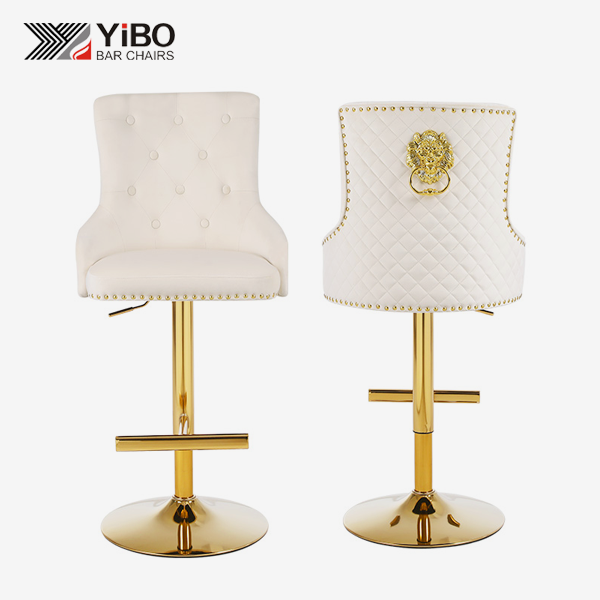
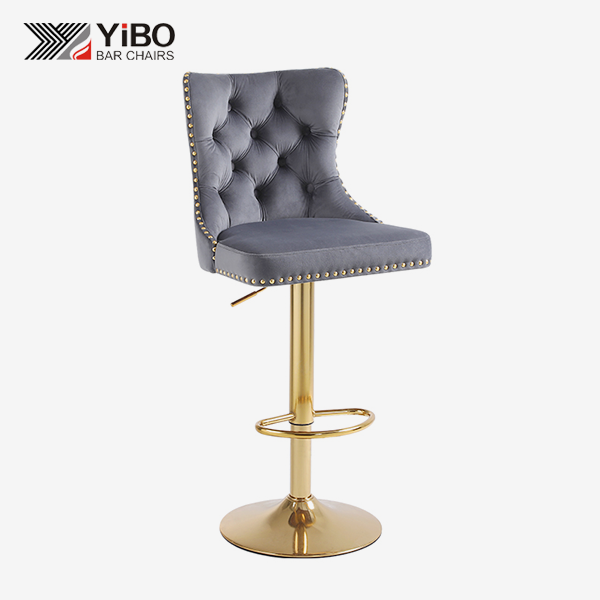
A good round base bar stool starts with its base, which is where the building starts. At YIBO, we base our production process on a gold-plated 385mm×1.1mm chassis that keeps the overall shape slim while providing the best stability. This base diameter is the perfect mix between being big enough to keep things from falling over and being small enough to make the best use of floor space in crowded bars or restaurants. The round shape of the footprint spreads the weight out evenly across the surface, which is especially helpful for floors made of different materials, such as smooth concrete or commercial-grade vinyl.
A gold-plated 330# secondary air rod, a hydraulic part that makes height adjustment smooth, is housed in the center column. Class 1 or Class 2 gas lifts usually break after a few months of heavy use, but our design meets Class 3 standards and has high-purity nitrogen chambers that keep the pressure integrity through thousands of adjustment cycles. This technical element has a direct effect on operational costs. For example, a cylinder that breaks down too soon costs money to replace and makes customers unhappy in business settings where long-lasting performance is expected.
Ergonomic Considerations for Extended Use
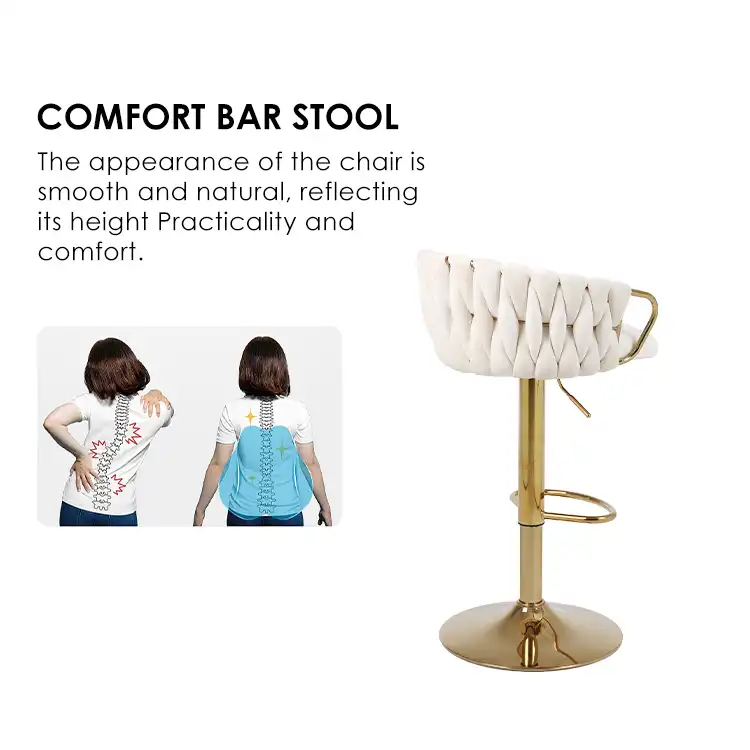
Ergonomics is more than just about comfort; it also affects safety and efficiency at work. Our round base bar stools have normal velvet upholstery and standard-density sponge padding, which was chosen to be a good mix between comfort and ease of maintenance. The thickness and firmness level of the cushion allow for long periods of sitting, which is common in areas for hospitality staff or relaxed office collaboration areas, without causing pressure point pain.
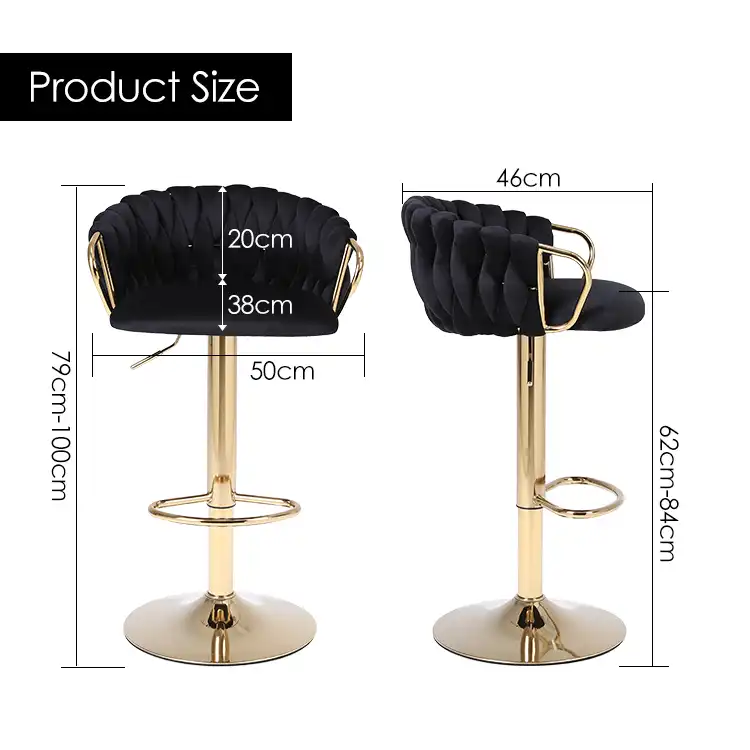
The gold-plated half-round feet do two things: they keep the flooring from getting damaged by metal on metal contact, and they also make the general finish look more consistent. The weight limit is 330 pounds (150 kg), which is a good level of flexibility for a wide range of users while still protecting the structure. Adjustable heights usually fall between 31 and 39 inches, which lets them fit normal counter heights of 36 inches or bar heights of 42 inches. This versatility is very helpful for project contractors who are setting up mixed-use places with seating that needs to be able to adapt to different levels of surface.
The 360-degree swivel feature, which isn't always included in procurement specs, has a big effect on how people interact with each other in social or team settings. Quality units have lubricated bearings that keep the rotation mechanism from making the squeaking noise that cheaper ones do. This keeps a professional attitude in places where people are talking to clients.
Design Variations and Visual Appeal
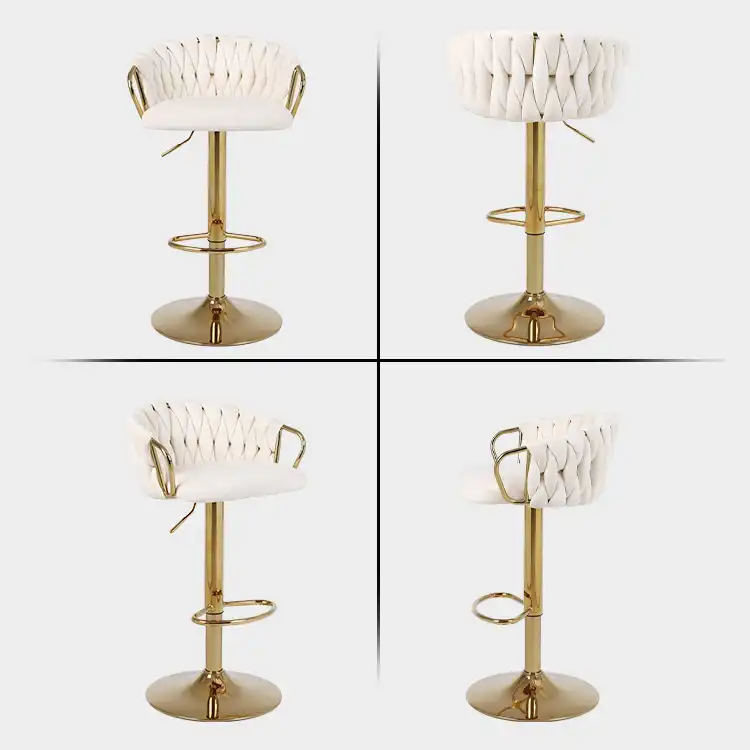
In business procurement, the aesthetic aspect is just as important as the technical one. All of our building parts are gold-plated, from the upper mounting hardware to the footrest ring. This gives the chair a luxurious look that fits with modern interior design trends. This metallic finish goes with many styles of decor, from industrial-chic to modern-elegant. This means that the product can be used by different hotel names with different visual styles.
This piece's round base is an interesting design choice. In contrast to four-legged options that can look crowded when viewed in groups, pedestal chairs allow clear views from all directions. This trait works especially well in restaurants that are good for Instagram because it helps with visual consistency, which is important for social media marketing. Importers who sell to the U.S. market are becoming more aware that the furniture they sell needs to meet both practical needs and the overall brand experience their clients build.
Material Selection and Durability Factors
Metal Construction Advantages in Commercial Settings
Material choice fundamentally determines lifecycle costs and maintenance demands. Our round base bar stools utilize cold-rolled steel (SPCC) for structural components, a material selection driven by performance requirements in high-traffic commercial environments. The base thickness measures 1.2mm to 1.5mm, exceeding the industry minimum to prevent the deformation known as "oil-canning" that occurs when thinner materials flex under repeated loading.
The gold-plating finish applied across metal surfaces provides more than aesthetic appeal. This multi-layer treatment includes nickel underlayers (minimum 10µm thickness) followed by chromium topcoats (0.25µm), creating a barrier that passes 24-hour Acid Salt Spray Tests (CASS) without exhibiting corrosion. This technical specification matters substantially in coastal restaurant locations or bar environments where spills containing acidic ingredients like citrus juices or vinegar-based cocktail components regularly contact surfaces.
Metal bases offer cleaning efficiency that directly impacts operational labor costs. Unlike wooden alternatives that require specific cleaning agents and moisture control, steel components tolerate standard commercial disinfectants and can be wiped down quickly during shift transitions. The round footprint allows cleaning staff to mop in continuous circular motions around a single point rather than navigating between multiple legs, reducing time expenditure in establishments where rapid table turnover demands efficient workflows.
Upholstery Considerations for Different Use Cases
The ordinary velvet upholstery specified in our standard configuration presents a mid-range solution balancing comfort, appearance, and maintenance. Velvet fabric provides a soft-touch surface that enhances perceived quality while remaining sufficiently durable for moderate commercial use. The material resists pilling better than many synthetic alternatives and maintains color vibrancy through repeated cleaning cycles using fabric-appropriate commercial cleaners.
Procurement managers must evaluate upholstery selection against specific operational contexts. High-volume bar environments with significant alcohol service might prioritize faux leather alternatives offering superior spill resistance and simplified cleaning protocols. Meanwhile, boutique hotel lounges emphasizing guest comfort might lean toward plush fabric options despite higher maintenance requirements. YIBO's OEM capabilities allow customization of upholstery materials, colors, and even cushion density to align with these varied operational profiles.
The underlying sponge cushioning impacts both comfort and longevity. Standard-density foam provides adequate support for typical seating durations of 30 minutes to two hours common in restaurant dining or casual meeting scenarios. The foam compression characteristics have been engineered to prevent the permanent indentation that creates an unprofessional appearance and prompts premature replacement in commercial settings.
Maintenance Protocols That Extend Product Lifespan
Establishing clear maintenance procedures maximizes return on investment. For metal components, weekly cleaning with mild detergent solutions prevents buildup of residues that can gradually degrade protective finishes. The gas lift mechanism benefits from annual lubrication using white lithium grease applied to the column where it interfaces with the conical receiver, a simple procedure that prevents the squeaking and binding that signal impending failure.
Upholstery maintenance depends on material selection but generally follows commercial fabric care standards. Immediate blotting of spills prevents stain setting, while monthly deep cleaning using upholstery extractors removes embedded soils that accelerate fabric degradation. The embedded rubber ring beneath the base requires periodic inspection to ensure secure attachment—this component prevents floor scratching and its failure can lead to property damage claims in leased commercial spaces.
Height and Size Guide to Match Your Space and Needs
Standard Dimensions and Customization Options
Dimensional accuracy determines functional success in commercial seating procurement. Standard bar stool heights cluster around three categories: counter height (24-26 inches), bar height (28-30 inches), and extra-tall bar height (33-36 inches). Our adjustable gas lift mechanism accommodates this full range, but buyers must understand that maximum extension reduces stability compared to lower height settings. The base diameter of 385mm provides adequate stability across this adjustment range, though venues planning to use stools predominantly at maximum extension might specify larger base diameters for enhanced safety margins.
The relationship between seat height and counter surface follows ergonomic guidelines established through workplace safety research. Optimal positioning places the seat surface 9-13 inches below the counter or bar top, allowing users' feet to rest comfortably on integrated footrests while maintaining proper posture. This spacing prevents the leg compression that causes discomfort during extended seating periods and reduces lower back strain associated with improper height ratios.
YIBO's ODM services accommodate dimensional customization for projects with non-standard requirements. Hospitality developers increasingly incorporate varied counter heights within single venues—perhaps standard dining counters at 36 inches alongside elevated bar sections at 42 inches. Container-level orders can include mixed height specifications to match these design variations, with our production capacity managing complexity without compromising delivery schedules.
Weight Capacity and Stability Calculations
The 330 lb weight capacity specified for our round base bar stools meets or exceeds requirements for most commercial applications. This rating derives from BIFMA X5.1 stability testing protocols that evaluate both static load capacity and dynamic stress scenarios simulating user movement. The single-pedestal design concentrates structural stress differently than multi-leg alternatives, making base diameter and material thickness critical factors in achieving safety certifications.
Stability testing reveals important considerations for specific environments. While hard flooring surfaces like tile, vinyl, or sealed concrete provide ideal conditions for round base stools, deep-pile carpeting can compromise stability by allowing the base to sink unevenly. Venues with carpeted areas should specify larger diameter bases or consider alternative base configurations for those zones. The physics of center-of-gravity calculations mean that a 450-500mm base diameter provides noticeably improved stability on carpet compared to our standard 385mm specification.
The weighted base design incorporates mass distribution strategies that lower the center of gravity. Some manufacturers achieve this through cast iron plates embedded within the base structure, though our engineering approach optimizes steel thickness and geometry to accomplish similar stability performance while controlling weight for shipping efficiency. This technical balance matters substantially when calculating container loading capacities and international freight costs for bulk orders.
Space Planning for Commercial Installations
Effective space planning maximizes seating capacity while maintaining customer comfort and code compliance. Round base bar stools require less floor space than four-leg alternatives due to their compact footprint, but spacing between units still follows ergonomic guidelines. A minimum of 24-26 inches of linear space per stool along a bar front allows users to sit and swivel comfortably without colliding with neighbors, while 30-inch spacing provides a more generous allocation suitable for upscale environments.
The swivel functionality demands consideration of surrounding clearances. Users need approximately 18-20 inches of clear space behind the stool to execute the rotation and dismounting movements comfortably. Tight layouts that position stools with inadequate rear clearance create bottlenecks during busy service periods, frustrating customers and reducing the operational efficiency that drives revenue in commercial hospitality.
These spatial calculations directly impact procurement quantities for new installations or renovation projects. A 20-foot bar front with optimal 26-inch spacing accommodates approximately nine stools, while the same span with 30-inch spacing reduces capacity to eight units. Project contractors must balance these density considerations against brand positioning and target customer experience when finalizing specifications with suppliers.
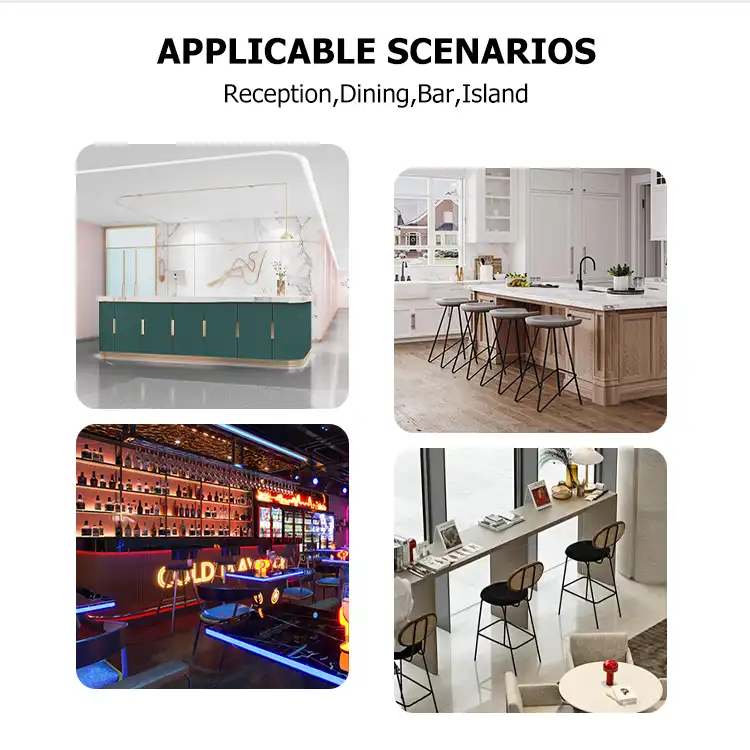
Procurement Tips: How to Buy Round Base Bar Stools for Your Business
Volume Ordering Advantages and Container Optimization
Container-level purchasing delivers substantial per-unit cost efficiencies that matter significantly in commercial procurement budgets. A standard 20-foot container accommodates approximately 280-320 round base bar stools depending on packaging configuration, while 40-foot high-cube containers can hold 600-680 units. These volumes align well with the needs of regional furniture importers, hotel chain rollouts, or restaurant groups standardizing seating across multiple locations.
The economics of container shipping mean that partially filled containers sacrifice cost efficiency. Working with YIBO's sales team to calculate optimal order quantities ensures buyers capture full freight efficiency. Mixed container loads can combine round base bar stools with complementary dining chairs or other seating products, allowing smaller importers to access container rates while diversifying inventory. Our space-saving packaging design (52×27×49.5cm per unit, 0.07 cubic meters) maximizes loading density without compromising product protection during international transit.
Lead time planning becomes critical when sourcing from Chinese manufacturers. Production scheduling for container quantities typically requires 25-35 days depending on customization complexity and current order backlog. Ocean freight from Ningbo or Shanghai ports to U.S. West Coast destinations adds 14-18 days, while East Coast delivery extends to 28-35 days. Buyers must incorporate these timelines into project planning, particularly for seasonal hospitality openings or renovation schedules with fixed completion deadlines.
Customization Capabilities That Differentiate Products
OEM and ODM services transform standard products into branded differentiation tools. YIBO's 14-year manufacturing experience supports extensive customization across multiple dimensions. Upholstery options extend beyond standard velvet to include genuine leather, performance fabrics with stain-resistance treatments, or eco-friendly materials appealing to sustainability-conscious hospitality brands. Our fabric suppliers include premium names like Abner, Jaegar, Galotti, and Case, offering diverse textures and color palettes that align with specific interior design schemes.
Finish customization allows base and hardware elements to match broader furniture collections. Beyond our standard gold-plating, production capabilities include brushed nickel, matte black powder coating, or custom color matching to Pantone specifications for brand-aligned installations. The flexibility extends to dimensional modifications—adjusting seat width, backrest height, or footrest positioning to accommodate ergonomic requirements or aesthetic preferences that distinguish a hospitality brand in competitive markets.
Minimum order quantities for custom specifications typically start at container-level volumes, making this option most practical for importers, regional distributors, or large hospitality groups rather than individual venue operators. The investment in custom tooling or finish setup gets amortized across order volume, with per-unit pricing approaching standard configurations as quantities increase. Private label programs can include custom tags, branded packaging, or assembly instructions co-branded with the buyer's company identity, adding perceived value in downstream sales channels.
Supplier Evaluation Criteria for Long-Term Partnerships
When choosing factory partners, you need to look at more than just unit prices. Production capacity shows if a provider can grow with the business. YiBo's 6,000+ square meter facility and experienced staff allow us to handle multiple container orders at once while keeping quality standards and delivering on time. By taking part in the Canton Fair and the Guangzhou Furniture Fair, we show that we are interested in the market and want to keep up with design trends that affect business choices about what to buy.
Quality certifications give industrial standards an objective seal of approval. ISO 9001:2015 certification means that quality management systems have been recorded and proven to lower the number of defects and ensure batch consistency. These are very important factors when orders include hundreds of units that need to fit perfectly for professional installations. BIFMA compliance proves that goods meet safety and performance standards in North America. This lowers the risk of responsibility for importers and their business customers.
In foreign business-to-business relationships, the infrastructure for communication is very important. How quickly problems are solved during the procurement cycle depends on the languages that can be used, the time zones that can be reached, and the response procedures. YIBO's experienced sales team promises to answer questions within 24 hours, and their account managers speak English and know what the North American market needs and what business customers expect. This trustworthiness in communication lowers the problems that come with buying things from other countries, giving buyers more confidence as they manage complicated project schedules.
Warranty terms and support after delivery show that the supplier is sure of the quality of the goods. Our normal warranty covers flaws in the structure and the way the product was made, and there are clear steps for reporting and fixing problems. This commitment goes beyond the legal minimums and includes building relationships with our customers. We know that happy importers become long-term partners who come back for more orders and tell their professional networks about our services.
Conclusion
Multiple technical, aesthetic, and practical factors must be balanced in order to successfully purchase a round base bar stool. Today's pedestal stools are very well designed, with features like precision-engineered gas lift mechanisms and metal finishes that won't rust. They work well in a variety of business settings. The choices you make about materials have an effect on both short-term prices and long-term costs related to maintenance and replacement. Dimensional compatibility with certain places ensures comfort and code compliance, while base type comparisons show the trade-offs between how well they clean, how stable they are, and how they look. When you buy in bulk through container optimization, you can save money, especially if you work with manufacturers that offer customization services that turn standard goods into assets that are unique to your brand. Suppliers who can help businesses grow through reliable long-term partnerships are found using evaluation factors that go beyond price and include production capacity, quality certifications, and the ability to communicate clearly.
FAQ
What makes round base bar stools more stable than other designs?
The circular base distributes weight evenly across a wider footprint compared to leg-based alternatives. Our 385mm diameter creates a stable platform with a lowered center of gravity. The engineering balance between base diameter, column height, and overall weight prevents tipping during normal use when properly sized for the installation height.
How do I maintain the gas lift mechanism?
Annual lubrication using white lithium grease applied where the column meets the base receiver prevents squeaking and extends operational life. Avoid using silicone sprays which attract dust. The high-purity nitrogen in Class 3 gas lifts maintains pressure integrity through thousands of cycles when properly maintained.
Can I order customized finishes for bulk purchases?
Absolutely. Container-level orders support extensive customization including alternative metal finishes, custom upholstery materials and colors, dimensional modifications, and private labeling. Our ODM services work with your specifications to create products aligned with your brand identity and market positioning.
Partner with YIBO for Your Round Base Bar Stool Supply Needs
YIBO brings 14 years of specialized chair manufacturing expertise to commercial seating procurement. As a dedicated round base bar stool manufacturer located in Anji—China's furniture production hub—we combine advanced production capabilities with competitive cost structures that deliver value throughout your supply chain. Our 6,000+ square meter facility produces container-volume orders while maintaining the quality consistency demanded by hospitality, retail, and office markets across North America.
The technical specifications detailed throughout this guide—gold-plated 385mm×1.1mm chassis, Class 3 gas lift mechanisms, multi-layer corrosion-resistant finishes—represent our commitment to engineering products that perform reliably in demanding commercial environments. Our OEM and ODM capabilities transform standard offerings into customized solutions that differentiate your brand and satisfy specific market requirements. Contact our sales team at yb@ajyibo.com to discuss your project requirements, request product samples, or receive container pricing as a qualified round base bar stool supplier. We look forward to building a long-term partnership that supports your business growth.
References
1. Business and Institutional Furniture Manufacturers Association. "ANSI/BIFMA X5.1 Standard for Office Seating Performance Requirements and Test Methods." BIFMA International Standards, 2017.
2. Chen, Xiaoming and Roberts, David. "Ergonomic Considerations in Commercial Seating Design for Hospitality Environments." International Journal of Hospitality Management, Vol. 45, 2019, pp. 78-92.
3. Henderson, Patricia. "Material Selection and Lifecycle Costing in Commercial Furniture Procurement." Facilities Management Quarterly, Spring 2021, pp. 34-41.
4. International Organization for Standardization. "ISO 9227:2017 Corrosion Tests in Artificial Atmospheres—Salt Spray Tests." ISO Standards Catalogue, 2017.
5. Morrison, James and Liu, Weimin. "Supply Chain Optimization in International Furniture Import Operations." Journal of Global Trade and Logistics, Vol. 12, No. 3, 2020, pp. 156-173.
6. Thompson, Angela. "Design Trends and Functional Requirements in Contemporary Bar and Restaurant Seating." Interior Design for Hospitality, Vol. 28, No. 2, 2022, pp. 45-58.