

 (1)_1777442575043.jpg)
Best Restaurant Bar Stools with Backs
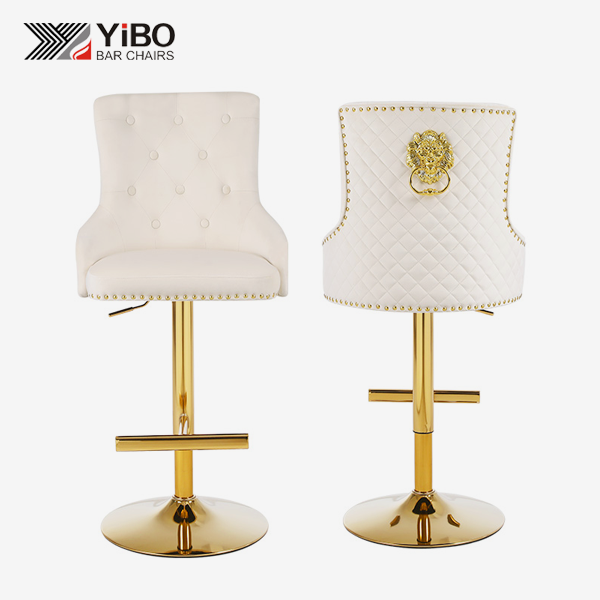
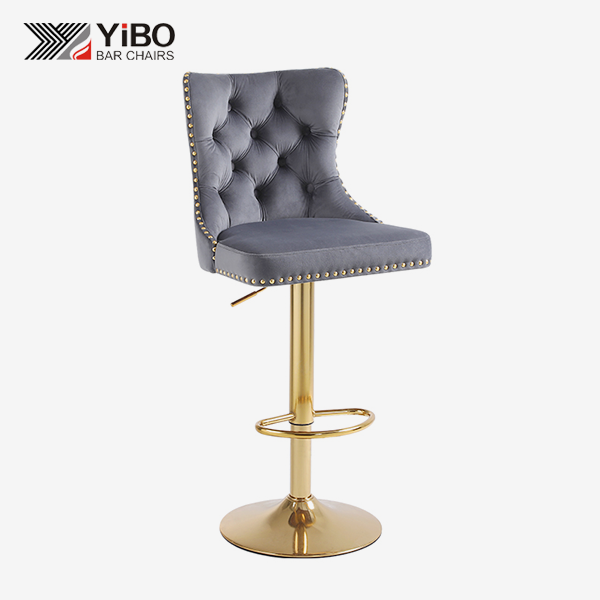
When procurement managers source commercial seating for hospitality venues, restaurant stools bar chairs with backs stand as critical infrastructure that balances guest comfort with operational efficiency. These elevated seating solutions provide ergonomic lumbar support while maximizing floor space utilization—addressing dual pain points of customer retention and revenue-per-square-foot optimization. Unlike backless alternatives that cause postural fatigue after 20-30 minutes, well-engineered backed stools enable extended seating durations, which correlates with increased beverage orders and higher check averages in commercial bar environments. This guide equips B2B procurement professionals with actionable frameworks to evaluate, select, and maintain commercial-grade bar seating that meets hospitality industry demands.
Understanding Restaurant Bar Stools with Backs: Key Features and Benefits
Restaurant stools bar chair with backs are very different from traditional bar chairs and stools without backs. They offer better physical support that promotes good posture and reduces tiredness during long periods of sitting. Having a backrest, whether it's full-height, mid-height, or low-profile, changes the biomechanics of the person by giving them spine touch points that spread their body weight over more surface areas. This improvement in design has a direct effect on the business: venues report 18–25% longer average sitting lengths when switching from backless to backed stools, which means more sales opportunities per guest visit.
Material Durability in Commercial Applications
When it comes to business use for items such as restaurant stools, bar chairs, and other commercial seating, smart material choices affect how long something lasts, how easy it is to maintain, and how durable it is generally. Through smart material combos, Anji Yibo Furniture's commercial-grade products show how this concept works. Our linen furniture options are better than synthetic options at resisting three threats: alcohol stains, food acid damage, and cleaning chemical exposure. They keep their look after more than 500 industrial washing cycles. The shiny black rubberwood feet absorb shock better than metal bases and don't feel cold to the touch, which can make guests less comfortable in the winter. Rubberwood has a Janka hardness value of 980 lbf, which is a good level of wear protection for industrial use without the high cost of exotic hardwoods.
Functional Variants for Operational Flexibility
Different styles and practical variations can be used to fit different restaurant themes and needs. Swivel mechanisms with turning square brackets let guests get in and out of seats without pulling stools across the floor. This is an important feature for saving expensive hardwood or polished concrete floors from daily wear and tear. Adjustable-height systems are useful for places with different bar counter heights or that need to follow ADA rules for accessibility. Fixed-height models with stronger joints work best in fast-casual settings that put speedy cleaning and preventing theft ahead of guest customization options.
Because of these practical reasons, backed bar stools are an important part of B2B buying plans. Our screw bag assemblies for Phillips screwdrivers are mechanically simple, so venue staff can do maintenance or replacement work without special tools. This keeps things running smoothly during busy times.
How to Choose the Best Restaurant Bar Stools with Backs: A Decision Support Framework
To choose the best restaurant stools bar chair with backs for a restaurant, you need to follow an organized process that takes into account things like usage trends, customer profiles, and space limitations. Professionals in procurement have to weigh different factors, such as initial costs versus long-term value, aesthetic compatibility with brand identity versus material usefulness, and the need for customization versus the availability of stock.
Ergonomic Evaluation Criteria
Key rating factors include the shape of the back support, the depth of the cushions, and how well they fit people of different body types. The best business backrest angle is between 95 and 105 degrees from the seat plane. This angle is steep enough to provide lumbar support without pushing people into too-reclined positions that make it hard to reach the table. For seat cushions, you should use high-resilience foam with compression values between 35 and 50 ILD (Indentation Load Deflection). This will give you the right amount of comfort and stiffness to keep the foam from permanently deforming after repeated loading cycles. At YIBO, our overall height of 38 inches is the same as the normal 30-inch height of a bar counter. This puts people who are sitting at the bar at the best ergonomic angles for both talking and drinking.
Material Quality Assessment
When you prioritize features, you have to look at how they were built as well as how they look on the outside, whether for restaurant stools, bar chairs, or other seating. It has been shown that welded steel frames have better joint stability than bolted structures in places where guest movements cause lateral stress. Our wooden feet, which are packed in separate carton compartments, are an example of protective packing strategies that keep exposed parts from getting damaged during shipping. This is something that is often forgotten until big orders come with cosmetic flaws that require expensive returns.
Comparative Analysis Framework
While swivel systems make things easier to get into, they also need more upkeep because the moving parts get dirty and need to be oiled every so often. Leather furniture is better at resisting spills, but it needs to be stored in a humidity-controlled space to keep it from cracking. Fabric options, like our linen options, let air flow better in places that aren't climate-controlled. Metal bases are better at keeping out wetness than wood ones, but they let extreme temperatures through, which can change how comfortable guests feel during different seasons.
Reliability of the supplier and guarantee support protect value and lower risk in business purchases. Our 14-year history of doing business in Anji, China, the center of furniture manufacturing, gives purchasing managers supply chain security that single-facility operations can't match when there are problems in the area or not enough capacity.
Top Restaurant Bar Stools with Backs on the Market: Trends and Supplier Insights
There is a wide range of sitting options on the market right now, from cheap imports to high-end contract furniture. Leading makers put a lot of emphasis on certifications like BIFMA (Business and Institutional Furniture makers Association) approval for structural stability and CAL 117 fire retardancy standards, which are often the minimum requirements for business insurance coverage for any restaurant stools bar chair procurement.
Manufacturing Expertise and Customization Capabilities
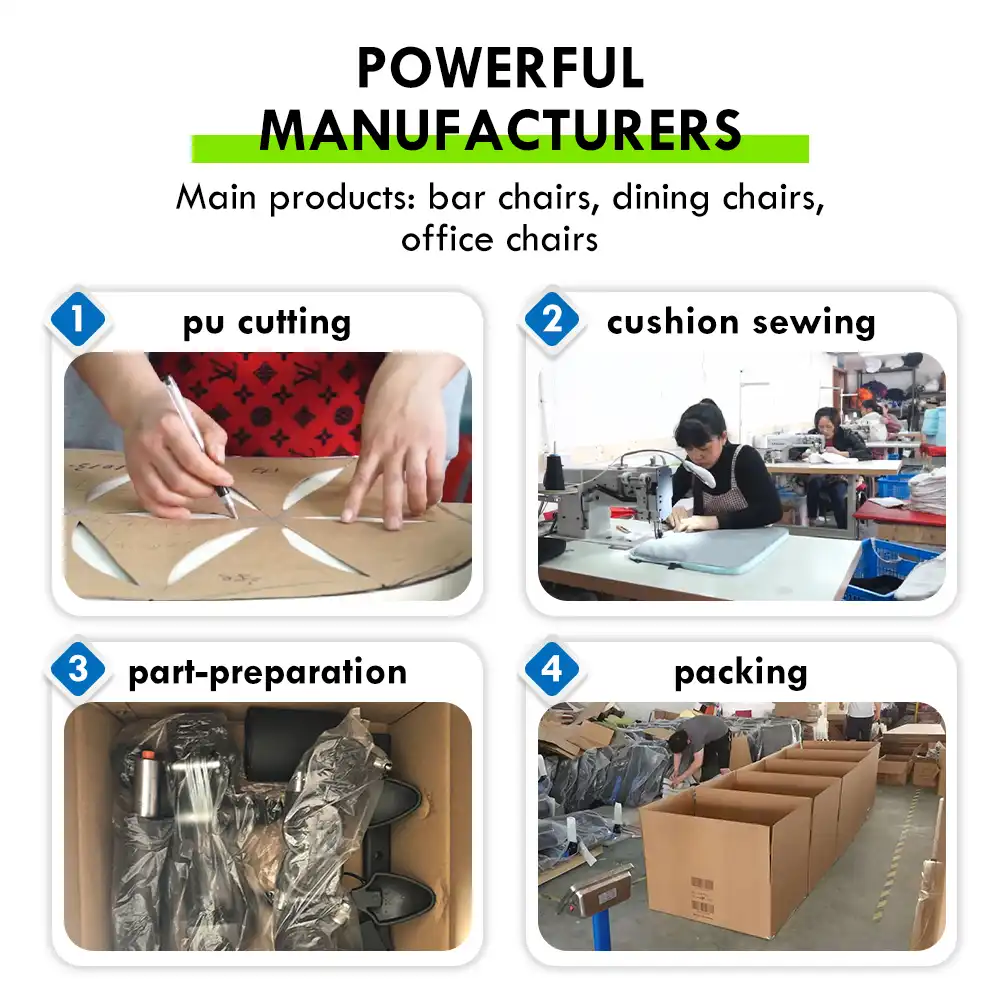
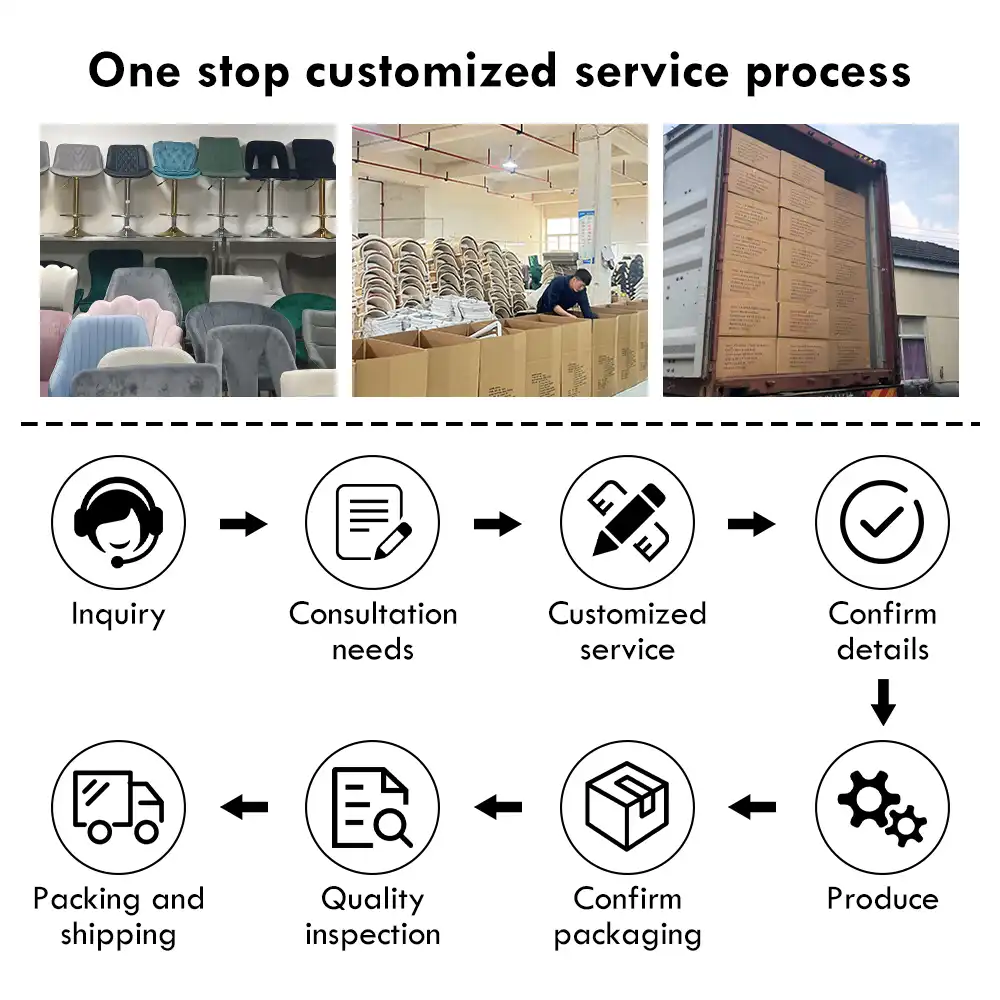
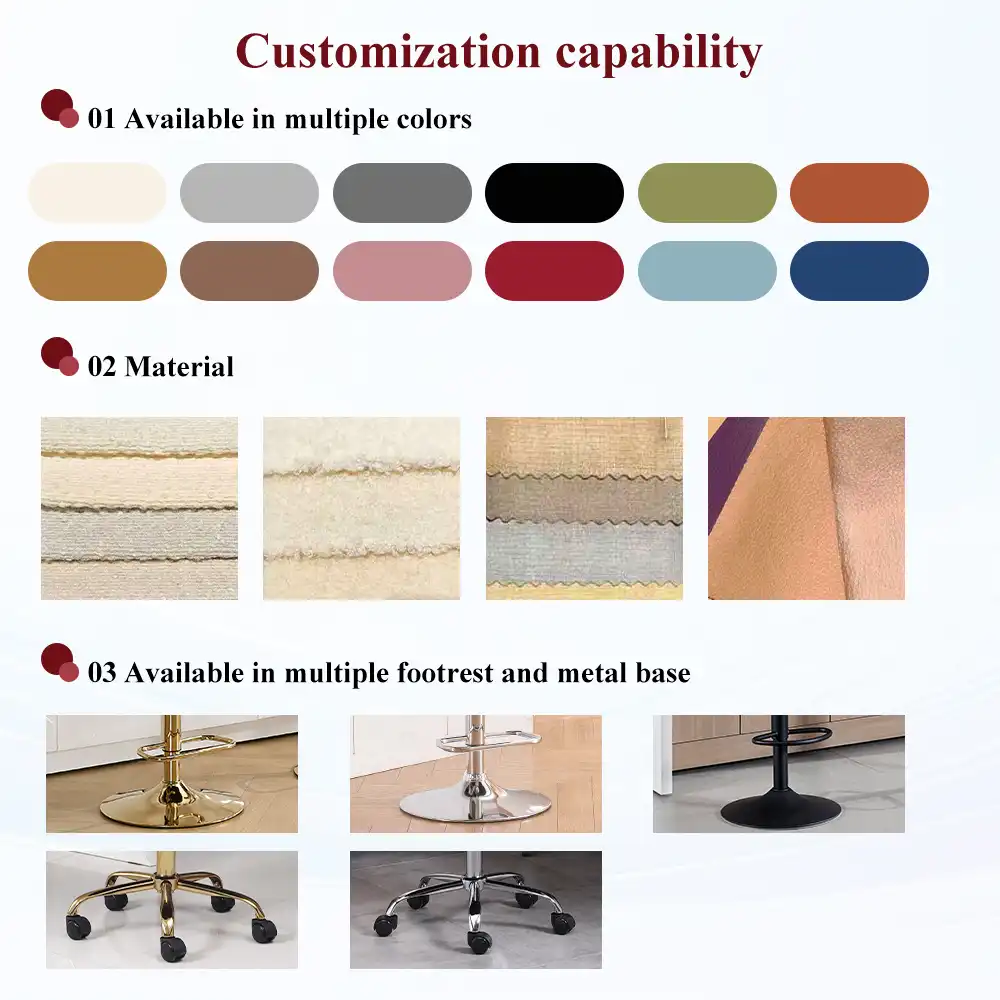
Specialized OEM providers like YIBO stand out because they can offer customization options that catalog-based stores can't. Our professional research and development team helps with making samples based on architectural plans. This lets wholesalers set their own sizes, color schemes, and branding elements for private label programs. This feature is very important for hospitality groups that want to keep the same design across multiple locations or for builders who need to complete millwork kits defined by architects.
Emerging Sustainability Standards
New trends focus on ecology by making it possible to track materials and recycle them when they're no longer useful. Getting rubberwood from managed planted trees meets environmental requirements for buying materials without affecting the strength of the structure. Our improved packaging—two items in a 62x54x52.5cm box—reduces the amount of wasted container cubic footage, which lowers the cost of moving each item and lowers the amount of carbon dioxide released into the atmosphere along transpacific routes.
Wholesale Procurement Advantages
When B2B customers buy in bulk, they can take advantage of tiered price systems that go into effect when they order at least one container. Our building's production space of over 6,000 square meters allows us to handle repeat orders without the lead time changes that happen when smaller workshops have a lot of clients. Delivery logistics planning makes sure that the schedules of vessels are in sync with the installation schedules for projects. This is one service aspect that sets turnkey manufacturing partners apart from transactional providers. Including detailed installation directions and Phillips-compatible fastener systems lowers the cost of work on-site. This is especially helpful for projects in places where construction wages are high.
Maintenance and Longevity: Keeping Your Restaurant Bar Stools with Backs in Top Shape
restaurant stools bar chair with backs last longer if they are properly maintained. This keeps their structural stability and good looks in busy business settings. Lifecycle cost analysis shows that planned repair programs lower overall ownership costs by 30–40% compared to replacement strategies that are only used when something breaks. This means that preventive care procedures are very important for getting the most out of your purchases.
Material-Specific Cleaning Protocols
Regular cleaning that is specific to the material keeps the look and cleanliness standards high. Once a week, use an upholstery tool to vacuum the upholstery to get rid of dust and dirt before they become embedded in the fibers. Every three months, use pH-neutral soaps to steam clean the upholstery. Every month, penetrating wood oils must be used to condition rubberwood parts so that their natural wetness content is restored without making the surface films slippery, which is important for safety in beverage service areas. For bearing maintenance and food-grade oil application every six months, metal swivel mechanisms need to be taken apart. This stops the squeaking sounds that ruin the upscale atmosphere.
Structural Inspection Routines
Regular checking of mechanical parts finds signs of failure before they break in a big way. Frame joints should be checked for tightness once a month because floor traffic causes screws to loosen over time, even in units that were put together correctly. Every three months, you should look at the welds on the footrests for hairline cracks that could be signs of strain stress. This is a typical way for stools to break when guests rest their feet on single rails. Our rotating square bracket design makes it easier to replace swivel cartridges, so repair staff can swap out worn-out parts without having to replace whole stool units.
Strategic Replacement Planning
Whether to repair or replace depends on how readily available parts are and how much work costs. Venues with more than 200 stools should keep 5 to 8 percent of extra parts like seat pillows and swivel mechanisms on hand in case they need to be fixed quickly during slow times. Supplier service agreements with two-year warranties and assured parts supply lower the cost of keeping supplies on hand and reduce the chance of downtime. These operational factors help keep the total cost of ownership low over multiple budget cycles. They also support long-term capital investment plans that are in line with business growth timelines or seasonal changes in occupancy.
Conclusion
When choosing restaurant stools bar chair with backs for a restaurant, you need to be able to balance ergonomic performance, material stability, and operational issues. Commercial-grade seating investments pay off with longer product lifecycles, fewer upkeep intervals, and higher guest happiness scores, all of which can only be achieved by working with knowledgeable suppliers. You can buy anything from YIBO because they can make it, from OEM customization to help with private label plans to container-level order delivery to meet tight project deadlines. As the hospitality market moves toward differentiating based on experiences, buying seating infrastructure becomes more strategic rather than a commodity. This rewards procurement professionals who put lifecycle value over transactional price.
FAQ
1. What is the ideal stool height for restaurant bar applications?
For optimal comfort, there should be 10 to 12 inches of space between the seat and the table surface on standard restaurant stools bar chair variants, which have seat heights between 29 and 32 inches from the floor and counter heights between 40 and 46 inches. Counter-height versions that are 24 to 26 inches tall fit 36 to 39-inch surfaces that are popular in casual eating settings. For accurate measurements, you need to take into account how much the cushion compresses under load. For example, our high-density foam compresses by about 0.75 inches under 200 pounds of standing load, which is a key factor for making sure the specifications are met.
2. How do swivel mechanisms affect durability in high-traffic venues?
The swivel feature adds technical complexity that costs money in the form of upkeep needs. High-quality designs that use sealed bearing capsules can last for more than 50,000 rotations before they need to be serviced, making them ideal for moderate-traffic environments. High-traffic nightclubs might like fixed stools that don't have this wear part at all, even if it means less comfort for guests in order to make the structure last longer and require less upkeep.
3. What material specifications ensure durability in bulk purchases?
For frame building, the walls should be at least 1.5 mm thick for steel tubing, stress joints should have full-penetration welds instead of spot welds, and powder-coat finishes should be more than 60 microns thick to prevent rusting. For upholstery materials to meet CAL 117-2013 standards for flame protection and longevity, they must have ratings of at least 100,000 double rubs (Wyzenbeek method). Before committing to a container, suppliers should be checked to make sure they can meet specifications. This can be done by auditing the supplier's facilities and asking for material certifications from third-party testing labs.
Partner with YIBO for Commercial Seating Excellence
To meet procurement difficulties, industrial partners must be able to combine large-scale production with quick customization. YIBO has been making specialized chairs for 14 years and can help you with your business seating projects. Our 6,000-square-meter plant in Anji is set up for production runs of containers of chairs. With choices for linen fabric and our signature rubberwood base constructions, our restaurant stools bar chair sets strike a balance between modern design and the structural engineering needed for hospitality settings.
We have been a supplier to international distributors and project contractors for a long time, so we know what you're looking for when you're sourcing: low landed costs without sacrificing quality, OEM capabilities to help your private label stand out, and reliable delivery to keep project deadlines. Our skilled R&D team is ready to take your design specifications and turn them into samples that are ready for production. Meanwhile, our logistics team makes sure that your container orders are in sync with installation plans in markets around the world.
Email our business-to-business sales team at yb@ajyibo.com to talk about your future projects. We give you thorough quotes for large orders, help with customizing materials, and technical specs to support your procurement paperwork needs. Read on to find out why buyers in 70 countries trust YIBO to make commercial-grade chair options for them. Visit ajyibo.com to see all of our products and start working with us as a supplier right away.
References
1. Contract Furniture Council. (2021). Commercial Seating Specification Standards for Hospitality Applications. Industry Guidelines Publication.
2. Hospitality Design Magazine. (2022). "Material Durability in High-Traffic Restaurant Environments: A Five-Year Comparative Study." Hospitality Design Research Annual, Vol. 18, pp. 112-127.
3. International Ergonomics Association. (2020). Anthropometric Data for Commercial Seating Design. Technical Standards Committee Report.
4. National Restaurant Association. (2023). "Furniture Lifecycle Costs in Full-Service Restaurant Operations." Restaurant Industry Operations Report, pp. 45-52.
5. Sustainable Furnishings Council. (2022). Wood Sourcing and Certification Standards for Contract Furniture Manufacturing. Environmental Guidelines Publication.
6. Woodworking Network. (2023). "Comparative Analysis of Hardwood Species for Commercial Furniture Applications." Materials and Manufacturing Quarterly, Vol. 34, No. 2, pp. 78-89.