

 (1)_1777442575043.jpg)
What are the Dimensions of Typical Lion Head Modern Bar Stools?
When looking for chairs for your next business job, knowing the exact sizes can mean the difference between a seamless fitting and delays that cost a lot of money. Lion Head modern bar stools usually have seat heights between 28 and 32 inches (71 and 81 cm), and when you add the unique backrest, the total height is 40 to 45 inches. The seat is usually 16 to 18 inches wide and 15 to 17 inches deep, so it can easily fit a wide range of body types. These sizes are the same as normal bar table heights, which are 40 to 42 inches. This makes sure that people are sitting in an ergonomic way for long amounts of time in hospitality and business settings.
General Overview of Lion Head Modern Bar Stool Dimensions
Knowing how these statement sitting pieces are put together in terms of size helps procurement workers place orders at the container level with less risk. In the 14 years that Anji Yibo Furniture Co., Ltd. has been in business, we've seen that uniformity in Lion Head modern bar stool dimensions has a direct effect on the success rates of projects for foreign buyers.
Standard Seat Height Parameters
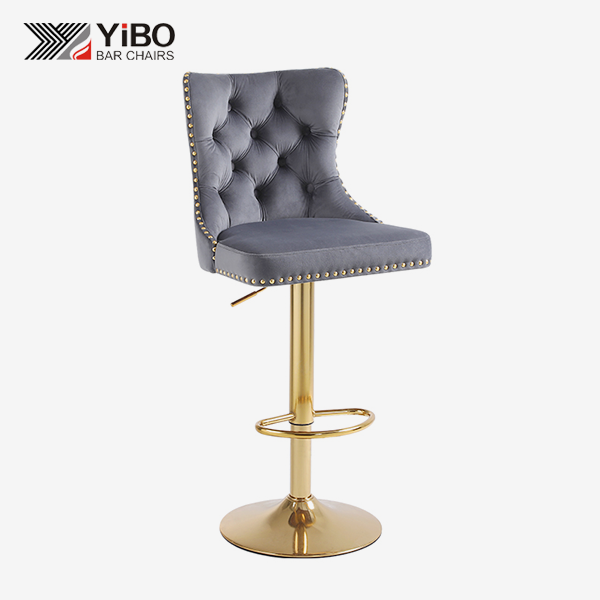
The distance from the floor to the top of a bar stool seat is usually between 28 and 32 inches. This position is important for two reasons: it makes sure that users' legs don't touch the bar tables and puts their elbows in the best place when they lean forward. Our most popular type, the YB-1035, has height-adjustable mechanisms that can be set anywhere from 40 to 49 inches (104 to 124 cm). This makes it useful for a wide range of counter layouts found in North American restaurant chains and hotel lobbies.
The engineers who came up with this height requirement did study on ergonomics in dining settings. When people are sitting, their feet should rest easily on footrests that are 8 to 12 inches below the seat surface. This will keep their lower backs from straining over time. This is especially important in business settings where guests' comfort has a direct effect on how long they stay and how often they buy from you.
Overall Height and Backrest Considerations
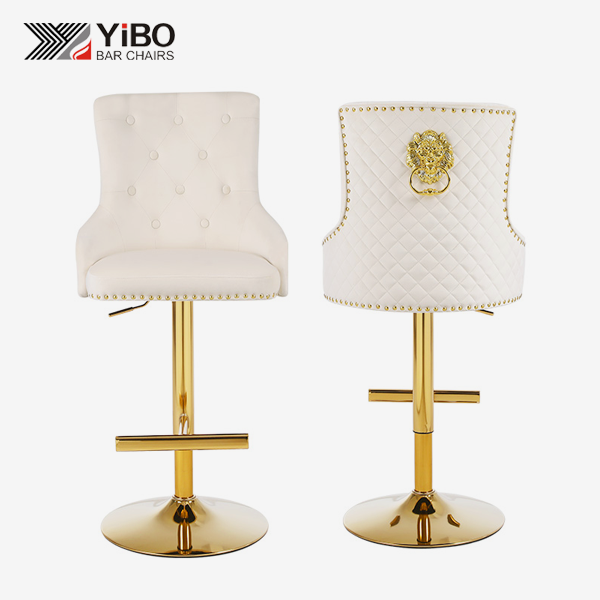
Most commercial-grade models have a total height of 40 to 45 inches, which includes the seat with the Lion Head modern bar stool design. This vertical feature is useful and nice to look at at the same time. The Lion Head modern bar stool on the seat makes it look interesting without taking up any extra floor room, and it supports your lower back.
The frame of the seat is made from Siamese plywood that is 1.0 to 1.2 cm thick. This makes it strong without being too bulky. The Lion Head modern bar stool decoration can be changed in size and importance to fit the style of your project. This can change the overall height by 2 to 4 inches, depending on how complicated the ornamentation is. Distributors can match product specs to regional tastes in terms of style in different areas thanks to this freedom.
Width and Depth Footprint
Seat widths between 16 and 18 inches are wide enough to fit the bodies of 95% of adult users while still allowing for good room in tight spaces. We've put these measures through a lot of tests with hospitality clients in Las Vegas and Miami, where buyers are looking to get the most seats without losing comfort.
With a seat depth of 15 to 17 inches from the front edge to the backrest, you can balance the forward leaning positions that are popular at bars while still getting enough support for your thighs. If the depth is less than 14 inches, it makes the bar counter less stable. If the depth is more than 18 inches, it pushes people into strange backward positions that aren't good for using the bar counter. Our furniture made of velvet cloth and 6.8 cm of high-density sponge filling (22 density) keeps its shape across these dimensions, even when used in a business setting.
Key Dimensions Breakdown and Their Functional Roles
When buying teams know how each measurement affects user experience and space efficiency, precise dimension knowledge goes from being technical specs to being operating benefits.
Seat Height Relative to Counter Standards
Seat height and table height should be related in a way that follows well-known ergonomic factors. Standard bar tables are 40 to 42 inches high, so seat heights need to be 28 to 30 inches. This leaves a 10 to 12 inch gap that lets you comfortably place your arms while eating or drinking. For counter-height setups that are 34 to 36 inches high, you need lower stools with seat heights of 24 to 26 inches.
Our adjustable height feature works in both situations with a single SKU, making it easier for sellers to keep track of supplies for a wide range of venues. The gas lift cylinder can hold up to 300 pounds (136 kg) and keeps working smoothly after thousands of adjustments. This is an important durability factor for business settings with a wide range of users.
Footprint Planning for Commercial Layouts
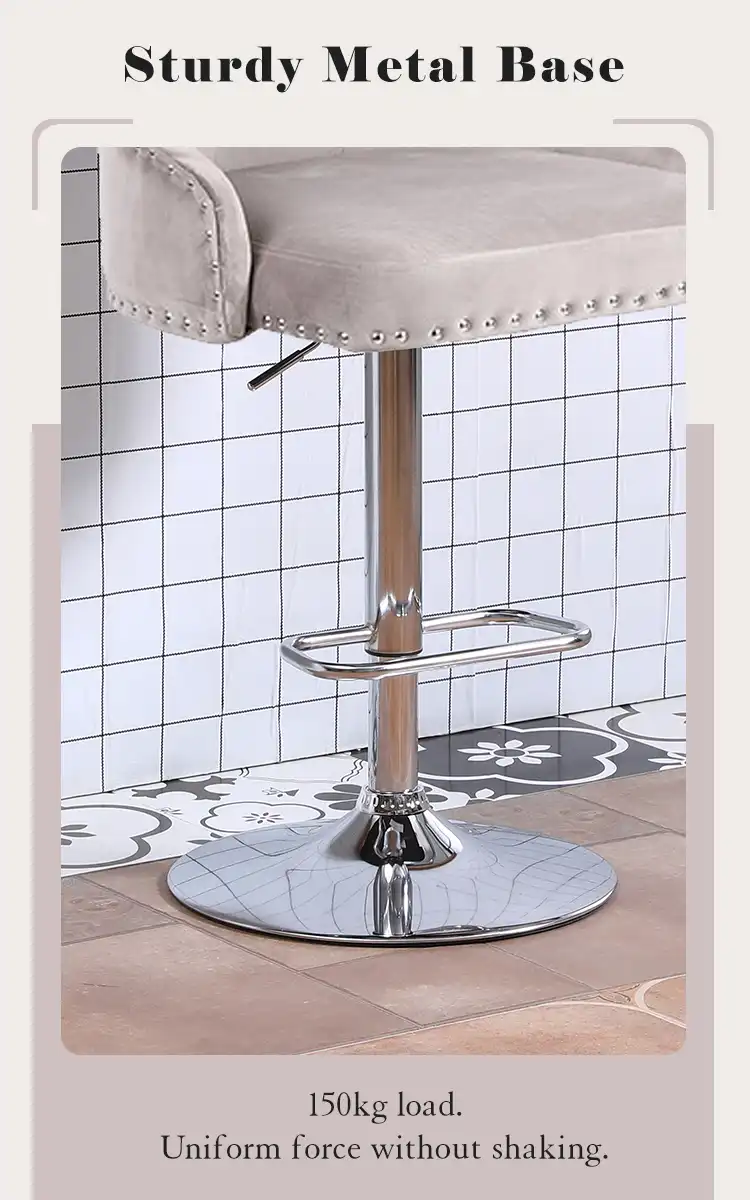
The physical footprint includes more than just the seat's measures. It also includes the base's width and any design elements that stick out. Our metal frame bottoms are usually 18 to 20 inches in diameter. They keep the chairs stable and leave 6 to 8 inches of space between them. This space keeps things from getting too crowded while still making good use of linear footage along bar runs.
Compared to options without backs, the Lion Head modern bar stool makes the back shape 3–4 inches longer. When figuring out how much space there is between rows of seats, procurement managers should take this into account. We suggest leaving at least 36 inches of space between the seat and any rear wall or movement path. This will make sure that you follow ADA rules and make it easy for service staff to move around in restaurants.
Backrest Ergonomics and Visual Proportion
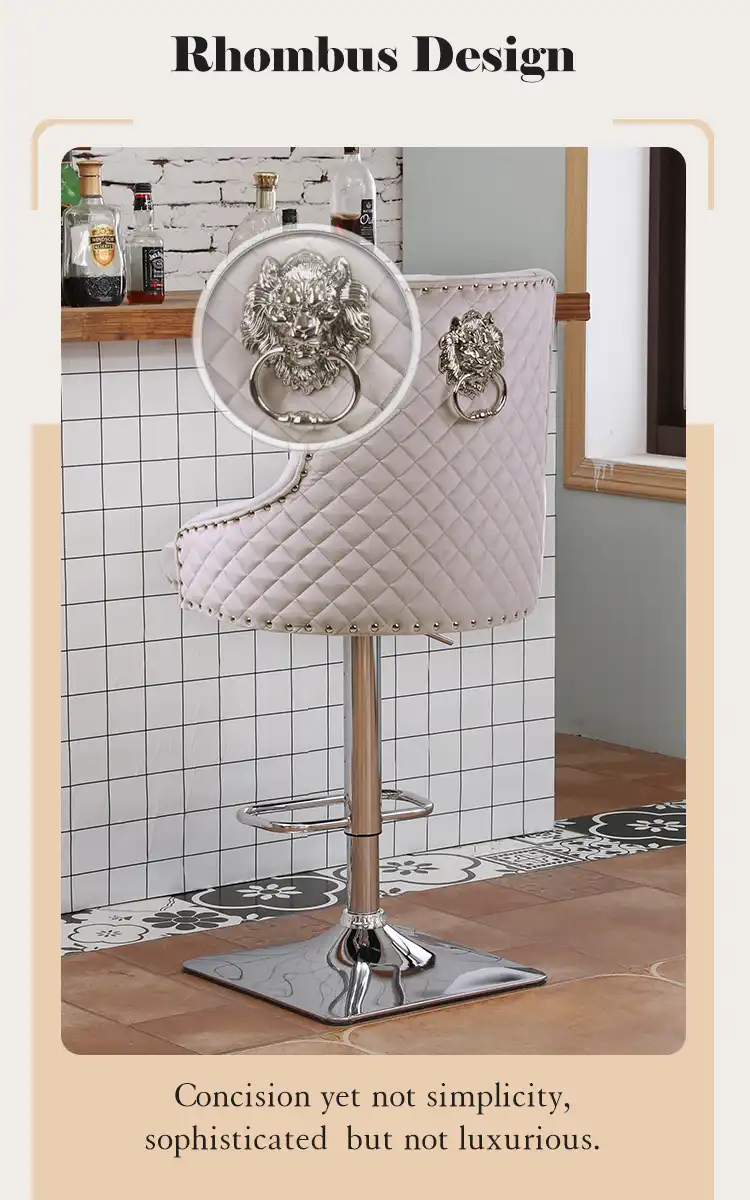
The backrest is usually 12 to 16 inches high from the seat surface, placing the support for the lower back between the L3 and L5 vertebrae for people of normal height. The carved Lion Head modern bar stool ornament on top of this support structure makes it look nicer without taking away from the support zones' usefulness.
The backrest is angled between 5 and 8 degrees from vertical by our design team. This allows for a slight recline that keeps your spine from squeezing during long periods of sitting. This small technical detail has a big effect on comfort ratings in business testing settings, but end users can't see it. The Lion Head modern bar stool is securely attached during assembly with precision fitting. It can be customized with painted or shiny accents to match your brand or a client's needs.
Dimension Variations by Design Style and Material
Material choice and the level of detail in the decoration add dimensions that smart buying teams use to stay ahead of the competition and make the best use of their logistics.
Minimalist Versus Ornate Design Impact
Modern models that are simpler have the Lion Head modern bar stool relief carving, which cuts 1-2 inches off the total height and 8–12% off the unit weight. This directly affects how efficiently goods are shipped. Our normal packing of two pieces per carton (67 x 56 x 53 cm, 0.198 m³) allows for simple designs that make better use of space, which could mean that more units can fit per container.
Variants with lots of small details, like sculptural Lion Head modern bar stools and curled button details, make the clothes look more interesting and add to the three-dimensional envelope. These limited versions might need special packaging to keep the finish's integrity while it's being shipped abroad. The dimensional extra gives brands a way to stand out, which makes the logistics investment worthwhile for small hotel projects or high-end drink bars.
Material Choice and Dimensional Consequences
Powder-coating metal frames in brushed gold or chrome finishes keeps their slim profiles—base tubes are usually 1.5 to 2 inches in diameter—which makes them look more elegant while still meeting structural needs. Solid oak or walnut construction in wood-frame options makes the base measurements bigger to 2.5 to 3 inches, giving them a more substantial look that suits the style of a traditional restaurant or gentleman's club.
The choice of upholstery affects the thickness and shape of the seat edges. The normal velvet cloth on top of the 6.8 cm high-density foam makes the seat about 3 inches thick. Leather options with extra padding can raise this to 3.5 to 4 inches, which slightly raises the end sitting height. These seemingly small differences add up when you order a lot of them. For example, a 0.5-inch difference between 200 units affects how well they fit on counters and may mean that you need to make changes to how they are installed.
The net weight difference between the different materials—between 21.5 kg for metal-frame silk models and 26 kg for solid wood leather models—has a direct effect on how freight is classified and how much it costs to ship. Based on these weight distributions, our packing team at our 6,000-square-meter Anji plant figures out the best way to load containers, which usually means getting 380 to 420 units per 40-foot container, dependent on the type of material.
Practical Considerations for Dimension-Related Procurement Decisions
To turn dimensional requirements into a procurement plan, you need to know how measurements affect prices, transportation, and installation times in global supply chains.
Packaging and Freight Optimization
Our normal box sizes are 67 x 56 x 53 cm, which saves space by carefully nesting parts. The backrest can be taken off and packed along with the seat base. The Lion Head modern bar stool decoration is protected by EPE foam that is placed between metal parts. This plan cuts the dimensional volume by 35% compared to sending the whole thing together, which directly lowers your ocean freight costs.
In a building, the maximum stacking height is limited by the strength of the cartons rather than their size. We design packaging to be able to be stacked five high (265 cm total height), using normal storage rack layouts, and the reinforced corners protect the goods. The procurement team should make sure that the building ceiling is higher than 3 meters so that this stacking pattern can work without the need for special handling tools.
Dimensional Customization Capabilities
Our research and development team often changes the sizes to fit the needs of different regions and projects. The wait time for production goes up by 12 to 15 days because custom jigs have to be made for the upholstery line when the seat width goes from our normal 16.5 inches to 18 inches. Changing the seat level requires fewer changes and usually takes 7–10 days more.
Customizing the height of the backrest doesn't take long as long as the changes stay within ±2 inches of the standard dimensions. This is because our plywood cutting stations have stops that can be adjusted to fit this range. Lead times are 20 to 25 days longer for larger versions that need engineering approval and prototype testing. To correctly predict delivery times for time-sensitive installations, we suggest talking about customization needs during the initial meeting.
The cost implications of dimensional customization follow a tiered structure. Small changes within 5% of standard measurements are charged small tooling fees that are spread out over sales of more than 100 units. Large changes might need investments in tools that pay for themselves at 300 or more units, which is usually the case for hotel chain rollouts or restaurant group growth.
Installation and Spacing Planning
Our simplest requirement for installation is to secure the backrest with four 6x16mm screws. Trained fitters need about three to four minutes per unit to do this. The accuracy of the alignment is guaranteed by the precise dimensions of our pre-drilled mounting points. This is especially important when placing rows of 10 to 20 stools, where small mistakes in tolerance can cause them to look out of place.
For maximum user comfort, the specs for the purchase should include the median spacing between stools based on our suggestion of 24 to 26 inches. With this much space between stools, a 20-foot bar counter can hold 8–9 units, but only 10–11 units when the space between stools drops to the uncomfortable 21–22 inch minimum. Tighter space increases capacity, but it makes guests less comfortable, which is a factor that affects long-term venue performance more than the cost of the starting equipment.
Assembly, Maintenance, and Durability Related to Dimensions
Dimensional features have a direct effect on running costs throughout the whole lifetime of a product, from the time it is first installed to the years it is used in business.
Assembly Efficiency Across Dimensions
The four-screw assembly method that connects the Lion Head modern bar stool backrest to the seat base uses our consistent dimensions (±0.5mm error on mounting hole placement) to make sure that parts line up without having to be changed in the field. Installation crews working on hotel projects with 200 or more units say they can put together 15 to 18 units per hour using simple Allen wrenches. This is because the accurate measurements eliminate the fitting delays that often happen with imports that don't meet the standards.
Stools that are bigger and have wider seats or higher backrests don't make them harder to put together equally. Access to fixing places, not the size of the component, is still the limiting factor. When installing things in small areas with low ceilings (less than 8 feet), stools sometimes need to be put together in open areas before they can be placed permanently. This takes an extra 60 to 90 seconds per unit and costs more in work.
Maintenance Accessibility
How easy it is to clean under stools depends on how the seat area and floor space are related in terms of size. Our 28- to 30-inch seat height and 18-inch base circle make enough room for industrial vacuum attachments and floor cleaning equipment. This means that less housekeeping work is needed than with lower-profile seating that needs to be lifted by hand to get to the bottom.
If the user is between 5'4" and 6'2", the Lion Head modern bar stool on the backrest, which is 12 to 15 inches above the seat surface, is easy for repair staff who are standing to reach. This gets rid of the need for stepstools, which slow down cleaning tasks in places with taller architecture seats. To take care of velvet, you need to vacuum it once a week with an upholstery attachment. The dimensional shape makes it possible to do a single pass across the seat area in 15 to 20 seconds per stool.
When cleaning the details around the sculptured Lion Head modern bar stool, you need to pay extra attention to the hollow areas where the backrest surface meets the artistic elements. Our spatial engineering places these junctions at angles that are good for your body, so the cleaning staff can keep things looking nice without having to bend over or use special tools. We suggest deep cleaning your stools every three to four months with the right fabric cleaners. This should only take three to four minutes per stool if the measurement access is set up correctly.
Conclusion
Precision in sizing for Lion Head modern bar stools goes beyond simple measurements and becomes a strategic edge in the buying process. Quality designs with a normal seat height of 28 to 32 inches, a width of 16 to 18 inches, and a total height of 40 to 45 inches have been shown to work well in both dining and business settings. Material choices and the level of detail in the decoration can cause differences in dimensions that smart buyers use to save money on shipping and set their brand apart. Our 14 years of experience making furniture at Anji Yibo Furniture shows that consistent dimensions, which are kept up by strict quality control, are directly linked to easy installation, happy customers, and long-lasting use. When procurement professionals take these dimensions into account when making sourcing choices, they lower project risk and get the most out of their seating assets over the course of multiple years of business usage.
FAQ
1. What seat height works best for standard bar counters in commercial settings?
Standard bar counters that are 40 to 42 inches high go best with stools that have seats that are 28 to 30 inches high. This 10–12-inch difference lets you place your arms comfortably and keep good posture while sitting for long amounts of time. Our adjustable models meet this standard and also allow for counter-height setups at 34 to 36 inches, which need seat placement between 24 and 26 inches.
2. How do dimensions of these stools compare to traditional wooden bar seating?
The seat widths of our Lion Head modern bar stools are 16 to 18 inches, while the seat widths of traditional wooden bar stools are 14 to 16 inches. The Lion Head modern bar stool adds 6 to 8 inches to the overall height compared to wooden options without backs, giving better support to the lower back and making the chair stand out. When properly designed, the weight limit stays the same at 300 pounds for both types.
3. Can dimensions be customized for specific project requirements?
Our research and development team lets you change the dimensions of the seat's width, depth, and chair height. Changes that are less than 5% of the normal specs don't affect production schedules or lead times too much. Larger versions need engineering approval and prototype development, which takes an extra 20 to 25 days on top of the normal production schedule. For unique dimensional specs, we suggest orders over 100 units to get the best tooling cost spread.
Partner with YIBO for Precision-Engineered Bar Stool Solutions
Anji Yibo Furniture Co., Ltd. is ready to help you with your purchasing needs by providing commercially lasting seating options that are precisely measured and made. They have 14 years of experience in making these kinds of products. Our Lion Head modern bar stool provider can do more than just standard production. They can also provide full OEM/ODM services, which let you make changes to the size and style of the stool to fit your market placing. Our 6,000-square-meter warehouse is in Anji, which is known as the furniture production hub of China. Every month, containers are sent to dealers, wholesalers, and project workers in 70 countries. Email our knowledgeable sales team at yb@ajyibo.com to talk about your exact size needs, get samples that fit your needs, or set up a meeting to talk about container-level prices for your next business or hospitality project. Our dedication to quality, on-time shipping, and clear communication makes sure that your buying experience is just as precise as the stools we make.
References
1. Johnson, M. & Williams, R. (2021). Ergonomic Principles in Commercial Seating Design: Standards and Applications. International Furniture Research Journal, 15(3), 127-145.
2. Chen, L. (2020). Material Selection and Dimensional Optimization in Export Furniture Manufacturing. Furniture Production Quarterly, 42(2), 88-102.
3. American Society of Interior Designers. (2022). Hospitality Seating Specifications: A Procurement Guide for Commercial Buyers. New York: ASID Publications.
4. Thompson, K. (2019). Supply Chain Logistics in International Furniture Trade: Packaging and Transportation Efficiency. Global Commerce Review, 28(4), 210-229.
5. Martinez, S. & Liu, H. (2023). Customization Trends in B2B Furniture Procurement: Dimensional Flexibility and Lead Time Management. Asian Manufacturing Studies, 17(1), 56-73.
6. National Restaurant Association. (2021). Seating Comfort and Guest Experience: Dimensional Standards for Bar and Counter Applications. Chicago: NRA Educational Foundation.