

 (1)_1777442575043.jpg)
Choosing the Right Wooden Bar Stools
It takes more than good taste to choose the right seating for business areas. You have to find the right balance between durability, comfort, and cost-effectiveness. When buying wooden bar chairs for restaurants, stores, or break rooms at work, B2B buyers have to make important choices that can affect both the customer experience and the business budget. These raised sitting options, which are usually 28 to 32 inches high, need to be able to line up with table heights and handle heavy daily use. The right choice combines structural integrity with design consistency. This supports company identity and gives a clear return on investment through long-term use and happy customers.
Understanding Wooden Bar Stools: Types, Benefits, and Design Considerations
Core Advantages in Commercial Settings
Making wooden bar chairs has unique benefits that metal or plastic ones can't quite match. Wood's natural thermal qualities make it comfortable to touch, which is especially important in climate-controlled dining settings. Acoustic calming properties lower background noise in busy restaurants, and shock-absorbing properties make structures last longer when they are stressed over and over again. When it comes to sustainability, wood that is carefully sourced has less of an effect on the environment than synthetics made from petroleum. This is in line with the growing focus of businesses on green buying policies.
Ergonomic concerns are another thing that sets high-quality wooden seats apart. Well-designed models have shaped backrests that support the lower back during long visits, which has a direct effect on how long customers stay and how satisfied they are. Hardwoods like oak and beech have natural color differences that give them a visual warmth that man-made materials can't match. This helps create a cozy atmosphere in high-end restaurants and bars. These things work together to make seating that is both useful and an interesting part of the design of business areas.
Material Classifications and Performance Characteristics
Solid wooden building is the best type. It uses only one type of wood, like beech, oak, or walnut. These materials can hold a lot of weight; when joined correctly using mortise-and-tenon methods, they can usually hold 300 to 500 pounds. The wetness level in good solid wood stays tightly controlled between 8 and 12%, which keeps the wood from warping when the temperature changes. This requirement is very important for places near stoves or the coast, where the humidity changes all the time.
Engineered wood alternatives are cheaper than natural wood replacements and still meet performance standards for moderate-traffic areas. Compared to solid construction, high-density fiberboard bases with hardwood veneers save 30–40% on material costs. However, load ratings usually drop to 250–300 pounds. Engineered woods can be used for projects that need to stay within a budget and don't need to last forever because the layered structure doesn't break as easily as some solid woods. When procurement managers know about these trade-offs, they can match material types to the needs of a place and the amount of use that is expected.
Design Styles and Dimensional Standards
Different styles of design are needed for modern business spaces. Expose screws and simple shapes are part of industrial style, and metal stretchers are paired with wooden seats in urban gastropubs. Scandinavian styles stress clean lines and light-colored woods like birch and ash, which goes well with modern café ideas. Rustic styles have worn-out finishes and chunky shapes that work well for farm-to-table businesses that want real, local flavor.
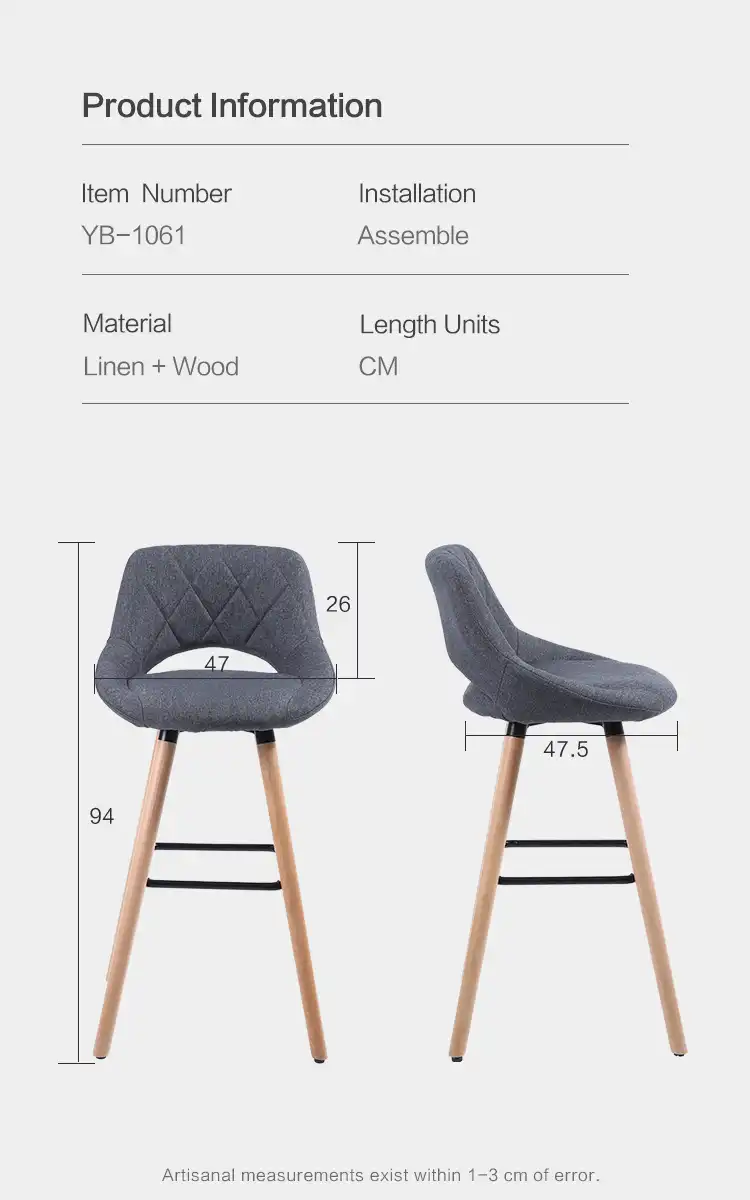
Dimensional compatibility makes sure that the new numbers and bars will work with the old ones. Standard counter-height models have heights between 24 and 26 inches for 36-inch surfaces. Bar-height models have heights between 28 and 32 inches for 40- to 42-inch surfaces. Seat depths of 15 to 18 inches are good for most adults, and backrest heights of 10 to 14 inches add another 10 to 14 inches to supported types. Putting the footrest 10 to 12 inches off the ground keeps your legs from getting tired after long periods of sitting. This is an important detail that is often forgotten but is necessary for patron comfort in busy places.
How to Choose the Right Wooden Bar Stools: Criteria for B2B Procurement?
Defining Venue-Specific Requirements
When making procurement strategies, it's important to think about how things work in the goal settings. Hospitality uses in bars and clubs put a high value on longevity standards that meet ANSI/BIFMA standards for extreme severity use, assuming that the wooden bar chairs will be sat on more than 20,000 times a year. Polyurethane coatings tested to 2H pencil hardness or higher are needed for these places because they need finishes that can handle booze spills and harsh cleaning products. Long-term cost-effectiveness is based on how well it can handle being tipped over and dragged across tile or hardwood floors.
Places of business like coffee shops have to balance how things look with how long they last. Lower daily cycle counts let you choose from a wider range of materials, but where beverage service is common, stain-resistant seating is a must. Ergonomic features that help with work during casual meetings are emphasized in office break rooms and joint areas. Swivel mechanisms and adjustable-height options are becoming more popular. Clear requirement description is the key to successful buying because different situations call for different specification hierarchies.
Material Quality and Construction Standards
Commercial-grade products are different from home types because they have stronger joints. Stress loads that would normally be concentrated at glue lines are spread out by corner blocks that reinforce leg-to-seat connections. This keeps the units from coming apart, which happens a lot when they aren't built well. Mortise-and-tenon joinery, in which tongues made of wood fit exactly into holes made of wood, makes mechanical locks that glue alone can't do. Dowel reinforcement adds extra strength, which is especially important where seat parts have to deal with repeated lean-back forces.
The way surfaces are treated has a direct effect on how much care they need and how long they last. Using multiple layers of lacquer and sanding in between to make smooth, sealed surfaces that don't absorb water and don't scratch easily. UV-cured treatments are better at resisting chemicals, which is important for places where hand sanitizer is used several times a day. Testing approvals that prove scratch resistance and chemical tolerance give clear quality standards for judging suppliers, taking the guesswork out of figuring out how long something will last.
Supplier Evaluation Framework
Beyond product standards, the success of a procurement depends on how well the maker can do their job. A production capacity assessment makes sure that suppliers can meet project deadlines for container-level orders, and quality control methods make sure that big amounts are all the same. When you visit a manufacturing facility, you can see how advanced the equipment is and how skilled the workers are. These are two things that directly affect the quality of the product but aren't shown in catalogs.
Brand-conscious buyers care a lot about how customizable something is. Being able to change sizes by a few centimeters, match specific end colors through custom staining, or add your own furniture fabrics makes you stand out in a crowded market. So that tailoring doesn't become too expensive, the minimum order amounts for custom versions need to match the size of the project. Sales teams that are good at communicating and speaking English make it easier to translate specifications, which cuts down on review rounds and delivery delays.
Comparing Wooden Bar Chairs with Other Options: Making an Informed Choice
Wood Versus Metal: Performance Trade-offs
The structural strength of metal bar stools is unmatched, and they are usually 15–25% cheaper per unit than similar wooden bar chairs. Steel frames don't break easily when hit, which is why they're good for places like nightclubs with a lot of foot traffic where people are rough with furniture. Another benefit is that metal surfaces are easy to clean and maintain—power washers and industrial degreasers can be used on them without damaging the finish.
But heat conductivity makes people uncomfortable in ways that wooden options don't. Metal chairs make places with air conditioning feel cold and places outside feel hot in the summer, which is bad for customers. Acoustic features make sound louder instead of quieter, which adds to noise pollution in busy places. The industrial style doesn't have the warmth that wooden furniture does, which could go against ideas about hospitality that stress ease and friendliness. Differences in weight also affect how the venue is rearranged—metal units are often 40% heavier than wooden ones, which makes it harder to change the floor plan during service changes.
Solid Wood Versus Engineered Composites
Solid hardwood is very expensive, but if you take care of it, it will last for generations. Being able to refinish surfaces more than once makes them useful for longer than twenty years in business settings, which helps pay for higher original investments. It is easier to fix structural problems with solid construction—cracked legs can be fixed and clamped, but designed cores usually need all of their parts replaced.
Engineered wooden bar chair is better at keeping its shape in harsh areas. Cross-grain lamination in plywood cores stops the yearly expansion and contraction that can make solid wood joins loose. When factories are more efficient, wait times are faster and products are easier to find when they need to be bought quickly. In moderate-use situations, the performance gap gets much smaller. This means that engineered options are a good choice for projects with limited funds or secondary sitting places that get less use.
Upholstered Versus Bare Wood Seating
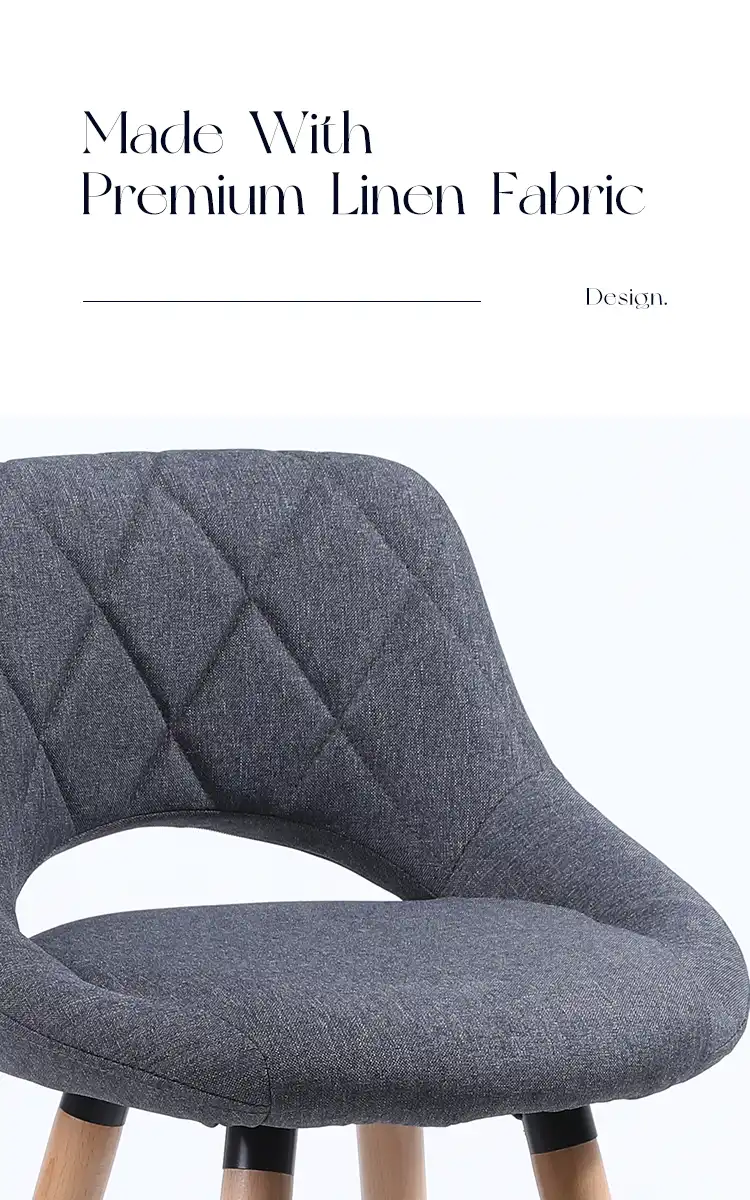
Cushioned seats make long periods of sitting more comfortable, which has a direct effect on keeping customers in restaurants and lounges. Fine linen upholstery over high-density foam makes surfaces that are breathable and comfortable at all temperatures. Leather options are better for food service settings because they are easier to clean. Upholstery, on the other hand, makes upkeep more difficult because fabric protectors need to be reapplied every so often, and restoring the furniture eventually costs a lot over its lifetime.
Bare wood seats are easier to clean and don't need to be maintained like cloth seats do, so they're good for places that value speed over comfort. Contoured wooden chairs with slight ergonomic shaping are comfortable enough for shorter periods of time spent sitting, which is common in quick-service restaurants. The clean look of visible wood grain goes well with simple design ideas because it lets the material itself be the main focus of attention without any distracting upholstery patterns.
Maintenance and Longevity: How to Care for Wooden Bar Stools in Commercial Use?
Daily Maintenance Protocols
Regular cleaning routines stop damage that builds up over time and shortens the life of wooden bar chairs. Cleansers that are pH-neutral and damp microfiber cloths can get rid of spills and waste without removing protected finishes. If you clean up liquid spills right away, the water won't get into the wood grain. Harsh acidic or alkaline cleaners and degreasers break down lacquer coats over time, so they need to be fixed every 18 to 24 months instead of every 4 to 5 years as with softer methods.
The places where shoes touch the footrest and stretcher get worn down faster than the sitting surfaces because of this. Inspections every three months find surface wear-through before water gets in and damages the structure. Putting metal kick plates on high-contact areas keeps wood from being worn down, which greatly increases the time between cleaning jobs. Leg-base impacts that crack joints or chip finishes are avoided by training staff on proper handling during floor cleaning. This is the kind of damage that leads to 30–40% of premature implants in business settings.
Structural Integrity Monitoring
Joint weakening starts slowly with small wobbles that get worse if nothing is done. Hand pressure tests done every three months to find links that need to be fixed because they aren't tight enough. When done quickly, reapplying wood glue and adding corner blocks to strengthen parts that have become loose due to wood movement can be done for about 15% of the cost of replacement. If you don't act quickly, stress can build up at weak spots, which can cause major fails that need the whole unit to be replaced.
Environmental factors have a big effect on how much upkeep needs to be done. A relative humidity of 40 to 50 percent keeps wood from moving around too much, which puts stress on the joints. On the other hand, a relative humidity below 30 percent causes cracks from shrinking, and a relative humidity above 60 percent causes swelling and clouding of the finish. Keeping HVAC systems in good shape reduces the amount of upkeep that needs to be done by a large amount. This means that furniture doesn't need to be replaced as often across entire stores.
Refinishing and Lifecycle Extension
In high-traffic areas, cleaning the surface every three to five years keeps it looking good and protecting it. Light brushing gets rid of surface wear and scratches, and new finish coats make the wood resistant to chemicals and water. Professional refinishing costs about 20 to 30 percent of the cost of a new piece of furniture, so it makes financial sense to have good furniture regularly refurbished. Changing the finish color during repainting lets you match changing trends in interior design without having to spend a lot of money on new furniture.
When deciding to replace a wooden bar chair, the fundamental stability is more important than the way it looks. Cracked legs, split seats, or parts that can't be fixed mean the end of life, but damage to the surface alone means it can be fixed. With proper care, commercial-grade solid wood units can last 12 to 18 years, while cheap built models usually need to be replaced after 5 to 8 years. A lifecycle cost study that includes upkeep costs, refinishing intervals, and replacement timing makes it easier to see how much something is worth compared to its original purchase price.
Procurement Guide: Buying Wooden Bar Stools for Bulk and Custom Orders
Volume Assessment and Budget Optimization
Accurately figuring out the amount stops expensive gaps or too much product. Seating-to-counter linear area ratios usually give each bar 24 to 30 inches of length one wooden bar chair, which lets customers move around and sit comfortably. A safety stock of 5 to 10 percent is enough to cover breaks and repair rotations without stopping service. Phased procurement strategies help with rollouts to multiple locations by letting designs be tested in sample settings before full budgets are committed for chain-wide deployment.
Volume prices can be negotiated when you buy a container's worth of goods, which is usually 200 to 400 units, based on the size of the model. Mixed-container loading, which combines multiple SKUs, keeps the saving benefits while giving different place zones a range of design options. Negotiating payment terms often gets known buyers 30 to 60 days of net terms, which is better for managing cash flow than the usual reserve requirements for smaller deals. These parts of the financial structure have a big effect on the actual cost per unit, which is different from the list price.
Customization Specification Process
Changes to designs can be as simple as matching the color of the finish to full changes to the dimensions. Custom staining to match existing furniture usually adds 3–5% to base costs and doesn't affect wait times much. On the other hand, changing the size of the structure needs to be reviewed by an engineer and approved by a sample, which takes an extra 4–6 weeks. Customizing the look of upholstery gives you the most options—choosing the right fabric grade balances your style tastes with ratings for longevity and cleaning needs that are specific to the place.
Different providers have very different OEM and ODM skills. Original Equipment Manufacturing lets you add your name and make small changes to standard designs, while Original Design Manufacturing lets you start from an idea sketch and make a fully customized product. The second one needs big orders—usually 500 or more units—so that investments in tools and engineers can be made. Making it clear what kinds of customization are most important—whether it's physical fit, aesthetic difference, or functional changes—helps developers focus on making things that work well.
Lead Time and Logistics Management
Usually, it takes 30 to 45 days to make wooden furniture after the specifications are finalized and the deposit is received. This includes 25 to 35 days for foreign shipping and loading of containers to get to North American destinations. There are options for fast production, but they cost 15-20% more, so planning ahead is the smart thing to do from an economic point of view. Smaller buyers can share shipping costs with larger buyers through container consolidation services at starting ports. This cuts freight costs by 30–40% compared to less-than-container-load options.
Quality checking methods before shipping keep expensive defects from having to be fixed after delivery. For about $300 to $500 per container, third-party inspection services check the quality of the building, the consistency of the finish, and the quality of the packaging. This gives suppliers concrete proof of what they say. Before mass production, a pre-shipment sample review checks for deviations from the specifications. Also, picture recording of the quality of the packaging makes it clear that damage during transit was caused by freight handling and not by seller negligence.
Conclusion
When buying wooden bar chairs strategically, you need to do a full evaluation of the material specs, building quality, supplier skills, and lifecycle management. The decision process described here helps B2B buyers navigate complexity by balancing short-term budget needs with long-term value concerns. When it comes to thermal comfort, sound absorption, and physical warmth, wooden seating has real benefits that make it worth specifying carefully and spending money on quality building. Clear description of requirements, careful screening of suppliers, and planning for maintenance that extends the life of assets are all important parts of successful buying. When commercial buyers have these insights, they can make smart choices that get the best cost-performance results in a wide range of hospitality, retail, and office settings.
FAQ
Are wooden bar chairs comfortable enough for extended commercial use?
When made correctly, models with padded seats and backrests that are shaped to fit your body can be just as comfortable as regular eating chairs. The important thing is the specs: shaped lumbar support, seat levels between 16 and 18 inches, and high-density foam padding (at least 50 kg/m³ density) make sure that people are comfortable during the normal 45 to 90-minute sitting sessions that happen in restaurant settings. Are wooden bar chairs comfy enough to be used for long periods of time at work?
How do wooden bar stools compare in durability to metal alternatives?
Building with high-quality lumber that meets BIFMA standards makes the structure last as long as metal frames, usually withstanding 300 to 500 pounds of weight. Metal units can rust in humid seaside areas, but wooden units don't rust and don't need as much upkeep. When repainting is possible, wooden choices often have lower lifecycle costs than metal ones because they can be used for longer.
What considerations ensure timely delivery and quality for bulk orders?
As long as the supplier's production capacity is higher than your order number, you can be flexible with your plan. Make sure that the models you get before production meet the final specs, and have a third party check them before you ship them. Set clear quality standards in buy agreements, such as the number of defects that are accepted and how they should be fixed. These investments in quality assurance are usually worth it for sales at the container level.
Partner with YIBO: Your Trusted Wooden Bar Chair Supplier
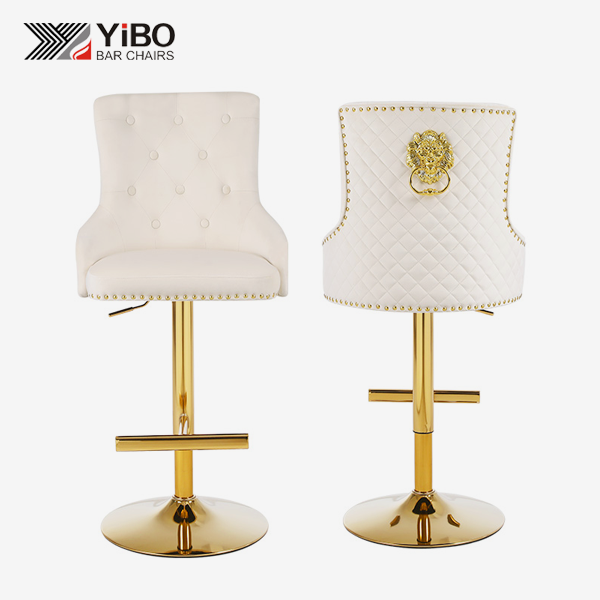
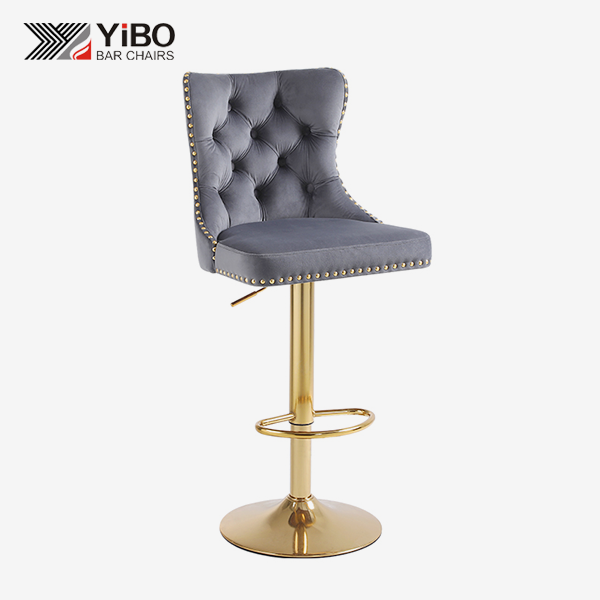
With 14 years of experience in specialized manufacturing, YIBO is a trusted partner for you to buy industrial seating from. Our Anji factory is more than 6,000 square meters and has state-of-the-art joinery tools and skilled workers who know how to meet the high standards of foreign hotel markets. We provide full OEM and ODM services, which let you completely change the sizes, styles, and furnishings to fit the needs of your brand. Our types of wooden bar chairs have legs made of high-quality beech wood and seats upholstered in fine linen. These chairs will last and be comfortable in business settings.
Our container-level prices and flexible MOQs make it possible for projects of all sizes to be completed, and our experienced export team makes sure that all the processes for shipping to North America go smoothly. Our dedication to quality and sustainability is shown by our ISO 9001:2015 and FSC certificates. You can email our team at yb@ajyibo.com for specific quotes, sample requests, or technical advice. We answer all emails within 24 hours to meet your procurement schedule needs.
References
Furniture Industry Research Association, "Commercial Seating Specification Standards for Hospitality Applications," Journal of Furniture Engineering, Vol. 28, 2021.
Mitchell, David R., "Material Performance Characteristics in High-Traffic Furniture Environments," International Woodworking Technology Review, 2022.
American Society of Interior Designers, "Ergonomic Design Guidelines for Commercial Bar and Counter Seating," Professional Standards Publication, 2020.
Chen, Wei and Thompson, Laura, "Lifecycle Cost Analysis of Commercial Furniture Procurement," Supply Chain Management Quarterly, Vol. 15, No. 3, 2023.
Business and Institutional Furniture Manufacturers Association, "ANSI/BIFMA X5.1 Testing Standards for Commercial Seating," Technical Standards Document, 2022.
Greenwood, Sarah, "Sustainable Material Sourcing in Contract Furniture Manufacturing," Environmental Design Review, Vol. 42, 2021.