

 (1)_1777442575043.jpg)
Do Round Base Bar Stools Fit Standard US Bar Counter Height?
Yes, when properly specified, a round base bar stool will fit a normal US bar counter height. Most models that can be adjusted can fit the normal 40- to 42-inch bar counters found in American businesses. The most important thing is to choose stools with seat heights between 28 and 32 inches, making sure there is 10 to 12 inches of space between the seat area and the counter bottom. Gas lift cylinders on round-base barstools allow for exact height adjustment, making them perfect for both standard bar counters and the sometimes different counter heights found in home or small-business hospitality settings, which can be anywhere from 39 to 43 inches.
Understanding Standard US Bar Counter Height and Round Base Bar Stools
Defining Standard US Bar Counter Specifications
In the US, the standard height of a bar counter is always between 40 and 42 inches from the floor to the top of the counter. This height has been set by decades of ergonomic study and industry standardization. Commercial settings like restaurants, hotels, and entertainment venues usually stick to the 42-inch standard. In homes, however, the width can range between 39 and 41 inches based on the design of the kitchen island and the homeowner's preferences.
People often mix up counter-height surfaces with bar height ones. Counter-height surfaces are lower, at 34 to 36 inches, and need completely different sitting options. When buying furniture for mixed-use areas, people in charge of procurement need to be able to tell the difference between these groups. The 40-42-inch standard came about because biomechanical studies showed that people's elbows and lower backs are in the best position when they are sitting at this height. This makes it easier for them to work for long amounts of time in hospitality settings.
Design and Construction Features of Round Base Stools
Round base bar stools are made with a single pedestal and a center column supported by a circular disc base instead of the more common multiple-leg designs. This architectural method meets certain needs in the business world, such as making it easier to clean the floors, reducing visual clutter in high-density seating arrangements, and making the building more stable by lowering its center of gravity.
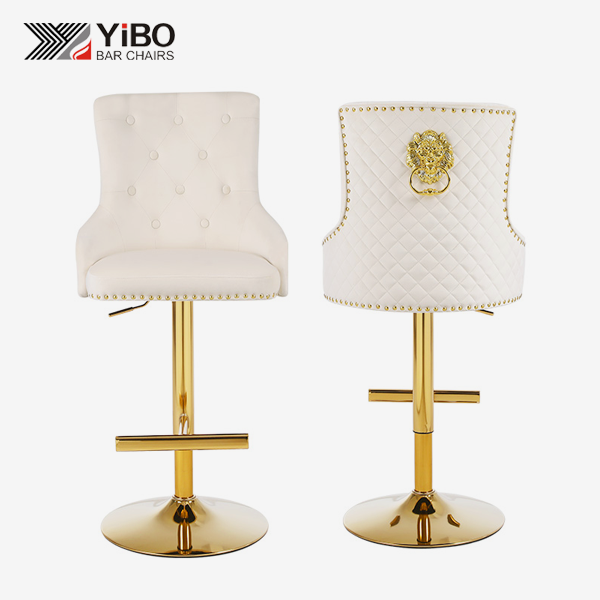
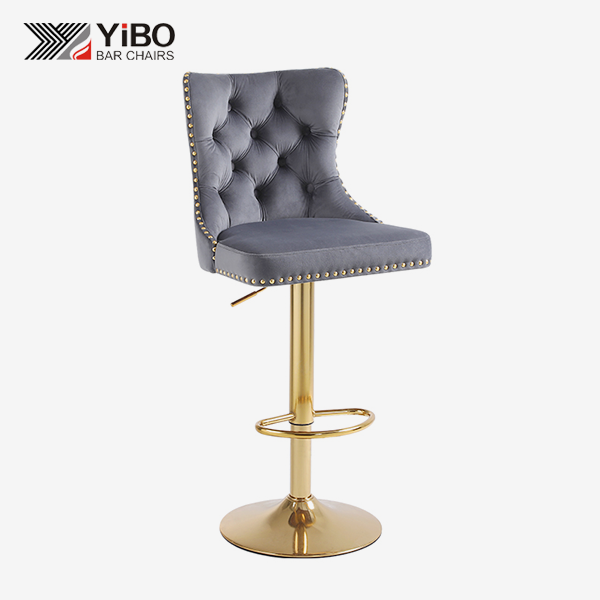
The base width is usually between 15 and 19.5 inches (380 mm to 495 mm), and commercial-grade units tend to have bigger footprints to keep them from tipping over when the load is uneven. Our factory uses a gold-plated 385mm chassis made of 1.1mm cold-rolled steel that is designed to meet the stability standards of BIFMA X5.1. The center column holds a Class 3 gas lift cylinder, specifically our 330# secondary air rod. This allows for smooth height adjustments over an 8-inch range and can hold up to 330 pounds.
The choice of material has a direct effect on how long something will last in business settings. Multi-layer nickel-chrome plating or electrostatic powder coating is used on steel bases to make them resistant to corrosion in humid bar settings where acidic drinks like citrus cocktails and wine can happen more easily. Our gold-plated half-round feet have built-in silicone floor protection rings that keep the surface from getting scratched and stop the black scuff marks that happen when cheap PVC glue strips come off over time.
Ergonomic Seat Height Correspondence
In commercial settings, the link between counter height and seat height affects how comfortable users are and how well the business runs. Ergonomic standards say that there should be 10 to 12 inches of space between the seat surface and the bottom of the counter. This gives your thighs enough room and keeps your elbows at the right angle for serving food or drinks.
Seat heights should be between 30 and 32 inches when setting up a normal 42-inch bar counter. With a minimum height of 28 inches when folded and a maximum height of 36 inches when fully stretched, our models that are adjustable and have gas lift mechanisms fit this range perfectly. This ability to be adjusted is very helpful for procurement managers who need to buy furniture for places with different counter layouts or who are planning improvements for the future.
Height specs work with seat depth and backrest placement to make full ergonomic profiles. Seats that are only 14 to 15 inches deep and backrests that are not very high are good for social settings where people often turn and talk. Our regular velvet upholstery over standard density foam provides enough cushioning for 45–90 minute seating durations that are common in bars and casual dining settings. It strikes a good balance between comfort and firmness to help customers leave in busy business settings.
How to Choose the Right Round Base Bar Stool for Standard US Bar Counters?
Critical Evaluation Criteria for Procurement Professionals
To choose the right seating for large orders, you need to evaluate it systematically across a number of performance factors. It is very important that the seat height can be changed. Fixed-height models make installation less flexible and cause problems when counter heights don't match exact specs. Gas lift mechanisms that meet DIN 4550 Class 3 standards guarantee reliable performance for 100,000 adjustment cycles, which is about five years of daily use in hospitality settings with moderate traffic.
Material resilience is more than just how it looks; it also includes how long it works under stress from use. Steel parts must show they can fight corrosion by passing the 24-hour CASS (Copper-Accelerated Acetic Acid Salt Spray) test without pitting or losing their finish. Upholstery materials need to be tested for abrasion resistance using Martindale cycles. For commercial use, the minimum rating is 30,000 cycles, but places that serve alcohol should have specifications higher than 50,000 cycles because of the friction from people moving around and the need to clean the furniture more often.
Safety approvals provide objective proof of the strength of a structure. BIFMA compliance means that a product has been through a lot of tests, such as a proof load test for leg strength (1,136 kg), a base stability check, and a gas lift tank safety check. These standards keep end users and organizations that buy things from being held responsible if public place furniture breaks.
Precise Height Matching Guide
Matching round base bar stool dimensions to counter specifications requires attention to numerical precision often overlooked in residential contexts but critical for commercial success. The table below outlines recommended specifications:
Counter Height: 36 inches (Counter-height) → Seat Height: 24-26 inches → Clearance: 10-12 inches
Counter Height: 40 inches (Bar-height) → Seat Height: 28-30 inches → Clearance: 10-12 inches
Counter Height: 42 inches (Standard Bar) → Seat Height: 30-32 inches → Clearance: 10-12 inches
Adjustable models with 8-inch adjustment ranges can accommodate multiple configurations within a single SKU, simplifying inventory management for distributors serving diverse client bases. Our units compress to 28 inches and extend to 36 inches, covering the entire spectrum from counter-height to tall bar applications. This versatility reduces procurement complexity for mixed-use developments incorporating both standard dining counters and elevated bar surfaces within the same property.
Footrest positioning correlates directly with seat height and user comfort. Footrests should sit 8-10 inches below the seat surface, placing patrons' knees at approximately 90-degree angles when seated. Fixed footrest rings on our models position at 17 inches from the floor when seats adjust to 28 inches, maintaining optimal ergonomic relationships across the adjustment range.
Comparative Analysis of Base Design Options
Round base configurations offer distinct advantages and limitations compared to alternative structural approaches. Traditional four-leg designs provide superior stability with smaller footprints, making them suitable for tightly-packed seating arrangements where floor space is constrained. However, the multiple floor contact points complicate cleaning operations and create visual complexity that detracts from minimalist design aesthetics increasingly popular in contemporary hospitality interiors.
Square pedestal bases deliver comparable cleaning benefits to round variants while offering slightly enhanced resistance to tipping when forces apply perpendicular to the base edges. Yet the angular geometry creates collision hazards in crowded environments and limits the smooth 360-degree rotation that facilitates social interaction in bar settings.
The round base excels in high-traffic commercial applications through several mechanisms. The circular footprint eliminates directional orientation concerns during setup, accelerating installation for large-scale projects. The continuous edge permits mopping and sweeping in any direction without maneuvering around legs or corners. Swivel functionality integral to most pedestal designs allows patrons to enter and exit without dragging stools across flooring, reducing both noise and surface wear.
Weight distribution characteristics favor round bases in environments with mixed flooring materials. The distributed load across a circular perimeter reduces point pressure compared to four-leg designs, making them safer for luxury vinyl tile and engineered wood surfaces prone to indentation. Our 15.2-inch diameter base with embedded floor protection creates approximately 182 square inches of contact area, limiting pressure to roughly 1.8 psi under a 330-pound load—well within safe thresholds for commercial flooring systems.
Benefits of Round Base Bar Stools in Commercial Procurement
Ergonomic Advantages in High-Traffic Settings
Commercial seating must balance comfort with operational efficiency, a challenge addressed effectively through thoughtful round base designs. The 360-degree swivel mechanism reduces the torque applied to lumbar structures when patrons turn to engage neighboring seats, particularly relevant in bar environments where social interaction drives extended occupancy durations. This rotational freedom decreases the muscular effort required for positional changes, reducing fatigue accumulation during multi-hour visits common in entertainment and nightlife venues.
Height adjustability accommodates diverse patron populations without requiring multiple stool variants, a procurement advantage that simplifies inventory management while ensuring accessibility compliance. The gas lift mechanism enables adjustment without tools or staff intervention, allowing patrons to self-optimize seating positions. This feature proves especially valuable in corporate cafeterias and hotel lobby bars serving users ranging from petite individuals requiring lower seat positions to taller patrons needing maximum extension.
Backrest configurations on our models provide lumbar contact without restricting movement, supporting the natural lordotic curve while permitting the forward lean necessary for counter-level dining and beverage consumption. The low-profile backrest design measures 8 inches in height, offering support without creating the enclosed sensation associated with full-height dining chair backs that discourage social interaction across seating rows.
Design Versatility and Material Customization
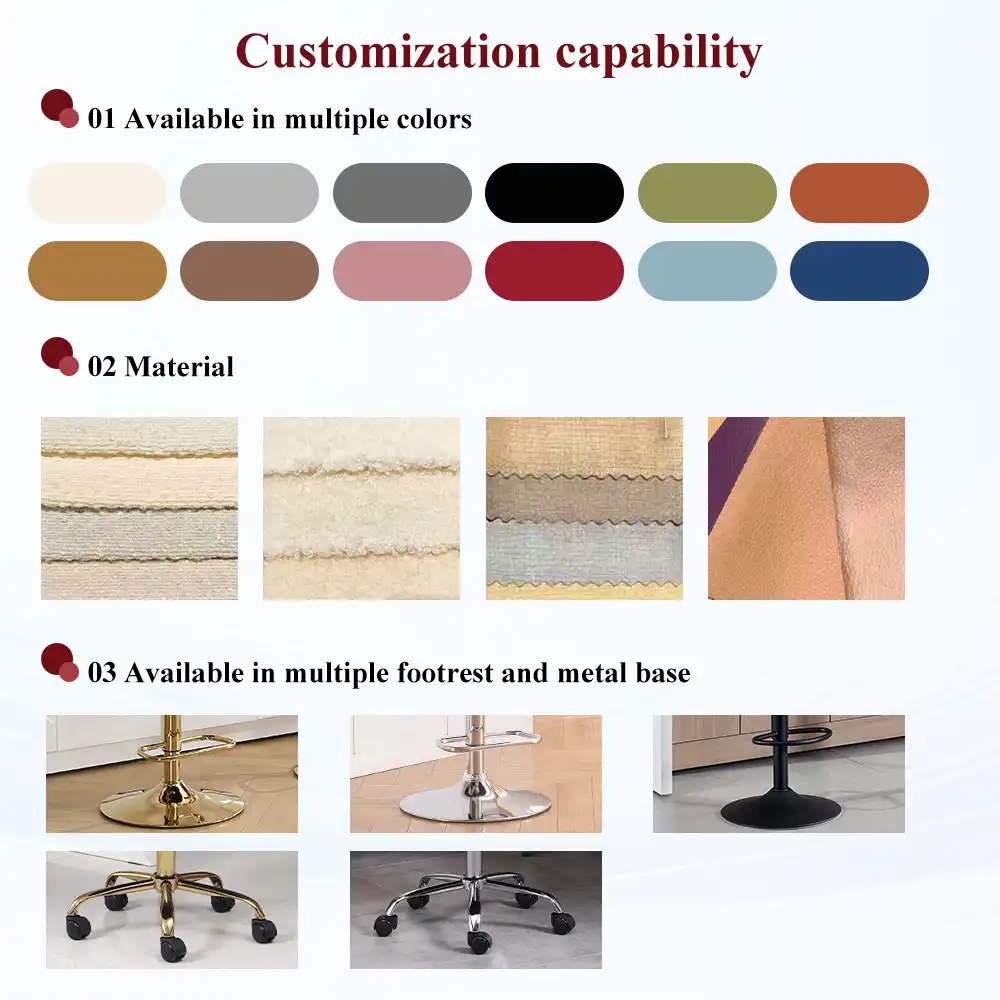
Round base bar stools adapt seamlessly to diverse interior design schemes through material and finish variations. Metal bases accept multiple surface treatments: polished chrome for contemporary aesthetics, brushed nickel for transitional spaces, matte black powder coating for industrial themes, and our signature gold-plated fittings for luxury hospitality applications. The uniform circular geometry maintains visual coherence across finish options, allowing designers to specify different colors within the same space without stylistic conflict.
Upholstery options extend from practical vinyl for high-volume establishments to premium materials for upscale venues. Our ordinary velvet option provides a mid-tier solution balancing tactile appeal with maintenance practicality, suitable for boutique hotels and craft cocktail bars where ambiance justifies elevated material costs without requiring the ultra-premium leather specifications of fine dining establishments. The standard density foam core delivers adequate cushioning for typical seating durations while maintaining the firmness necessary to prevent excessive compression that would reduce effective seat height over the product lifecycle.
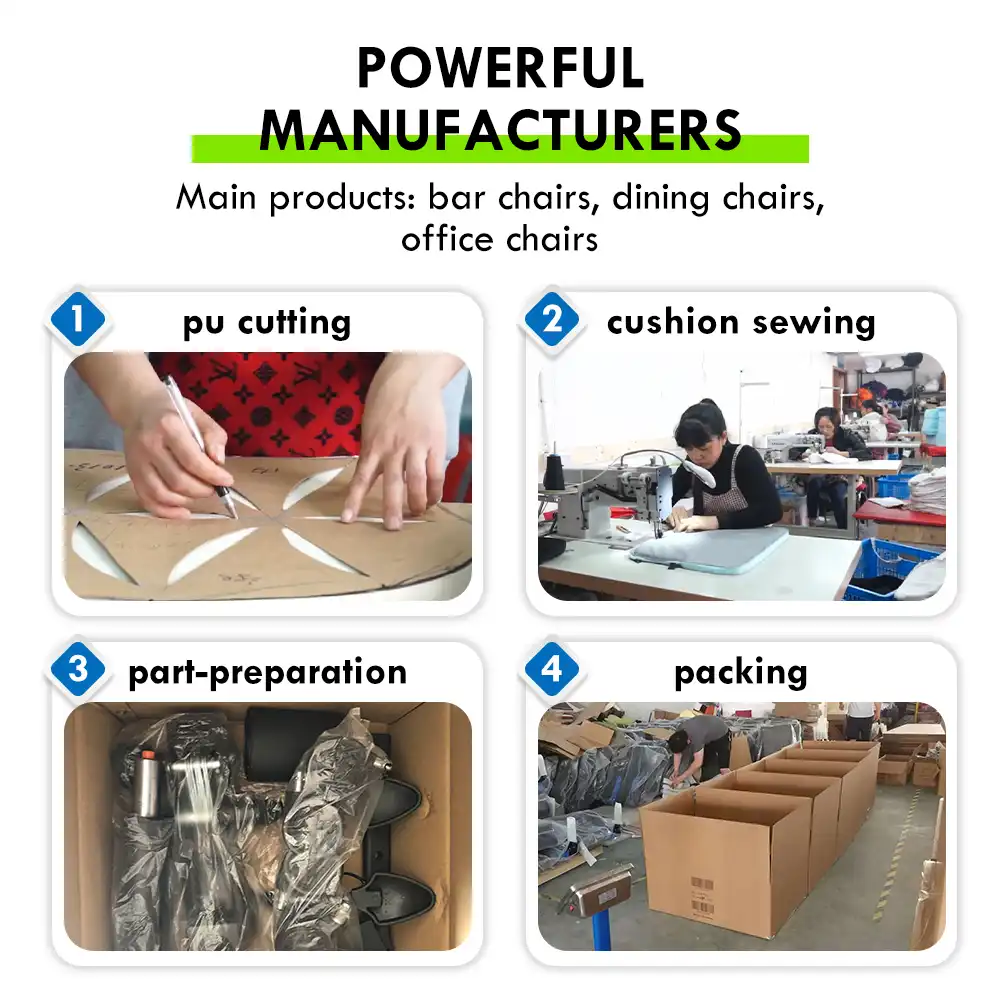
Customization capabilities enable brand alignment and market-specific adaptation critical for B2B clients serving diverse geographic territories. Seat diameter, backrest shape, and footrest ring positioning can be modified within our OEM framework to accommodate regional preferences. Our Anji-based facility's 14 years of specialized chair manufacturing experience supports rapid prototyping, with sample production completing within 15 business days for custom specifications. This agility allows distributors to test market responses before committing to container-level orders, reducing inventory risk in experimental market segments.
Maintenance Requirements and Longevity
Operational costs extend beyond initial acquisition to encompass maintenance labor and component replacement throughout the product lifecycle. Round base stools minimize ongoing maintenance demands through several design elements. The sealed gas lift cylinder requires no lubrication or adjustment, functioning maintenance-free until seal degradation necessitates replacement—typically after 5-7 years in moderate-use commercial environments.
Surface cleaning procedures simplify due to material selections and structural accessibility. Smooth metal surfaces accept commercial disinfectants without finish degradation, critical in post-pandemic hospitality contexts where visible sanitation protocols influence customer confidence. The elevated seat design allows floor cleaning equipment to pass beneath without manual stool relocation, reducing daily housekeeping labor. Our embedded floor protection ring resists detachment and discoloration, eliminating the periodic replacement required with inferior adhesive-backed felt pads that absorb spills and harbor bacteria.
Upholstery longevity depends on material selection and usage patterns. Velvet and synthetic options tolerate commercial cleaning agents and demonstrate superior stain resistance compared to natural textiles. Periodic professional cleaning every 18-24 months maintains appearance in high-traffic applications, with total upholstery lifecycle averaging 4-6 years before visual wear necessitates replacement. The modular construction allows seat cushion replacement without discarding the structural base, extending overall product life and reducing long-term procurement costs.
Component replaceability represents a crucial yet often overlooked procurement consideration. Our designs permit field replacement of gas lift cylinders, swivel mechanisms, and upholstered seat tops using standard tools, enabling property maintenance teams to extend product life without specialized technical support. This serviceability reduces total cost of ownership and supports sustainability initiatives by minimizing landfill waste from furniture disposal.
Popular Applications and Case Studies in B2B Procurement
Hospitality Sector Implementation
Hotels, bars, and restaurants represent primary application environments where round base stools deliver operational value. Lobby bars in upscale hotels favor these designs for their visual lightness—the single pedestal creates negative space beneath seating areas that enhances perceived roominess in compact footprints. A recent project for a boutique hotel chain required 240 units distributed across six properties, specifying gold-plated finishes to coordinate with brass architectural accents and custom velvet upholstery matching brand color palettes. The adjustability accommodated variations in counter fabrication across properties, preventing the specification delays and cost overruns associated with custom fixed-height manufacturing.
Nightlife venues prioritize durability and cleanability in environments with elevated spill frequency and aggressive cleaning protocols. A craft brewery installation specified 80 round base bar stools with matte black finishes and vinyl upholstery, materials selected for resistance to beer and acidic cleaning compounds. The round base facilitated efficient floor cleaning during rapid turnovers between service periods, reducing housekeeping labor by an estimated 20 minutes per cleaning cycle compared to the previous four-leg seating configuration.
Restaurant applications span from casual dining to upscale establishments, each with distinct performance requirements. Quick-service concepts emphasize turnover facilitation through slightly firm cushioning that maintains comfort for 30-45 minute dining durations without encouraging extended occupancy. Fine dining bars require softer cushioning and aesthetic refinement suitable for multi-hour experiences. Our OEM capabilities accommodate both extremes through foam density specification and finish customization within a common structural platform, allowing restaurant groups to maintain visual brand coherence across multiple concept formats while optimizing functional performance for each venue type.
Corporate and Commercial Workspace Solutions
Office environments increasingly incorporate bar-height collaborative spaces and café-style break areas that require commercial-grade seating balancing professional aesthetics with casual functionality. Technology campuses favor adjustable seating accommodating diverse user heights and preferences, supporting the activity-based working models popular in creative industries. A recent corporate campus project specified 300 units for distributed break areas, with matte silver finishes complementing modern architectural finishes and neutral upholstery supporting flexible space utilization across multiple departments.
Retail environments utilize bar-height seating in customer service areas, product consultation zones, and in-store cafés that enhance dwell time and purchase conversion. The professional appearance of metal pedestal bases conveys quality appropriate for premium retail brands while the practical maintenance characteristics support high-traffic operations. A cosmetics retailer specified 45 stools with rose gold plating for makeup consultation stations, leveraging custom finish capabilities to achieve precise brand alignment. The adjustability proved valuable given the predominantly female customer demographic with heights ranging more broadly than mixed-gender populations, allowing each client to optimize positioning during extended consultation sessions.
Cost-Effectiveness and Procurement Logistics
Volume pricing structures make container-level orders economically advantageous for distributors and large-scale projects. Our space-saving packaging design measures 52cm × 27cm × 49.5cm per unit with 0.07 cubic meter volume, enabling dense container loading that optimizes freight costs. A standard 40-foot high-cube container accommodates approximately 950 units, delivering meaningful economies of scale for projects requiring multiple venue outfitting or distributor stock replenishment.
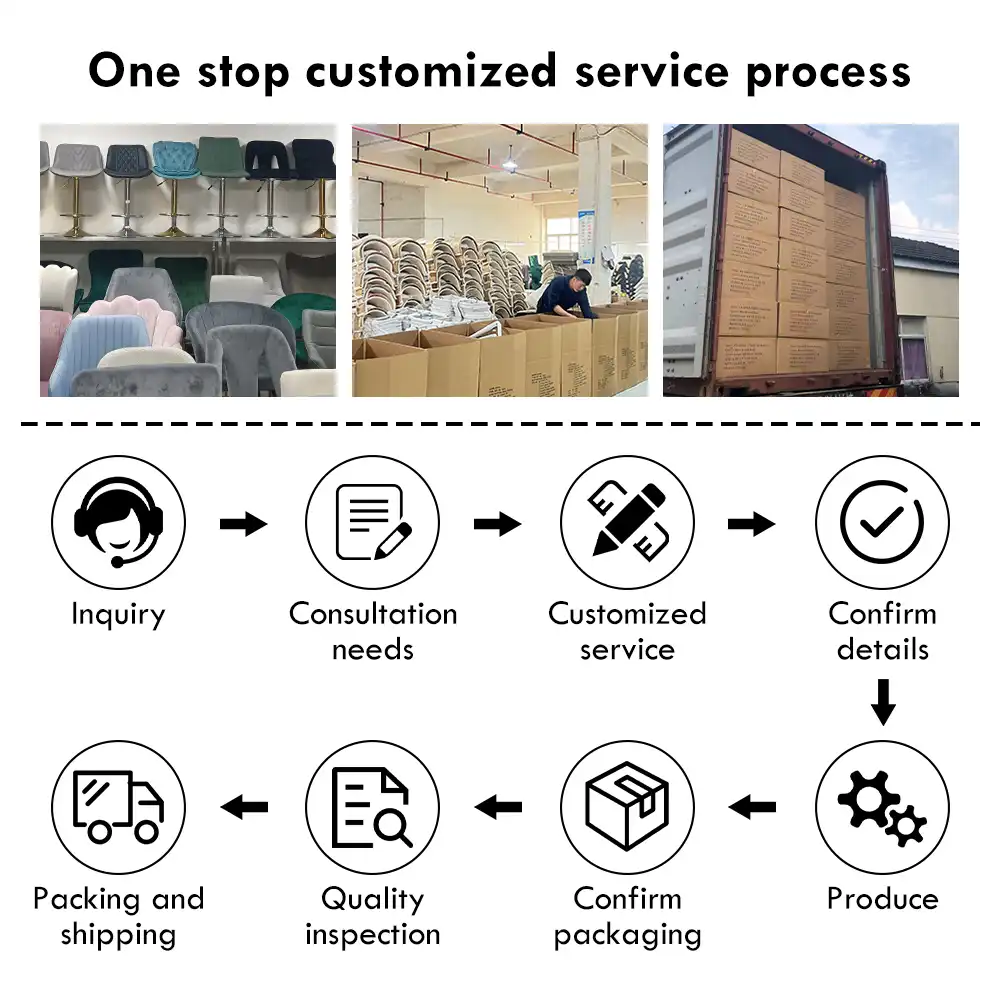
Lead times for production and international shipping require advance planning in procurement cycles. Standard specification orders complete production within 30-35 days ex-works, with ocean freight to major US ports adding 25-35 days depending on destination and carrier routing. Custom specifications extend production timelines by 10-15 days to accommodate sample approval and tooling preparation. Our established export procedures and partnership with major freight forwarders ensure documentation accuracy and customs clearance efficiency, reducing the delays that plague less experienced manufacturers.
Warranty coverage provides risk mitigation essential for B2B procurement decisions. Our standard commercial warranty covers structural components for three years and gas lift mechanisms for two years, terms reflecting confidence in component quality and manufacturing precision. This coverage protects distributors from premature failure costs that erode profit margins and damage customer relationships. Extended warranty options are available for large-volume orders or high-profile installations where failure risks justify additional premium costs.
Conclusion
Round base bar stools demonstrate clear compatibility with standard US bar counter heights through adjustable mechanisms and ergonomic design principles. Procurement professionals benefit from understanding the technical specifications, material considerations, and supplier evaluation criteria that determine successful large-scale furniture sourcing. The single-pedestal construction offers practical advantages in commercial environments where cleaning efficiency, visual aesthetics, and space optimization drive specification decisions. Selecting experienced manufacturers with proven export capabilities, quality certifications, and customization flexibility ensures procurement outcomes that satisfy immediate project requirements while supporting long-term operational success.
FAQ
Does seat height adjustment impact structural stability?
Quality gas lift mechanisms maintain stability throughout the adjustment range when properly engineered. The 330# Class 3 cylinders we specify undergo 100,000-cycle testing, ensuring consistent performance without degradation. Base diameter relative to maximum seat height determines tipping resistance—our 385mm base paired with ergonomically-appropriate seat heights provides stability meeting BIFMA standards even at full extension.
How do I prevent floor damage in installations?
Embedded silicone floor protection rings integrated into the base perimeter prevent scratching and scuffing across flooring types from hardwood to luxury vinyl tile. Unlike adhesive felt pads that detach or PVC strips that leave black marks, co-molded silicone maintains permanent attachment and non-marking contact. Regular debris removal from the ring surface during routine cleaning prevents particle accumulation that could cause abrasion.
What maintenance extends product lifespan?
Periodic tightening of the seat-to-cylinder connection maintains structural integrity, typically required annually in high-use environments. Upholstery spot cleaning with manufacturer-approved solutions prevents stain setting, while professional deep cleaning every 18-24 months maintains appearance. Gas lift cylinders function maintenance-free until seal degradation occurs, at which point replacement rather than repair is the appropriate remedy—a field-serviceable process requiring standard tools.
Partner with YIBO for Your Commercial Seating Solutions
YIBO (Anji Yibo Furniture Co., Ltd.) stands as your reliable round base bar stool manufacturer with 14 years of specialized experience in commercial seating production. Our 6,000 square meter facility in Anji, Zhejiang—China's recognized chair manufacturing hub—combines advanced production equipment with skilled craftsmanship to deliver container-level orders meeting international quality standards. We support OEM and ODM requirements through our experienced R&D team, enabling customization in dimensions, finishes, and materials that align with your market positioning. Reach our export team at yb@ajyibo.com to discuss your procurement needs, request samples, or schedule a facility video tour demonstrating our quality control processes and production capabilities that have served clients across 70 countries.
References
1. Business and Institutional Furniture Manufacturers Association. "ANSI/BIFMA X5.1-2017: General-Purpose Office Chairs – Tests." BIFMA Standards Program, 2017.
2. Cornell University Ergonomics Web. "Anthropometric Data for Seated Work Surface Heights." Department of Design and Environmental Analysis, 2019.
3. National Restaurant Association. "Restaurant Industry Operations Report: Furniture Specifications and Replacement Cycles." Industry Research Division, 2021.
4. American Society for Testing and Materials. "ASTM F1858-18: Standard Specification for Furniture for Public Seating." ASTM International Standards, 2018.
5. Hospitality Design Magazine. "Seating Solutions for High-Traffic Commercial Environments: Material Selection and Longevity Analysis." Annual Procurement Guide, 2022.
6. International Furniture Association. "Global Commercial Furniture Sourcing: Best Practices for B2B Procurement." Trade Research Publications, 2023.