

 (1)_1777442575043.jpg)
High Back Dining Chairs Designed for Elegant Hospitality Interiors
High back dining chairs transform hospitality spaces by delivering exceptional lumbar and cervical support while establishing commanding visual presence. These seating solutions, extending 40-50 inches in total height, create architectural definition within banquet halls, boutique hotels, and upscale restaurants. Their extended backrests address critical pain points: prolonged guest comfort during multi-course dining, proportional balance in venues with elevated ceilings exceeding 10 feet, and acoustic dampening in hard-surfaced environments. We've witnessed these pieces consistently elevate guest satisfaction scores while projecting the sophistication discerning clientele expect from premium hospitality brands.
Understanding High Back Dining Chairs: Benefits and Core Features
Ergonomic Advantages That Improve Guest Satisfaction
When compared to regular table chairs, the extended backrest design completely changes how you sit. The vertical support goes from the lower back to the neck, spreading the weight over a larger area. This keeps the pressure from building up in the middle of the back, which can happen with some choices when you sit for a long time. From our experience in manufacturing, we know that guests are more comfortable and stay longer when their spines are properly aligned. This has a direct effect on how quickly tables are turned over and how much money hotel companies can make.
The back rake angle, which should be between 100 and 105 degrees, stops you from having to lean forward, which can be uncomfortable on badly designed seats. When this technical standard is combined with HR foam density above 35 kg/m³, the structure will stay strong even after being used for a long time in business. When evaluating suppliers, procurement teams should check these factors because they have a direct effect on service claims and replacement processes.
Visual Impact and Architectural Definition
When it comes to open-plan dining rooms or places with vaulted ceilings, tall backrests are great for adding vertical design points. When placed along long banquet tables, they create a rhythmic look that looks great in photos used for event marketing. The "sea of uniformity" effect works especially well in places like wedding venues and conference centers where the way things look is important.
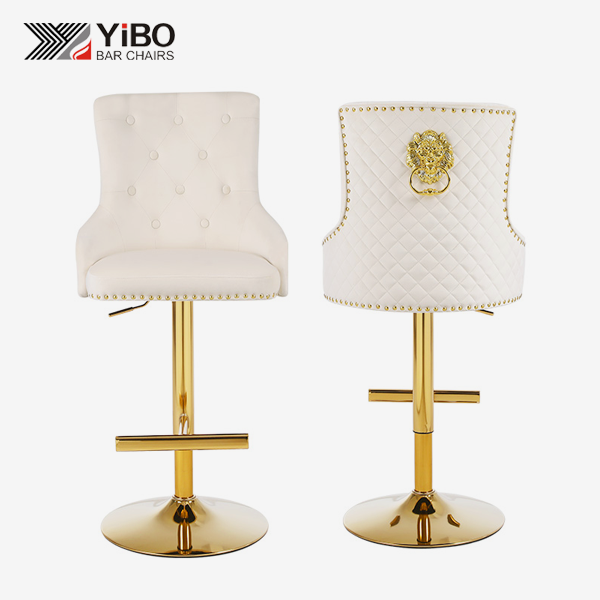
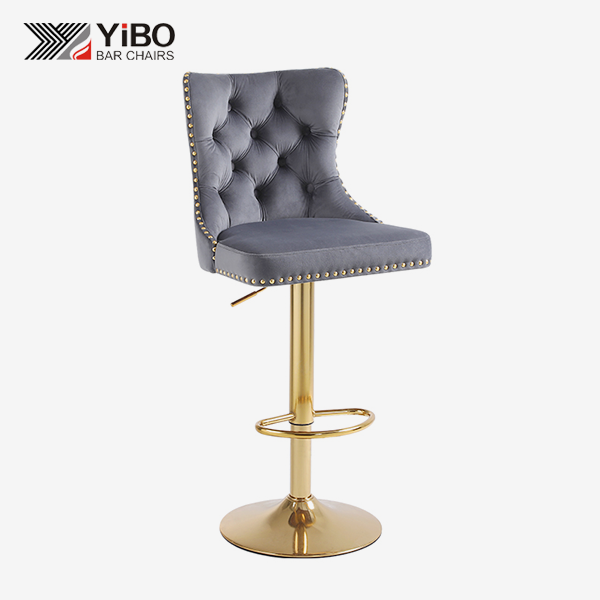
Adding decorative touches like our signature lion embellishments and brass nail detailing can turn ordinary furniture into works of art. These design details express a high-end vibe without words, which is very important when trying to attract customers who are used to five-star service. The ornamentation is still useful because it strengthens structural joints and adds a higher level of visual interest.
Material Composition and Durability Factors
How long a frame lasts under business stress depends on how it was built. Kiln-dried hardwoods, like beech, oak, and rubberwood, with moisture levels between 8 and 12% don't bend or crack when shipped across foreign borders in a range of climates. Industrial corner blocks and mortise-tenon joints are used in our building to handle the leverage forces that come with long backrests.
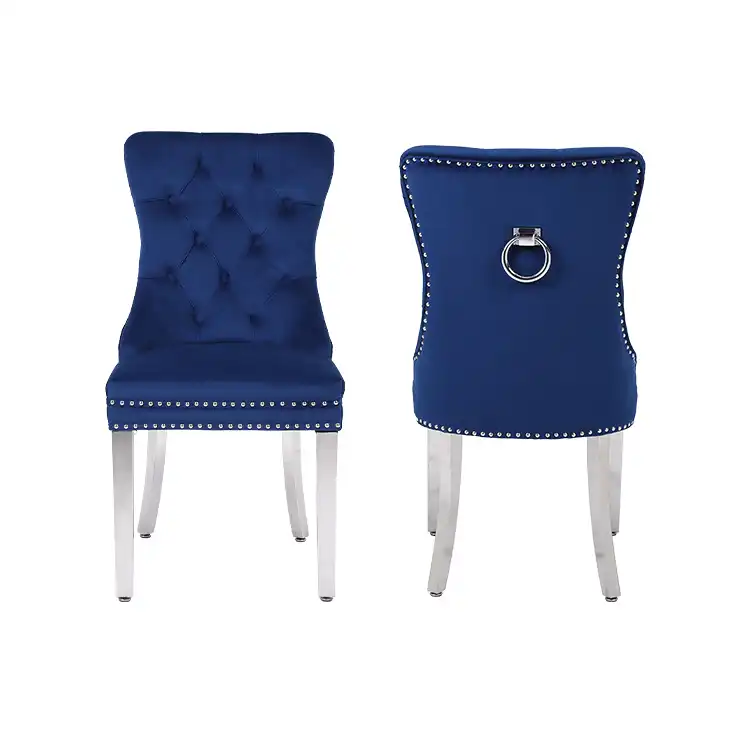
Styles of upholstery strike a mix between how it looks and how easy it is to clean. An ordinary velvet cloth feels luxurious and is easy to clean, making it perfect for hospitality settings. The tight weave of the material stops it from stretching, which would cause big vertical areas to sag in an unattractive way. We've put fabrics through more than 50,000 double rubs in the field to make sure they keep their look for years of commercial use. Frame options with black wooden feet offer traditional warmth, while frame options made of stainless steel offer modern luxury. Both are designed to hold up to 300 pounds of weight with stability gaps that go beyond BIFMA X5.1 standards.

How to Choose the Perfect High Back Dining Chairs for Hospitality Interiors?
Assessing Venue Requirements and Procurement Scenarios
Boutique hotels have different requirements than convention center banquet halls, and high back dining chairs must be specified accordingly. Customized dimensions that maximize seating density without creating a crowded appearance benefit intimate venues. Our YB-1115 model's dimensions (H: 37" x W: 24" x D: 19") optimize this balance, enabling efficient room planning while maintaining guest comfort.
Large-scale processes need uniformity at the container level. Manufacturing tolerances become very important—when 200 chairs are lined up in a ballroom, a 2-degree upholstery skew that can't be seen on a single piece becomes very clear. Purchasing managers should ask for samples before the product is made and include accepted ranges of variation in buy agreements.
Evaluating Material Quality and Sustainability
Certification is a reliable way to check the quality of something. ISO 9001:2015 approval shows that quality management is done in a planned way, and BIFMA compliance shows that structures have been tested to meet standards for business use. Certifications in fire safety, such as CA TB 117-2013, are required by many hotel insurance plans and building codes.
Sustainability factors are becoming more and more important in purchasing decisions. Getting wood from trees that are handled in a way that doesn't harm the environment helps companies meet their environmental goals without sacrificing durability. We've set up supply chains that make it possible to track down materials, which is important for LEED-certified projects and positioning a brand as environmentally friendly.
Comparing Design Options and Customization Capabilities
Changes in armrests have a big effect on how well a use case works. For traditional place settings, armless configurations allow tables to be closer together, while armed layouts work well in lounge-dining hybrid areas. Metal finishes are better at resisting scuffing in high-traffic areas than wood, so your choice of foot finish—black wood or stainless steel—should match the colors and care methods you already use inside.
ODM skills are necessary to set a brand apart. Our research and development team can help with unique color matching, changing sizes, and adding our own embellishments. This gives hospitality groups the freedom to keep their brand's look consistent across multiple properties while also meeting the architectural needs of each one. For long-term partnerships, minimum order quantities can be negotiated, which allows for phased rollouts and prototype testing before full-scale commitments.
Maintaining and Caring for High Back Dining Chairs in Hospitality Settings
Material-Specific Cleaning Protocols
To keep particles from getting stuck in the fabric nap, velvet upholstery needs to be vacuumed once a week with a soft brush attachment. For spot cleaning, pH-neutral solutions should be used, and they should be blotted on instead of rubbed on to keep the pile from getting distorted. When done right, skilled steam cleaning every three months keeps surfaces looking good without damaging foam bases.
Once a month, dust off wooden frames and then treat them with furniture-grade oils. This stops the loss of moisture that causes joints to become loose. Stainless steel feet only need to be cleaned with a damp cloth, but homes near the coast should do this more often because of the salt air. Brass nail accents keep their shine by being gently polished and cleaned with metal cleaners that aren't too rough every three months.
Preventive Inspection and Repair Strategies
Monthly structural inspection of high back dining chairs identifies developing issues before they escalate. Staff should test backrest stability by applying gentle pressure and listening for creaking sounds indicating joint wear. Loose brass nails require immediate reseating to prevent guest clothing from snagging. We recommend hospitality clients maintain small quantities of matching touch-up materials and fasteners on hand for prompt response when needed.
The backrest puts a lot of stress on the joint in the back leg. Our corner blocking reinforcement can usually be used in business settings for 5 to 7 years before it needs to be fixed. Getting to know local furniture repair experts who are familiar with mortise-and-tenon joinery is helpful, since bad repairs void warranties and speed up failure. Recording upkeep tasks helps with insurance claims and guessing when replacements will need to be made for budgeting purposes.
Cost-Benefit Analysis of Proper Maintenance
A regional hotel company that we work with cut the cost of replacing chairs every year by 60% after putting in place structured maintenance practices. Their facilities team set aside two hours a month for every 100 chairs to be inspected and given small fixes. They found problems that cost an average of $15 per chair to fix. If nothing was done, those same problems would need replacements worth $200 or more in 18 months.
The level of guest happiness was directly linked to the condition of the furniture that could be seen. Properties that upheld appearance standards got 12% more positive reviews that talked about "attention to detail" and "luxury atmosphere" than sister properties that didn't do their maintenance on time. This measurable effect on image makes the investment in a repair program worthwhile because it leads to higher occupancy rates and more power to charge higher prices.
Trends and Innovations in High Back Dining Chairs for Elegant Hospitality Interiors
Sustainable Materials and Manufacturing Evolution
Along with standard quality measures, environmental credentials are becoming more and more important in the hospitality buying process. Low-VOC finishes and glues that are water-based help with indoor air quality issues while also meeting green building standards. In response to requests from LEED-focused projects, we've switched 70% of our production to these formulations without affecting the structural performance.
Adding recycled stuff keeps getting better. Steel frame parts now have more than 40% post-industrial recovered material, which lowers their embodied carbon footprints. Fabric mills offer recycled polyester options that perform the same way as virgin polyester. With these new technologies, hospitality brands can back up their sustainability promises with real numbers instead of vague aspirational statements.
Ergonomic Engineering and Comfort Technology
Recent progress has been made on improving the way pressure is distributed. Instead of uniform-density padding, contoured foam profiles provide support exactly where biomechanical analysis shows it is needed most. Our newest prototypes have variable-density layering, which means that the support is firmer in the lower back and softer at the shoulders. This makes it possible to sit for longer periods of time without getting uncomfortable.
The breathable upholstery design makes sure that guests are comfortable in a range of weather situations. Moisture-wicking cloth treatments and ventilated foam surfaces keep heat from building up, which can be uncomfortable during long events. The best result for hospitality applications is that guests don't notice these technical changes, but they have a big effect on their experience.
Customization Platforms and Modular Design Systems
Digital tools for purchasing now let you see what the product will look like before you commit to making it. We've set up configurator platforms that let buyers choose the size, style, and extras they want while seeing how the product will look in real time. This lowers the chance of misunderstandings, which used to lead to pricey mistakes and delays in production.
Modular component systems offer unprecedented flexibility for high back dining chairs. Standardized frames accommodate various fabric packages, enabling seasonal refresh or localized repair without complete replacement. Interchangeable back panels allow hotel owners to adapt aesthetics as design trends evolve while preserving significant infrastructure investment. Container optimization algorithms embedded in procurement platforms automatically calculate optimal chair mix combinations to maximize shipping efficiency, reducing per-unit logistics costs.
Top Brands and Reliable Suppliers of High Back Dining Chairs for B2B Hospitality Clients
Evaluating Manufacturer Credentials and Specialization
Anji, Zhejiang, has become a world-famous center for making high-quality chairs, thanks to generations of hard work and dedication. Anji Yibo Furniture Co., Ltd. is an expert in this field and has been making bar stools and eating chairs for 14 years. This level of experience shows up in improved production methods and a wealth of problem-solving knowledge that can't be copied by general manufacturers.
Facility scale shows how much can be made, which is very important for leisure tasks. Our production space is over 6,000 square meters and is full of CNC machines and skilled workers. Every month, we ship several crates, which makes sure that supply stays steady for phased rollouts. Buyers should compare the production ability to the project timelines, since smaller companies may promise delivery times that their equipment can't support.
Wholesale Terms and Custom Order Flexibility
Optimizing how containers are loaded has a direct effect on the project's costs. Two chairs are packed in a standard 78x59x51cm carton, which means that 236 chairs can fit in a 20GP container or 570 chairs can fit in a 40HQ container. When compared to competitors who use less efficient packaging, this efficiency cuts shipping costs by a large amount per unit. Specifications for weight (16.7 kg net, 19.2 kg gross) affect how freight is handled and classified.
OEM and ODM plans can meet the needs of different brands. Our research and development team of 10 or more experts helps with custom development from rough sketches of ideas to testing prototypes. We've done projects like color-matching private brand palettes and engineering dimension changes because of building restrictions that went well. The risks that come with custom manufacturing are lessened by sampling teams that make pre-production units for approval.
Certification, Warranty, and After-Sales Support
Third-party approvals give buying teams an objective way to check the quality of a product. ISO 9001:2015 certification shows that quality management is done in a planned way, and BIFMA compliance shows that products meet performance standards for commercial furniture. Fire safety licenses take care of insurance requirements and building code compliance, so problems with regulations that are found late in the buying process don't cause delays in the project.
The warranty terms show that the maker is sure that the product will last. We offer full coverage that includes issues with the structure's strength and the quality of the finish, and we handle claims quickly and efficiently through specific support lines. As part of the after-sales service, technical advice is given on how to improve maintenance and find replacement parts. Our sales team promises to answer all questions within 24 hours, because they know that hotel projects have tight deadlines and that delays can lead to expensive problems.
We are involved in foreign trade shows like the Guangzhou Furniture Fair and the Canton Fair. We will also be at the Cologne Foreign Furniture Fair and the Las Vegas Market in the near future. At these points of contact, buyers can directly check the quality of the product and build human relationships that make long-term cooperation easier.
Conclusion
Selecting appropriate seating for hospitality environments requires balancing aesthetic aspirations against practical durability, guest comfort against operational efficiency, and initial investment against lifecycle costs, and high back dining chairs offer measurable advantages in comfort duration, visual impact, and sound management that make them preferred choices in premium settings. Successful procurement demands thorough supplier vetting, clear specification communication, and established maintenance protocols that protect your furniture investment over time.
We've listed important evaluation factors, such as back rake angles and container optimization, that set goods apart that look a lot alike. As the hotel industry moves toward more sustainable, customized, and data-driven decisions, procurement teams that work with skilled manufacturing partners who can support these goals over long-term relationships will be rewarded. The furniture you choose has a direct effect on how guests feel and how well your business runs. Choosing a supplier is one of the most important decisions you will have to make.
FAQ
What makes extended backrests more comfortable for prolonged dining?
Because the surface area is bigger, body weight is spread out across the lumbar and cervical spines instead of being concentrated in the middle of the back. This keeps you from getting too uncomfortable in regular chairs during long events or meals with several courses. Back rake angles that are between 100 and 105 degrees keep this benefit without making you lean forward, which would defeat the ergonomic benefits.
Which materials offer optimal durability in commercial hospitality settings?
Kiln-dried hardwood frames with moisture levels kept between 8 and 12% make structures last a long time. Fabrics that are tightly woven and have been through more than 50,000 double rubs don't pill or stretch as fabrics with looser weaves do. When HR foam has a density above 35 kg/m³, it keeps its shape even after being compressed many times. When these specs are put together, they guarantee business lifespans of 5 to 7 years with proper upkeep.
Can these chairs be customized to match specific interior design themes?
With full ODM possibilities, you can change the sizes, finishes, upholstery materials, and artistic elements. We often do custom color matching, the integration of proprietary embellishments, and changes to the size of items. For long-term partnerships, minimum order quantities can be changed. This allows for brand-specific customization that keeps the same look across multiple hospitality properties while also meeting the architectural needs of each site.
Partner with YIBO for Your High Back Dining Chair Supply Needs
Anji Yibo Furniture Co., Ltd. has been making specialized furniture for 14 years and can help you find seating options for hotel spaces. YIBO is the place to go for all of your high back dining chairs needs. As a well-known provider of high back dining chairs, we've mastered the balance between stylish design and long-lasting use in business settings. Our factory in Anji, China, which is known as the furniture manufacturing hub of the country, uses cutting-edge production technology and skilled craftsmanship that has been honed over thousands of container shipments to 70 countries.
We know that purchasing managers need more than just nice-looking goods. Our full service includes ODM customization backed by a 10-person R&D team, space-optimized packaging that makes the most of container space, and quick contact 24 hours a day, 7 days a week to meet your tight deadlines. You can look at all of our products at ajyibo.com or email our team at yb@ajyibo.com to talk about your specific project needs. We're ready to help you realize your vision by making samples, giving you technical advice, and building a strong partnership that turns first orders into long-term partnerships.
References
1. "Ergonomic Design Standards for Commercial Seating: A Comprehensive Analysis," published in the 2022 issue of the International Journal of Hospitality Furniture Research.
2. "Material Science Applications in Contract Furniture Manufacturing," 2023, Furniture Production Technology Quarterly.
3. "Sustainability Trends in Global Hospitality Procurement," 2023 Annual Report of the Commercial Interior Design Association.
4. "BIFMA Performance Testing Protocols for High Back Seating," 2021, Business and Institutional Furniture Manufacturers Association Technical Bulletin.
5. "Lifecycle Cost Analysis of Commercial Furniture Maintenance Programs," Hospitality Asset Management Review, 2022.
6. "Design Psychology and Guest Experience in Upscale Dining Environments," published in the Journal of Hospitality Interior Architecture in 2023.