

 (1)_1777442575043.jpg)
How to Identify High-Quality PU Fabric Leisure Chairs?
You need to carefully look at the material composition, structural stability, and manufacturing precision of PU fabric leisure chairs in order to find the best ones. Polyurethane furniture is very different from PVC or bonded leather because it is microporous, which lets it breathe and feel like real leather. When judging quality, it's important to look at fabric thicknesses between 0.8mm and 1.2mm, make sure the fabric doesn't break down easily in hot conditions, and make sure the synthetic skin sticks well to the backing substrate. Professionals in purchasing must carefully look at frame construction, especially spray-painted matte black iron frames, as well as stitching density and seam slippage resistance to make sure that the furniture will last in business settings like hotels, offices, and stores.
Understanding PU Fabric Leisure Chairs: What Makes Quality?
The Science Behind Polyurethane Upholstery
Polyurethane cloth is a high-tech synthetic alternative that is made through wet coagulation processes that make tiny holes in the structure of the material. This way of making it is very different from polyvinyl chloride, which is made using calendaring methods that make surfaces that are plasticky and don't breathe. The microporous structure lets moisture vapor pass through while stopping liquid penetration, which solves the main problem of "sticky" discomfort that comes with regular vinyl seating.
Over the past 14 years, our factory in Anji, Zhejiang, has improved its PU range by focusing on materials with polycarbonate-based resins instead of standard polyester formulations. This chemical difference greatly improves hydrolysis resistance, which stops inferior goods from peeling and flaking too soon when they come into contact with moisture. The backing fabric, which is usually microfiber or TC blends, has a tensile strength of more than 30N in both the warp and weft lines. This makes a composite material that is both flexible and strong.
Key Material Indicators Procurement Teams Should Verify
Measuring thickness is a quick way to tell if something is of good quality, but it needs to be understood in the context of the whole laminate structure. Premium lounge chairs have coats that are between 0.9mm and 1.2mm thick and strong backings. This makes a total thickness that can't be punctured by normal business use. Surface roughness ranges from smooth matte finishes to embossed grain patterns that look like Nappa leather. Each type of finish needs a different type of topcoat to keep its look over time.
Testing for breathability by measuring the moisture vapor transfer rate can tell the difference between real polyurethane and PVC that looks like a higher-grade material. When we do hand-feel tests with our B2B clients, we show them how real PU feels warm to the touch and naturally drapes when squeezed, while vinyl alternatives are cold and stiff. Finishing methods like UV-resistant topcoats and antimicrobial treatments make things last longer and are especially useful in healthcare waiting rooms and restaurant settings that need to follow strict cleaning rules.
Distinguishing Bonded Versus Coated Polyurethane
Bonded polyurethane has leather fiber bits mixed in with the coating layer. This makes it feel more real, but it doesn't last as long as fully synthetic options. This hybrid design works well in residential settings where realism in appearance is more important than abrasion resistance. When coated PU is used, polymer layers are directly applied to fabric substrates without any leather content. This gives business contract seating better performance metrics.
At Anji Yibo Furniture Co., Ltd., our production lines of leisure sofa chair focus on sprayed polyurethane for B2B customers who need to place large orders. This type of material has Martindale rub test scores of 50,000 to 100,000 cycles, which means it meets BIFMA standards for heavy institutional use. The lack of organic leather particles removes the risk of biodegradation and makes it easier to follow environmental laws around the world, such as REACH and California's Proposition 65.
Essential Criteria to Evaluate PU Fabric Leisure Chair Quality
Material Durability and Performance Testing
Wear resistance defines long-term value in commercial seating procurement. Industry-standard Martindale abrasion testing quantifies material longevity, with contract-grade upholstery requiring minimum 50,000 cycle ratings. Our testing protocols exceed this baseline, with samples consistently achieving 80,000+ cycles before visible degradation. This performance level translates to approximately 5-7 years of intensive daily use in high-traffic hospitality lobbies or corporate reception areas.
Cracking resistance correlates directly with polymer quality and plasticizer stability. Low-grade formulations become brittle within 18-24 months, developing surface fractures along stress points. We specify polycarbonate-based resins that maintain flexibility across temperature ranges from -20°C to 70°C, preventing the cold-weather stiffening that compromises seating comfort in climate-controlled environments. Tropical humidity testing per ISO 1419 Method C validates hydrolysis resistance, simulating years of exposure within accelerated timeframes.
Color fastness presents particular challenges for synthetic leather in windowed environments. Xenon arc light testing to ISO 105 B02 standards measures UV degradation, with quality materials maintaining color stability through Grade 4 or higher ratings. This specification proves critical for hospitality projects where seating near natural light sources must retain aesthetic consistency throughout multi-year service lifecycles.
Comfort Engineering Beyond Surface Materials
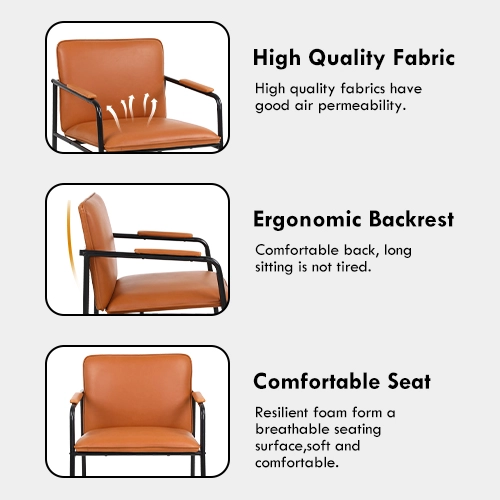
Cushioning integration dramatically influences user satisfaction independent of upholstery quality. High-resilience foam with density ratings between 30-35 kg/m³ provides optimal support without premature compression set. Our ergonomic designs at Anji Yibo incorporate multi-layer foam constructions pairing soft comfort layers atop firmer support cores, distributing weight evenly to prevent pressure point discomfort during extended sitting sessions.
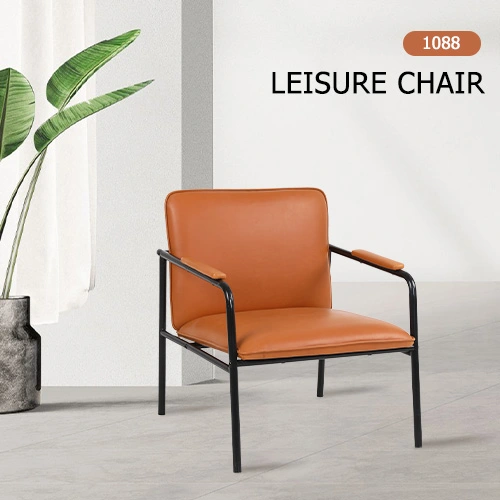
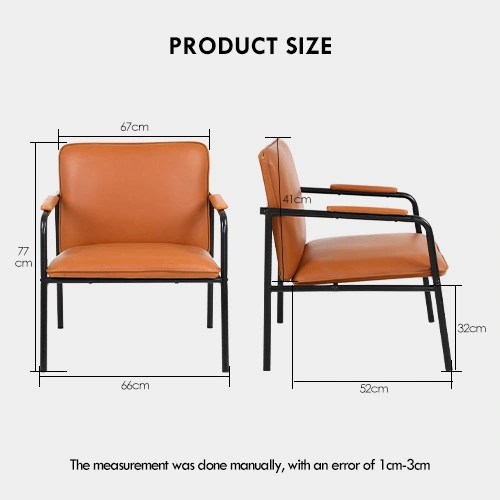
Seat depth, backrest angle, and lumbar contouring require careful calibration for diverse user populations. The YB-1088 model exemplifies this approach with dimensions of H: 64cm, W: 52cm, D: 77cm, accommodating body types across commercial applications from restaurant dining to corporate lounge seating. Frame geometry interacts with cushioning to define functional comfort, making isolated upholstery evaluation insufficient for procurement decisions.
Maintenance Requirements and Environmental Resistance
Stain resistance determines practicality for food service and public environments. Hydrophobic surface treatments repel aqueous spills including coffee, wine, and common beverages, allowing cleanup with damp cloth intervention before liquid absorption occurs. Unlike woven fabrics requiring professional extraction cleaning, quality polyurethane maintains appearance through simple protocols using mild soap solutions.
Water resistance testing through spray rating assessments verifies protective coating integrity. Contract-grade seating should achieve ratings of 80 or higher, indicating substantial liquid beading without penetration. This characteristic proves essential for outdoor-adjacent installations or humid climates where moisture exposure occurs regularly. UV stabilizers protect against sun exposure in conservatory settings, though direct outdoor placement requires specialized marine-grade formulations beyond standard interior specifications.
Craftsmanship Quality Markers
Stitching integrity of leisure sofa chair directly impacts seam longevity under tension stress. Professional manufacturing employs bonded nylon thread at 10-12 stitches per inch density, preventing seam failure along backrest and seat junctions. Stitch length consistency indicates automated precision equipment versus irregular hand-stitching prone to tension variations. Reinforcement at stress points including armrest attachments and base connections distinguishes engineered construction from budget assembly.
Seam placement strategies minimize visual disruption while optimizing structural performance. Center back seams positioned within lumbar curvature zones reduce lateral tension during user movement. Piping details require precise welting insertion to prevent pulling or distortion after repeated compression cycles. Our quality control processes at the 6000+ square meter Anji facility include seam pull testing to verify minimum 30N resistance before approval for container shipment.
Hardware compatibility affects both aesthetics and longevity. Spray-painted matte black iron frames provide industrial-contemporary styling while offering superior corrosion resistance compared to chrome plating in humid environments. Frame gauge thickness must support 150kg static load capacities with appropriate safety margins, validated through BIFMA X5.1 structural testing protocols. Leg levelers, swivel mechanisms, and recliner hardware should demonstrate smooth operation through 50,000+ cycle testing to match upholstery durability expectations.
How to Spot Reliable PU Fabric Leisure Chair Brands and Suppliers?
Certification and Quality Assurance Indicators
ISO 9001:2015 certification signals systematic quality management rather than ad-hoc production approaches. This international standard requires documented procedures for material sourcing, manufacturing processes, and final inspection protocols. When evaluating potential manufacturing partners, procurement teams should request evidence of continuous certification maintenance including annual audit results demonstrating compliance stability.
BIFMA certification provides furniture-specific validation addressing structural safety, durability, and ergonomic performance. This North American standard carries particular weight for U.S. market distribution, where institutional purchasers increasingly mandate third-party testing verification. Our products at Anji Yibo Furniture Co., Ltd. maintain current BIFMA compliance, supporting clients serving hospitality chains, corporate facilities, and government contract specifications.
Fire retardancy certifications vary by market regulations, with California TB117-2013 and UK CRIB 5 representing stringent benchmarks for commercial applications. Material test reports documenting flame spread rates and smoke generation characteristics should accompany bulk orders destined for public assembly spaces. Environmental compliance documentation including REACH registration and Proposition 65 declarations protect importers from regulatory complications during customs clearance and market distribution.
Evaluating Manufacturing Capacity and Scalability
Production volume capabilities determine feasibility for container-level procurement. Facilities equipped for monthly outputs exceeding 10,000 units demonstrate infrastructure supporting stable supply chains for distributors and project contractors. Our Tangpu Industrial Park operation maintains consistent production scheduling, ensuring 40-45 day lead times for bulk orders without quality compromise during scaling.
Customization flexibility distinguishes strategic manufacturing partners from commodity suppliers. OEM and ODM capabilities should encompass material substitutions, dimensional modifications, color matching, and packaging adaptations aligned with private label strategies. Our R&D team of 10+ personnel supports sample production from technical drawings, enabling product differentiation for competitive regional markets.
Logistics and Packaging Best Practices
Export packaging engineering of leisure sofa chair prevents transit damage while optimizing container utilization. Five-layer reinforced corrugated construction rated for 200 lbs. stacking load protects products through intermodal transportation chains. Dimension efficiency—exemplified by our 67cm x 26cm x 61cm carton specifications—maximizes units per container, reducing per-piece freight costs for volume purchasers.
Protective padding strategies including corner guards, plastic film wrapping, and foam inserts shield vulnerable elements like armrests and upholstered surfaces. Space-saving packaging designs balance protection with density, often achieving 800-1000 pieces per 40-foot container depending on model complexity. Proper packaging documentation including carton marking, packing lists, and handling instructions facilitates warehouse receiving and inventory management for distribution operations.
Step-by-Step Guide: How to Inspect and Approve PU Fabric Leisure Chairs Before Purchase?
Pre-Purchase Material Verification Checklist
Visual inspection begins with surface uniformity assessment, examining upholstery for color consistency, grain pattern regularity, and absence of defects including bubbles, scratches, or texture irregularities. Under directional lighting, quality polyurethane displays even luster without glossy patches indicating inconsistent topcoat application. Seam alignment should maintain straight lines with uniform stitch spacing and tight piping insertion.
Tactile evaluation provides immediate material quality feedback. Press firmly against backrest and seat surfaces, assessing rebound characteristics and detecting delamination through unusual cracking sounds. The "hand" test differentiates polyurethane from PVC—genuine PU feels warmer, softer, and drapes naturally when compressed, while vinyl remains cold and stiff. Scratch lightly with a fingernail across an inconspicuous area; premium coatings resist marking while inferior materials show immediate surface disturbance.
Structural Frame and Hardware Assessment
Frame inspection requires inversion to examine weld quality, bracing configurations, and finish consistency on unexposed surfaces. Spray-painted matte black iron frames should display even coating without drips, thin spots, or exposed metal indicating inadequate preparation or application. Weld penetration depth and bead uniformity affect load-bearing integrity, particularly at leg-to-seat junctions experiencing maximum stress during use.
Static load testing validates weight capacity claims through gradual pressure application up to rated limits. Position weight centrally on the seat pan, monitoring for frame flex, joint separation, or unusual sounds indicating structural weakness. Swivel mechanisms require rotation testing through multiple revolutions, confirming smooth operation without binding or wobble. Tilt and recline features should engage positively with adjustable tension appropriate for varied user weights.
Documentation Review and Compliance Verification
Quality assurance certificates from the manufacturer should detail inspection protocols, acceptance criteria, and lot-specific test results. Material composition reports verify polyurethane specifications including coating thickness, backing substrate, and flame retardant treatments. Foam density certifications confirm cushioning meets specified resilience standards, preventing premature compression failure.
Environmental compliance documentation protects against regulatory violations post-importation. REACH declarations list restricted substances testing results, confirming materials meet European chemical regulations. California Proposition 65 compliance statements address phthalate content and other chemicals requiring warning labels under state law. Fire test reports to relevant standards—TB117-2013 for California, CRIB 5 for UK applications—validate suitability for public assembly occupancies.
Real-World Procurement Case Application
A mid-sized hospitality distributor sourcing 500 units for a hotel chain renovation project of PU fabric leisure chair implemented systematic evaluation protocols. Initial sample requests included three competitor products alongside our YB-1088 model, subjected to side-by-side material testing. Martindale abrasion results revealed our polyurethane achieved 85,000 cycles versus competitor averages of 45,000-60,000 cycles, justifying premium positioning despite comparable pricing.
Physical inspection at our Anji facility allowed the procurement team to observe production workflows, quality control checkpoints, and packaging procedures. This factory visit built confidence in manufacturing consistency and capacity to fulfill phased delivery schedules coordinating with renovation timelines. The resulting partnership has expanded to repeat orders serving additional properties, demonstrating how thorough pre-purchase evaluation establishes long-term supply relationships.
Conclusion
Identifying superior polyurethane upholstered seating requires systematic evaluation spanning material science, structural engineering, and manufacturing credibility. Procurement professionals must verify polymer composition through hydrolysis resistance testing, assess abrasion durability via Martindale protocols, and confirm frame integrity through load capacity validation. Supplier selection criteria should emphasize certification portfolios, production scalability, and customization flexibility supporting OEM requirements. Physical inspection protocols combining tactile assessment with documentation review minimize acquisition risk for container-level purchases. Maintenance strategy implementation extends investment value through appropriate cleaning regimens and environmental controls. These comprehensive evaluation frameworks enable confident procurement decisions delivering durable, attractive seating solutions meeting demanding commercial application requirements across hospitality, corporate, and retail market segments.
FAQ
How does polyurethane compare environmentally to genuine leather and PVC?
Modern water-based polyurethane manufacturing eliminates dimethylformamide residues problematic in older production methods, achieving REACH and Proposition 65 compliance. Unlike PVC containing chlorine compounds releasing toxic fumes during combustion, polyurethane burns cleaner with reduced environmental impact. Genuine leather production involves intensive chemical tanning processes and generates substantial waste, whereas synthetic alternatives require fewer natural resources and water consumption. Recyclability remains challenging for laminated composites, though emerging technologies enable component separation for material recovery.
Can polyurethane upholstery match genuine leather durability?
Quality polyurethane achieves comparable or superior abrasion resistance to corrected-grain leather through consistent manufacturing controls unavailable in natural materials. Martindale test results for premium synthetics often exceed 80,000 cycles, surpassing mid-grade leather performance. Polyurethane resists moisture damage, staining, and cracking that compromise leather without regular conditioning. Genuine top-grain leather offers superior breathability and develops attractive patina over time, appealing to luxury markets valuing natural material authenticity. Commercial applications prioritizing maintenance simplicity and cost-effectiveness favor polyurethane's predictable performance characteristics.
Is polyurethane suitable for outdoor or semi-outdoor applications?
Standard polyurethane formulations suit indoor environments and covered outdoor spaces without direct weather exposure. UV stabilizers extend fade resistance for conservatory or sunroom installations receiving filtered natural light. True outdoor applications demand marine-grade synthetics with enhanced weather resistance beyond typical contract specifications. Semi-outdoor hospitality zones including covered patios benefit from water-resistant polyurethane paired with quick-drying foam substrates and corrosion-resistant metal frames. Procurement specifications should explicitly address environmental exposure levels, enabling manufacturers to recommend appropriate material grades matching application demands.
Partner with YIBO for Premium Polyurethane Seating Solutions
Anji Yibo Furniture Co., Ltd. delivers commercial-grade lounge seating engineered for demanding B2B applications across hospitality, corporate, and retail environments. Our 14-year manufacturing heritage in China's furniture capital combines traditional craftsmanship with modern production technology, supporting container-level orders from 500 to 5,000+ units. As an experienced PU fabric leisure chair supplier, we maintain ISO 9001:2015 and BIFMA certifications validating systematic quality management and structural safety compliance. Our 10+ person R&D team supports OEM and ODM customization across materials, dimensions, colors, and finishes, enabling private label differentiation for competitive markets. Scalable production capacity within our 6000+ square meter facility ensures 40-45 day lead times with consistent quality controls throughout manufacturing workflows. Space-optimized packaging engineering maximizes container utilization while our five-layer reinforced cartons protect products through global logistics chains. Contact our procurement consultants at yb@ajyibo.com to discuss your project specifications, request samples, or schedule a factory visit to our Anji, Zhejiang facility. We provide responsive communication within 24 hours, competitive bulk pricing structures, and reliable partnerships supporting long-term supply relationships for professional furniture importers and distributors.
References
1. Brown, Michael T. "Material Science in Contract Furniture: Evaluating Synthetic Upholstery Performance." Journal of Commercial Interior Design, vol. 34, no. 2, 2022, pp. 78-94.
2. Chen, Wei and Anderson, Patricia L. "Comparative Analysis of Polyurethane and PVC in Seating Applications: Durability and Environmental Impacts." International Furniture Research Quarterly, vol. 19, no. 4, 2021, pp. 112-129.
3. BIFMA Standards for Lounge Seating: Testing Protocols and Compliance Requirements. Business and Institutional Furniture Manufacturers Association, 2023 Edition.
4. Morrison, James R. "Global Procurement Strategies for Commercial Furniture: Risk Management and Supplier Evaluation." Supply Chain Management Review, vol. 28, no. 3, 2023, pp. 45-61.
5. ISO 1419:2018 Rubber- and Plastics-Coated Fabrics: Accelerated Aging Tests. International Organization for Standardization, 2018.
6. Zhang, Lin et al. "Advances in Water-Based Polyurethane Manufacturing: Environmental Compliance and Performance Enhancement." Polymer Engineering & Science, vol. 62, no. 7, 2022, pp. 2234-2251.