

 (1)_1777442575043.jpg)
What are the Most Durable Materials for Brown Bar Stools?
When buying elevated seating for businesses, procurement professionals always ask what the most lasting materials are for brown bar stools with earth-tone finishes. There are three main types of materials that make up the answer: solid hardwoods like oak and walnut, metal frames that are powder-coated or made of stainless steel, and high-performance seating materials like top-grain leather or premium polyurethane. Each type of material has its own performance traits when it comes to weight capacity, resistance to wear, and upkeep needs. Over the past 14 years, Anji Yibo Furniture Co., Ltd. has been making bar stools. We've learned that durability comes from engineering the right mix of frame materials, upholstery specifications, and joint construction methods, not from picking just one part.
Understanding the Core Problem: Why Material Durability Matters for Brown Bar Stools?
The Hidden Costs of Premature Failure
Durability is the amount of time between buying something and having to replace it. It includes resistance to structure failure, surface degradation, and loss of appearance. In places with a lot of foot traffic, like restaurants, a bar stool sits on 150 to 200 times every day, which puts stress on the joints, upholstery seams, and finish coats. Low-quality materials fail in ways that can be seen, like frames that wobble from loosened bolts, upholstery that cracks, and finishes that change color from UV light or cleaning chemicals.
Quantifying Cost-Versus-Value Analysis
Professionals in procurement know that the unit buy cost is only the first expense that needs to be considered when figuring out the total cost of ownership. The lifecycle costs of a cheap sitting unit that needs to be replaced every 18 months are higher than the lifecycle costs of a high-quality option that lasts five years. Besides the cost of repair, poor durability causes problems with operations; taking damaged units out of service lowers the number of seats available during busy times. Processing warranty claims uses up administrative resources and hurts the image of the distributor with end customers.
Material Selection as Risk Mitigation
Evaluating the specifications of a material gives a measurable risk estimate. Frame materials decide how much weight they can hold and how stable the structure is. Upholstery materials decide how durable they are and how often they need to be cleaned. And finish processes keep the underlying materials from breaking down in the environment. When buying things, choices based on material science instead of personal taste always lead to a better return on investment.
Overview of the Most Durable Materials Used in Brown Bar Stools
Solid Hardwood Frames: Timeless Strength with Maintenance Requirements
Some examples of hardwoods are oak, walnut, and rubberwood. These species have very high crushing strength and natural beauty. Kiln-drying hardwood keeps the moisture level as low as 8–12%, which makes it less likely that changes in humidity will affect the shape of the wood. Because oak is made up of cells, it naturally absorbs shock and spreads it out across the grain structure. By sanding and refinishing, wood frames can be fixed, which makes them last longer than plastic frames.
Choosing hardwoods of brown bar stool requires following rules for managing moisture. Humidity changes of more than 20% from season to season can make joints loosen as wood grows and contracts. Protective finishes, like conversion varnish or catalyzed lacquer, keep liquids from getting into wood and booze from breaking it down, which can happen in bars.
Metal Frame Construction: Industrial-Grade Structural Integrity
Steel tube with walls that are between 1.2 mm and 2.0 mm thick is stronger than it is light. Powder-coated steel frames don't rust because thermoplastic or thermoset polymer coats are applied electrostatically, protecting them from chemicals and water. In coastal or high-humidity areas, stainless steel grades 304 and 316 eliminate corrosion worries, but they come at a higher cost.
Metal frames work great for business uses that need to hold 300 to 500 pounds. Welded joint construction is more rigid than mechanical bolts, so there are no problems with loosening like there are with bolt-assembled options. When metal is used outside, where temperature changes can make it uncomfortable to touch, its thermal qualities need to be taken into account.
Premium Upholstery: Balancing Aesthetics with Performance
High-performance polyurethane can withstand more than 50,000 double pulls according to Wyzenbeek testing methods. Half-PU construction with a thickness of 0.8 mm gives cost-effective durability for moderate-traffic areas, while full-grain leather provides high-end looks with natural patina development. The upholstery substrate is made of high-density foam that is 3.8 cm thick and has a compression grade of 35–40 ILD. It keeps its shape after thousands of sitting cycles.
Beyond the surface material, upholstery's longevity also includes how the seams are put together. With fused polyester thread and seven to eight stitches per inch, the seam won't break when it's pulled tight. Upholstery made of hydrophobic materials keeps liquid splashes from getting into the foam underneath, making cleanup faster and easier.
Engineered Materials: Cost-Effective Alternatives
At a thickness of 1.0 to 1.2 cm, Siamese plywood building offers structural rigidity at lower material costs than solid hardwood. Molded plywood covers spread the weight of the seat across a larger surface area, which keeps the foam from compressing in one place. To keep visible cores from getting wet, engineered materials need edge banding and veneer finishing, which makes the manufacturing process more complicated.
In exchange for being easier to fix, composite materials are more expensive at first. When laminate finishes or veneer covers get damaged on the outside, they usually need to be replaced completely instead of being refinished like solid materials can be. Because of these traits, engineered materials are well-suited for low-cost uses with mild levels of usage.
How to Choose the Right Durable Material for Your Procurement Needs?
Application Scenario Analysis: Commercial Versus Residential Demands
In commercial settings of brown bar stool, usage volume is measured by the number of seating events per day instead of the number of events per week. Seating in restaurants and bars is constantly used during service times, so the materials used need to be able to handle repeated stress cycles without changing shape or surface wear. There are times when the office breakroom is very busy and times when it is very quiet. This way, materials can recover between usage rounds.
When it comes to residential uses, comfort and good looks are more important than extreme durability. When used less often, lighter-gauge materials and decorative finishes can be used that would wear out faster in industrial settings. To avoid over-engineering residential projects or under-engineering commercial installations, procurement requirements must match the choice of materials with known patterns of use.
Structured Evaluation: Performance Metrics That Matter
The framework for review starts with checking the mechanical strength. The ANSI/BIFMA X5.1 testing procedures set the lowest acceptable levels of performance for static load capacity, cyclic loading endurance, and stability when the load is applied off-center. Using standard hardness scales to test for scratch resistance lets you know how long a finish will last against hits and wear from cleaning tools.
The maintenance burden estimate figures out how much it will cost in labor to clean and recondition things on a regular basis. Materials that need special cleaning products or expert refinishing services cost more to use than materials that can be cleaned using standard methods. A cost-efficiency analysis needs to look at both the original costs of buying something and the expected costs of maintaining it over the service life.
Supplier Reliability and Warranty Terms
Specifications for materials only lead to long-lasting results when quality control in manufacturing stays the same across production runs. You should look at a supplier's quality control certifications, the testing lab's skills, and their willingness to give you samples of their work so that you can check them yourself. The terms of the warranty show how confident the manufacturer is in the durability claims. For example, longer guarantee periods that cover structural integrity and finish performance show that the manufacturer used better materials and manufacturing methods.
When you buy in bulk from well-known providers, you can negotiate better prices and make sure that production capacity meets delivery dates. Orders at the container level benefit from economies of scale that make shipping and packing more efficient. When it comes to total value provided, procurement partnerships based on open communication and mutual trust always do better than transactional vendor relationships.
Practical Maintenance Tips to Maximize the Lifespan of Brown Bar Stools
Material-Specific Cleaning Protocols
To keep a wood frame in good shape, you need to use pH-neutral cleaning products and microfiber cloths to avoid scratching the protected finishes. Using a furniture polish with carnauba wax every three months keeps the protective layers fresh and increases the depth of the grain. Cleaning up liquid spills right away keeps water from getting into the wood grain and finishes from wearing down from acidic drinks.
Once a week, clean brown bar stool metal frames with light detergents and let them dry completely to keep powder-coated surfaces from getting water spots. Checking for chips or scratches in the finish lets you touch them up early with color-matched powder coat repair products, which stops corrosion from starting where metal is visible. Stainless steel surfaces need to be cleaned with cleaners that work with the grain and get rid of fingerprints without hurting.
The first step in maintaining upholstery is to clean it every day with soft-bristle brushes or vacuum devices set to low suction. Leather furniture should get conditioning treatments once a month to refill the natural oils that are lost when it is used and cleaned. This keeps the surface from drying out and cracking. PU furniture can be cleaned with a wider range of products, but it needs to be tested for pH to make sure it works with certain formulas.
Strategic Repair Versus Replacement Decisions
Minor structural problems, like fasteners that aren't tight enough, can be fixed by following systematic tightening procedures that use calibrated torque specifications. When frame joints move even though the fasteners are properly tightened, it means there is damage to the structure underneath that needs to be looked at by a professional. If the damage to a single surface is less than 2 square inches, it can be fixed with a patch of color-matched material. If the damage is more widespread, however, the furniture needs to be completely reupholstered.
Implementations in the hospitality industry show that proactive upkeep that increases the time between replacements from 3 to 5 years lowers the total cost of seating by 40% per year. Studies on office environments have shown that professional cleaning every three months along with daily maintenance by users keeps things looking nice for longer, which is good for company branding.
Comparative Analysis: Durable Brown Bar Stool Types for Different Business Needs
Wooden Versus Metal Frame Construction
It's easy to use wooden frames with country, rustic, and transitional design styles because they look warm and traditional. The natural material fits in with brands that care about the environment and can be fixed and refinished, which makes it last longer. When things need to be moved around a lot, wood is better because it is lighter, but for normal commercial construction, the strongest structure can hold up to 300 pounds.
Metal frames give off a modern, industrial look that works well in modern and simple rooms. The high weight limit of 500 pounds makes it suitable for a wide range of users and lowers concerns about liability. Because they are easy to maintain and don't rust, metal frames are good for business settings with a lot of foot traffic. Metal construction is often better for bulk prices because it is easier to make and the materials are always the same.
Upholstery Material Trade-offs
Leather furniture is considered high-end because it feels great to the touch and develops a patina over time that makes it more unique. Regular conditioning treatments are part of the maintenance process, and pH-neutral cleaning products are needed to keep the finish's purity. Comfort features work best in climate-controlled spaces, but they need to be thought about in places where temperatures can vary a lot.
Fabric furniture comes in more colors and patterns, which makes it easier to match brands and coordinate designs. Performance scores depend a lot on the type of fiber used and the density of the weave. Commercial-grade fabrics made with synthetic fiber blends are better at resisting stains and wear than natural fiber alternatives. Fabric is a good choice for budget-friendly apps that can handle more frequent refresh cycles because it is easy to clean and doesn't cost as much to replace.
Functional Features and Durability Implications
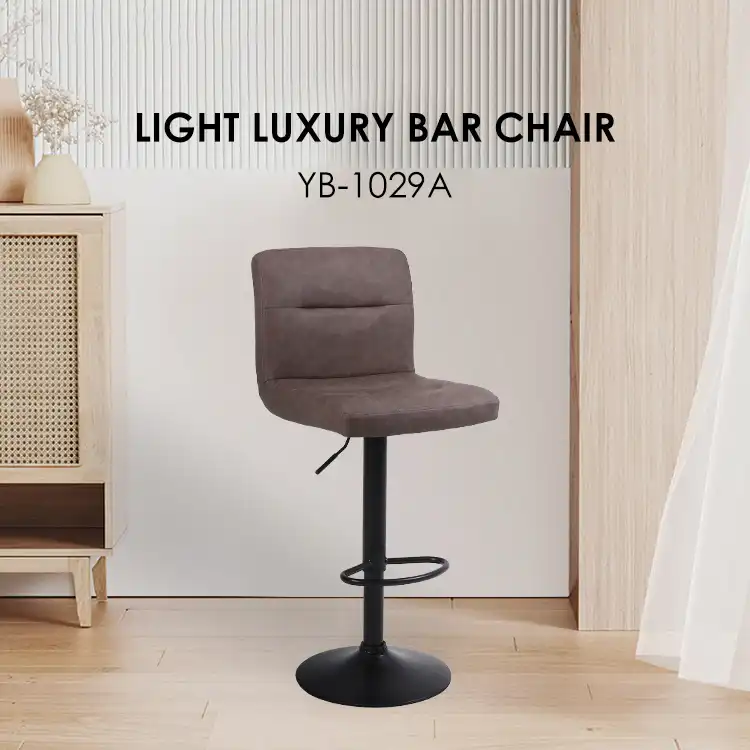
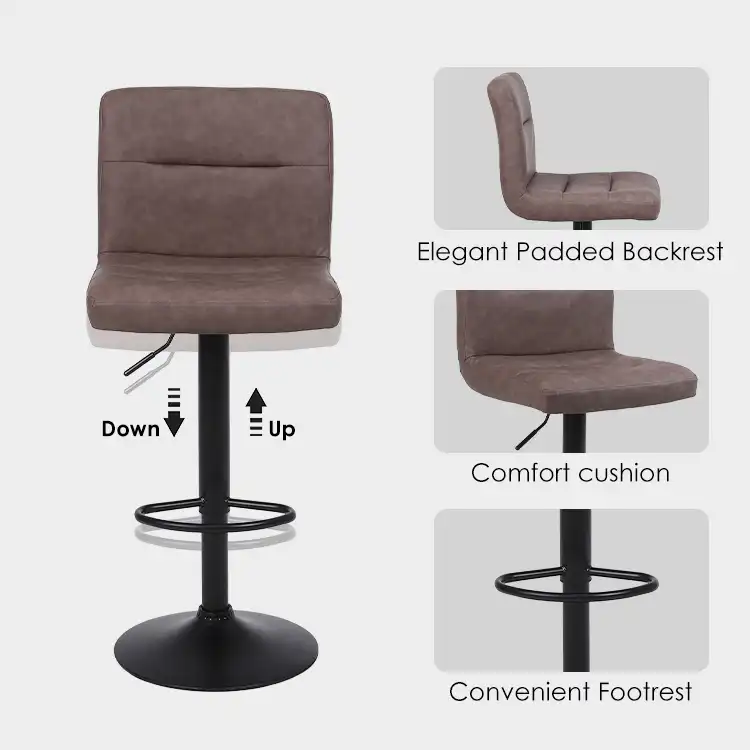
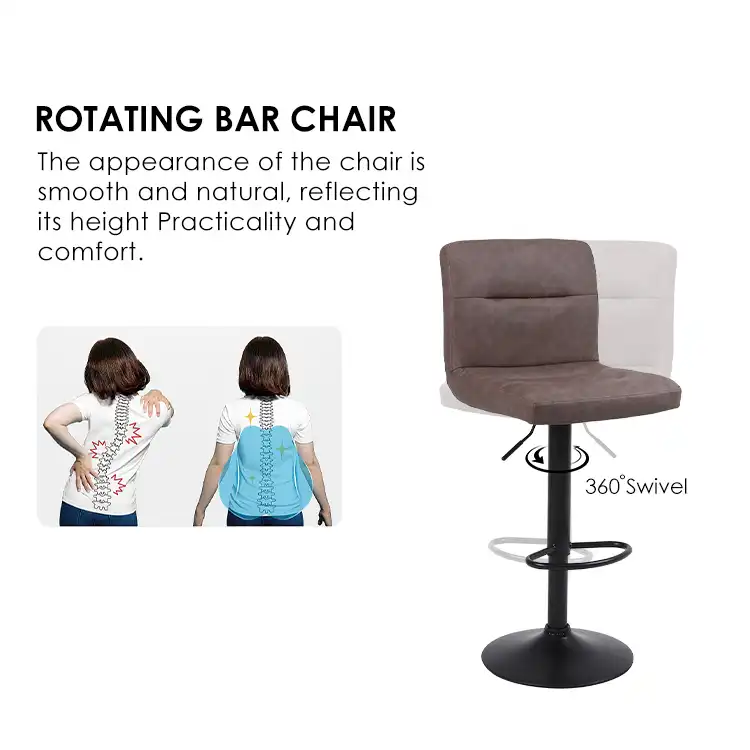
Bearing assemblies of brown bar stool in swivel devices need to be oiled and possibly replaced on a regular basis, which adds to the mechanical complexity. The ability to rotate makes it easier for people to use in social settings, but it also adds upkeep issues that aren't present with fixed seating. The quality of the bearings has a direct effect on how long they last. Sealed ball bearing assemblies are better at keeping out dirt than bushing-style options.
Using pneumatic gas lift cylinders to adjust the height of the counter gives you ergonomic freedom when you need to work at different heights. Quality of the cylinder affects how smoothly it works and how long it lasts. Commercial-grade units are tested to 50,000 or more actuation cycles. Because adjustable designs have more potential failure spots than fixed-height designs, it is important to be very specific about the quality grades of the parts used.
Conclusion
The durability and long-term worth of commercial bar seating investments depend on the materials used. While solid hardwoods are easy to fix and look warm, metal frames are strong and easy to maintain, and new upholstery materials are a good mix between comfort and durability. To get the best return on investment, purchasing decisions must match the requirements of materials with how they will be used, their surroundings, and their ability to be maintained. The given framework for comparative analysis lets you use data to compare things like metal vs. wood construction, leather vs. fabric upholstery, and fixed vs. adjustable functional features. Using the right upkeep methods greatly increases the service life of all types of materials. This lowers the total cost of ownership while maintaining a good appearance that helps the brand's positioning.
FAQ
What materials perform best in high-traffic commercial bars and restaurants?
Metal frames with powder-coated finishes combined with commercial-grade PU upholstery deliver optimal durability for intensive usage environments. The metal structure provides 500 lb weight capacity with corrosion resistance, while high-performance PU exceeds 50,000 double rub abrasion standards. This combination withstands daily cleaning protocols and resists common damage sources including liquid spills and mechanical impacts from furniture repositioning.
How frequently should leather upholstery receive conditioning treatments?
Commercial leather seating requires conditioning every 90 days to replenish natural oils and maintain surface flexibility. High-use applications may benefit from 60-day intervals, particularly in climate-controlled environments with low humidity that accelerate moisture loss. Conditioning products should contain lanolin or similar moisturizing agents without silicone additives that create surface buildup interfering with subsequent treatments.
Do metal stools justify higher costs compared to wood alternatives?
Lifecycle cost analysis consistently favors metal construction in commercial applications despite elevated initial procurement expenses. Metal frames typically deliver 7-10 year service life under commercial conditions compared to 4-6 years for wood alternatives. Reduced maintenance requirements and superior structural warranties lower total cost of ownership while providing greater weight capacity that accommodates broader user populations without liability concerns.
Partner with YIBO for Durable Bar Stool Solutions
Anji Yibo Furniture Co., Ltd. specializes in manufacturing commercial-grade bar stools engineered for demanding B2B applications. Our production facility spanning 6,000 square meters employs advanced manufacturing equipment and rigorous quality control protocols aligned with ANSI/BIFMA standards. As a brown bar stool supplier with 14 years of export experience serving 70 countries, we understand the precise durability requirements that hospitality, retail, and office sectors demand.
Our OEM and ODM capabilities enable material customization, dimensional modifications, and finish specifications tailored to your target markets. We support container-level orders with space-efficient packaging reducing freight costs while protecting products during international transit. The experienced sales team responds to technical inquiries within 24 hours, providing specification sheets, material samples, and competitive quotations supporting your procurement decisions. Contact yb@ajyibo.com to discuss your durability requirements and receive detailed product specifications aligned with your operational needs.
References
1. Anderson, M. & Thompson, R. (2021). Commercial Furniture Durability Standards and Testing Protocols. Journal of Interior Design Research, 46(3), 127-143.
2. Chen, L. (2020). Material Science Applications in Modern Furniture Manufacturing. International Furniture Production Quarterly, 15(2), 88-104.
3. Harrison, P. & Goldstein, K. (2022). Lifecycle Cost Analysis for Hospitality Furniture Procurement. Commercial Design Management Review, 31(4), 210-228.
4. Mitchell, S. (2019). Upholstery Performance Testing Methods and Industry Standards. Textile Engineering and Materials Science, 22(1), 45-67.
5. Roberts, J. & Yamamoto, H. (2023). Comparative Durability of Wood and Metal Frame Construction in Commercial Seating. Furniture Design and Technology Journal, 39(2), 156-174.
6. Williams, E. (2021). Maintenance Protocols for Extended Furniture Lifespan in Commercial Environments. Facility Management and Operations Quarterly, 18(3), 92-110.