

 (1)_1777442575043.jpg)
Pros And Cons Of Commercial Backless Counter Stool
Businesses that want to make the best use of their space without sacrificing usefulness should buy backless counter stools as a smart seating investment. These devices, which are usually 24 to 26 inches tall to fit normal business counters, don't have a lumbar backrest, so there is a clear line of sight in open-plan dining areas. If procurement managers are looking for furniture for places with a lot of foot traffic, like coffee shops, casual dining counters, and shared workspaces, they need to know both the pros and cons of backless counter stools in order to make smart bulk purchases that balance cost, durability, and user experience.
Understanding Backless Counter Stools in Commercial Use
Commercial-grade backless counter stools are different because they are designed with features that make them useful in challenging work settings. Unlike private seats, these units are put through a lot of tests to make sure they meet ANSI/BIFMA X5.1 standards. This makes sure that the structures stay strong even after years of use.
Defining Key Design Characteristics
The design of these stools is based on three important factors: seat heights that are adjusted to fit counter heights, the lack of back support structures, and small footprints that make them easy to tuck under counter overhangs. The width of the seat is usually 15 inches, which gives enough surface area while keeping the narrow profile needed for installs with limited room. Commercial uses usually have weight limits that start at 300 pounds, which is enough to safely accommodate a wide range of users.
Material Compositions for High-Traffic Settings
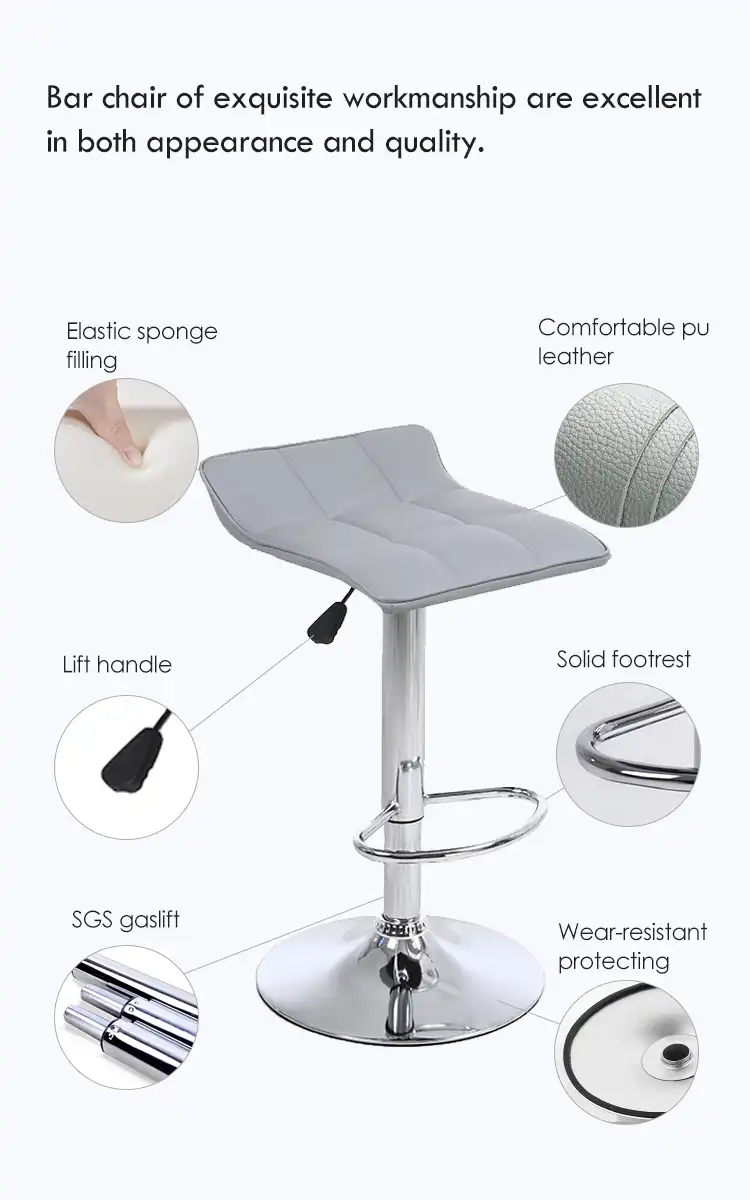
Material choice has a direct effect on how long something lasts in business settings. Heavy-gauge tube steel frames, usually 16-gauge or less, are very rigid and can handle multiple hits from mounting. Our factory in Anji uses kiln-dried hardwoods with less than 10 percent moisture to keep the wood from twisting in places where the temperature changes often. A protective coating on faux leather furniture keeps it looking good even after thousands of sitting rounds. This is because professional cleaning agents don't wear down the coating. Using high-density foam padding (more than 2.5 pounds per cubic foot), the padding spreads pressure evenly across the ischial tuberosity, making moderate-length sitting more comfortable.
Ergonomic Considerations and Height Standards
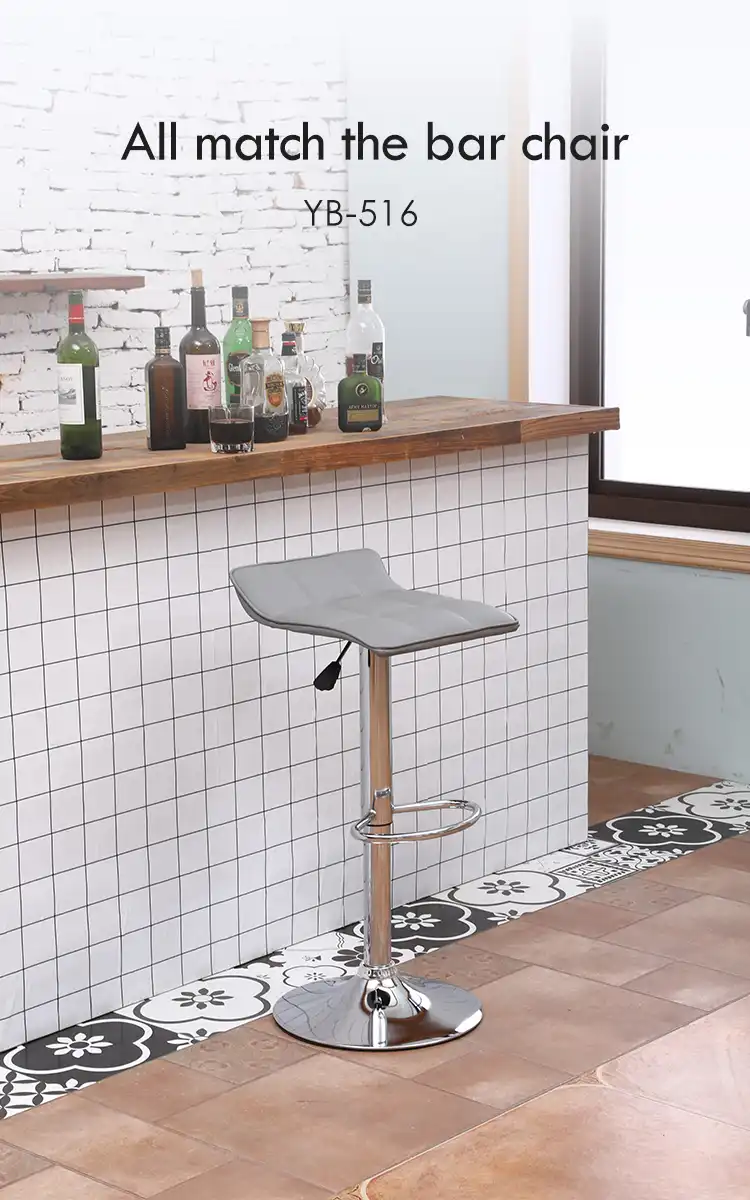
It is still necessary to match people's heights correctly. If you put a counter stool on a bar-height surface the wrong way, your thighs will be squished against the bottom of the structure, which is uncomfortable and could be dangerous. The usual measurement for clearance in this business is 10 to 12 inches between the seat area and the bottom of the counter. Before making container-level orders, commercial buying teams must compare these specs to what they already have in order to avoid having to pay a lot of money for returns or changes.
Pros of Commercial Backless Counter Stools
The practical benefits of backless counter stools go beyond the original cost savings; they create value that grows over the product's lifetime. These benefits are especially helpful for businesses in competitive hotel markets that need to reduce the number of seats they offer to stay within their budgets.
Space Optimization and Floor Plan Flexibility
These stools solve the problem of sight blockage that comes with open-concept designs. When tucked fully under bar overhangs, they keep clear sightlines, which is important for keeping the open feel that is popular in modern cafés and restaurants. The small size means that businesses can give each unit 24 inches of linear room instead of the 28 inches needed for backed options. This means that they can add 15% more seats without breaking any rules. This mathematical edge directly translates to more money that can be made in places where the rate of change determines success.
Design Versatility and Brand Alignment
Customization options for looks help make indoor branding strategies work together. With our OEM/ODM services, you can choose frame finishes, fabric colors, and protection coating formulas that are in line with standard design languages. The simple shape goes well with a lot of different styles, from industrial-chic brewery settings with open metal frames to Scandinavian-styled dining spaces that focus on natural wood grains. This flexibility cuts down on the need for a lot of venue-specific SKUs, which makes inventory management easier for wholesalers who serve a wide range of customers.
Operational Cost Efficiency
When compared to fully-backed models, lower buying costs make budgets easier right away. This is especially helpful when furnishing big business projects that need more than 50 units. Maintenance costs are low because there aren't any back parts that need to be fixed or adjusted. Many of our product lines come with stackable setups that make storage easier during off-peak times or yearly closures. Our space-saving packing method—putting two units in a 45x45x30-centimeter carton—lowers the cost of freight on container shipments, which helps foreign buyers figure out the landed cost.
Mobility and Reconfiguration Speed
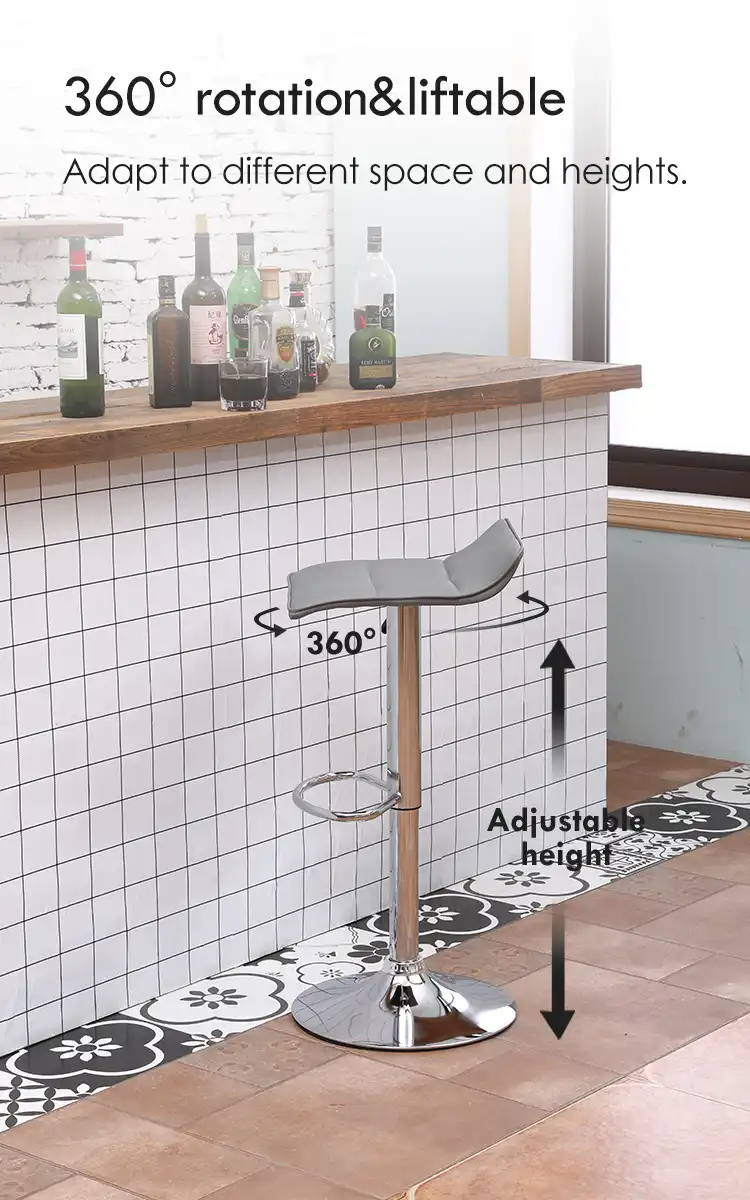
The light weight (usually 11–12.5 kilograms per unit) makes it easy for staff to quickly change how people are sitting when the number of guests or event needs change. The 360-degree turn seat system we built in lets users mount from any approach angle. This gets rid of the direction restrictions that slow down service during busy times. This operating flexibility is very helpful in mixed-use business areas that change from a breakfast counter to an evening cocktail setup.
Cons of Commercial Backless Counter Stools
Even though there are strong benefits, backless counter stools come with some problems that need to be honestly looked at during the design process. Professionals in procurement have to think about these limits in the context of their own operations and the types of customers they serve.
Extended Comfort Limitations
According to ergonomic study standards, you should only sit in one place for 60 to 90 minutes at a time if there is no back support. Places where people come to eat slowly, like fancy wine bars or lunch spots where people stay for more than two hours, may have problems with customer happiness. The physiological truth is based on posture: when people don't have posterior support, they unknowingly use their core muscles to stay upright, which makes them tired. Our foam cushions and leather covers make the surface comfortable, but they can't fully make up for the lack of structural support when used for long periods of time.
Stability and Safety Considerations
Center-of-gravity dynamics change in a way that is not better than backed options. Because there isn't a counterbalancing rear feature, users are more likely to fall off when they lean while mounting or dismounting. Stability must be checked by strict tipping-angle tests as part of quality control, especially when paired with footrest setups. These risks are made worse by units that are the wrong size, whether the seat width is too small or the height doesn't match the counter specs. Businesses that serve booze should pay extra attention to the stable requirements because customers who aren't able to coordinate their actions are more likely to get into an accident.
Demographic Suitability Constraints
Some user groups have more problems than others with backless setups. People who are older, have trouble moving around, or are healing from injuries often need back support for safe mounting and easy seating. Concerns about accessibility are made worse by the lack of armrests, which makes it harder to follow global design principles that are becoming more and more important in business building rules. To meet the needs of a wide range of people, venues that want to be welcoming may need to use a mixed seating approach that includes both backless counter stools and fully supported seats.
Posture and Long-Term Health Impacts
When employees sit on these stools for long shifts, they put a lot of stress on their backs. The design subtly supports the "active sitting" position, which is good for short amounts of time but can't be maintained for eight hours. For businesses that use counter seating for workplaces like greeting desks or quick-service order-taking jobs, rotating scheduling or extra ergonomic support should be put in place to avoid problems with repetitive strain.
How to Choose the Right Commercial Backless Counter Stool – A Decision Support Approach
Strategic selection technique turns buying backless counter stools from a business activity into one that creates value. After 14 years of focusing in chair manufacturing, we've learned that business setups that work well follow similar patterns when making decisions.
Assessing Business-Specific Requirements
Start by creating operational profiles of your customers. Write down their normal stay times, peak capacity needs, and usual usage scenarios. A coffee shop that wants to get people in and out quickly can benefit most from backless efficiency, but a drink club that wants to keep people there for a long time might have to give up some features. To make accurate measurements, you need to keep track of current counter heights, available floor space, and store space for stacking during off-hours. Knowing your customer's demographic description helps you set the right comfort level and make sure your business is accessible.
Critical Specification Parameters
Verification of height is the only thing that can be used as a starting point. Once you know how big the counters are, you can choose chairs that leave 10 to 12 inches of space between them. To figure out how long a material will last, you have to look at how the frame was put together. For example, welded parts last longer than bolted pieces. Weight capacity should be 25% higher than expected loads for safety. Our 300-pound number fits the 95th percentile of users easily. We engineer an easy-to-install building process that cuts down on release time, which is very important when working on big projects with tight deadlines.
Feature Prioritization and Comparison
Check to see if the extra cost of cushioned seating is worth it for your use case. Venues with average dwell times of 30 minutes may find unpadded versions to be suitable, while longer-term uses benefit from our foam padding integration. The 360-degree swivel mechanism makes things easier for users, but it also adds more upkeep places. Think about whether your work flow needs this feature. Protective finishes are important. For example, our leather covers with stain-resistant treatments make cleaning easier in food service settings where spills happen all the time.
Supplier Partnership Criteria
Partner decision is more than just unit price. The 6,000-square-meter production space at our plant allows for flexible production that can handle orders at the container level without having to wait longer for supplies. Our OEM/ODM team can create sizes, finishes, and logo details, which sets strategic providers apart from commodity vendors. Check our export history. Our involvement in the Canton Fair and the Guangzhou Furniture Fair shows that we can be trusted in the market, and our plans to expand to German and US fairs show that we are committed to meeting international quality standards. Responding contact routes, like our promise to answer all inquiries within 24 hours, make it easier to buy things across time zones.
Conclusion
When practical needs match up with their natural design features, backless counter stools provide measured value. They save room, are cheaper, and can look good in a variety of ways, which makes them great choices for high-traffic commercial settings where business goals include quick seating rearrangement and visual openness. Procurement officials have to weigh these benefits against issues with comfort during long periods of use and stability that affect a wide range of users. For implementations to go smoothly, strict specification methods must be used to make sure that the stool's measurements fit with the current infrastructure, that the material's durability is based on how much it will be used, and that long-term performance is maintained through regular upkeep. When you work with experienced manufacturers who offer customization options and quick help, buying goods becomes a smart asset acquisition.
FAQs
Are backless counter stools suitable for prolonged sitting in commercial settings?
For sitting for less than 90 minutes, backless counter stools work best. They work great in cafés and quick-service restaurants, but places that want customers to stay for a long time might want to add comfortable features like molded cushions or a mix of backed and backless seats.
What material specifications ensure durability in demanding environments?
For commercial units, the frame must be made of 16-gauge or thicker steel and be bonded together. Specifications for wood types should include kiln-dried hardwoods with less than 10% moisture. Upholstery needs coatings that are immune to stains that have been tried with professional cleaners. As part of our quality assurance process, we test for drops and check that the standing load is more than 300 pounds.
Can suppliers customize dimensions and finishes for brand-specific requirements?
Reliable makers offer OEM/ODM services that let customers choose the colors of the frame, the materials used for the padding, the sizes of the seats, and the ways that the products are packed. Our research and development team works with clients to make custom prototypes that meet the aesthetic standards of the brand and the functional needs of particular market uses.
Partner with YIBO for Premium Commercial Backless Counter Stools
We encourage people who buy things to look at our wide selection of commercial-grade backless counter stools made in Anji, China, which is known as the furniture capital of the world. As a seller of backless counter stools with 14 years of experience in the field, we offer stable transportation and production that can be scaled up to support container-level orders. Our building has high-tech tools and strict quality control measures that make sure every unit meets international standards. Also, our knowledgeable sales staff answers all questions within 24 hours. You can email us at yb@ajyibo.com to talk about customization options, get samples from our large showroom, or get full specs to help you with your purchase evaluation. We offer OEM/ODM services, space-efficient packaging, and warranty support that turn furniture buying into a smart relationship that helps your business success.
References
American National Standards Institute. (2021). ANSI/BIFMA X5.1: General-Purpose Office Chairs and Seating Standard. Business and Institutional Furniture Manufacturers Association.
Chen, M., & Roberts, P. (2020). Ergonomic Design Principles for Commercial Seating Applications. Journal of Furniture Design and Manufacturing, 45(3), 112-128.
Harrison, D., & Liu, S. (2019). Material Science in Contemporary Furniture Manufacturing: Durability and Performance Metrics. International Wood Products Journal, 10(2), 67-81.
Kaplan, R. (2022). Space Planning Strategies for High-Density Hospitality Environments. Commercial Interior Design Quarterly, 18(4), 34-49.
Thompson, L., & Wang, H. (2021). Quality Control Standards in Export Furniture Manufacturing: A Comparative Analysis. Global Supply Chain Management Review, 12(1), 89-104.
Williams, J. (2020). Seating Solutions for Modern Foodservice Operations: Balancing Functionality and Guest Experience. Restaurant Management Today, 27(6), 56-72.