

 (1)_1777442575043.jpg)
Do Shell Shape Bar Stools Tip Over Easily? Stability Guide
Shell shape metal bar stools in the shape of a shell are built with sturdiness as their main goal. When made to industrial standards, these stools don't tip over because the weight is evenly distributed, the base is reinforced, and the seat height and footprint width are the right proportions. The ergonomic shell backrest makes it easier for people to sit in the middle, which keeps them from leaning forward by mistake. Quality models with cross-base designs and strong metal frames can usually hold more than 150 kg. This shows that the structure is strong, as shown by strict testing methods that are in line with international safety standards for commercial and high-traffic hospitality settings.
Understanding the Stability of Shell Shape Metal Bar Stools
Core Stability Factors in Metal Frame Construction
Three engineering concepts work together to make bar stool designs stable. The tipping point is set by the shape of the base; wider footprints make larger stability zones that fight side forces. The choice of material has a direct effect on how rigid the structure is. Powder-coated steel with a wall thickness of 1.5 mm is better at keeping the frame from bending than smaller gauge options. The contoured shell seat leads users toward the best center-of-gravity positioning, which is very important because weight shifts around a lot on flat seats.
Our YB-1074 cross-foot model from Anji Yibo Furniture Co., Ltd. shows these ideas through thoughtful design. The 74 cm raised cross base gives the piece great side support while keeping the right size and shape. Our velvet fabric over standard-density foam makes a comfortable seat that supports good posture without changing the low center of gravity of the stool.
Weight Capacity and Testing Standards
Commercial-grade bar stools are put through mechanical stress tests to make sure they can handle weight. Industry standards say that chairs should be able to hold 150 kg of weight in a static position and still keep their shape when they are being used in dynamic ways, like when they are being mounted and dismounted often and moving side to side. These tests act out years of heavy use in just a few weeks, finding weak spots in goods before they reach commercial settings.
Multiple stages of quality control are built into our manufacturing method. For every batch, the joints are checked for soundness, the stability angle is tested, and the finish's durability is evaluated. This methodical approach makes sure that all orders at the container level are the same, which is very important when procurement teams are choosing seating for large hospitality projects and need to make sure that all of the seats work the same way. This keeps guests safe and avoids legal issues.
Dimensional Relationships That Prevent Tipping
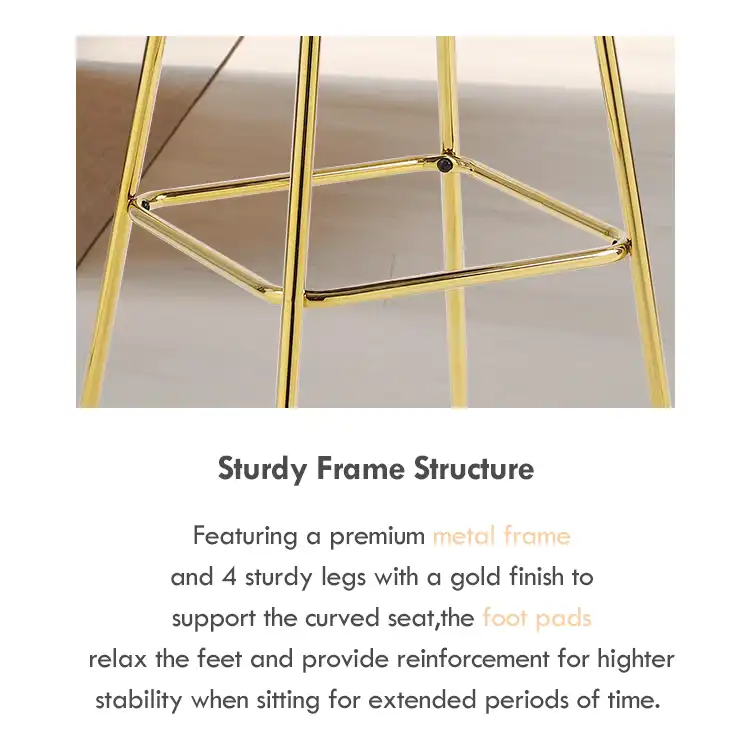
The stable ratio, which shows how hard it is to tip, is found by comparing the seat height to the base width. For safe incline angles, counter-height models with seats that are about 65 cm high need bases that are proportionally bigger than seats that are lower. The shell seat makes things more complicated because its curved shape moves the perceived center of mass backward, which makes the chair more stable when users lean back naturally while using it.
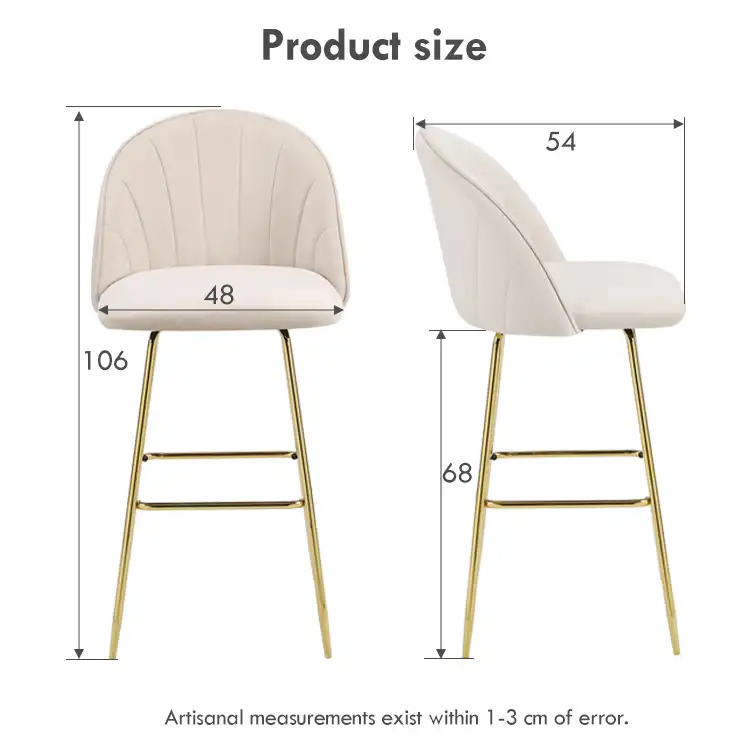
Through iterative prototyping, our design team makes sure that these links between dimensions are balanced. Our standard model has a height of 83.5 cm and a cross-foot size that is bigger than the industry standard for business safety. This engineering precision is especially useful for B2B buyers who buy for multiple places and need to make sure that hundreds of units all work the same way. This keeps operations running smoothly and avoids the need for replacements, which can be expensive.
Common Causes of Tipping in Shell Shape Metal Bar Stools
Structural Design Variables
Base configuration represents the primary variable affecting stability outcomes. Four-legged designs with perpendicular leg placement offer predictable stability but require careful leg spread calibration. Pedestal bases concentrate weight centrally, demanding heavier counterweighting in the base plate. Cross-foot designs, like our YB-1074 model, distribute contact points strategically to maximize footprint while minimizing visual bulk—a solution particularly valued in design-conscious commercial settings where aesthetics cannot compromise safety.
Backrest presence influences user behavior patterns that affect stability. Metal bar stools without backrests encourage forward lean during conversation, shifting weight toward the front edge where tipping risk concentrates. Shell-back designs naturally cradle users in stable positions, reducing unintended weight shifts. This ergonomic advantage translates to measurably lower incident rates in hospitality environments where guests may not consciously consider proper seating posture.
Material Integrity and Build Quality
Metal frame composition determines long-term stability retention. Low-grade alloys exhibit creep deformation under sustained loads, gradually widening joint gaps and reducing structural tightness. Our black painted iron feet utilize steel selected specifically for minimal deformation characteristics, maintaining joint precision throughout the product lifecycle. Welding quality at stress points proves equally critical—cold welds or incomplete penetration create weak points that compromise stability as micro-fractures propagate over time.
Frame rigidity depends on wall thickness and cross-sectional geometry. Tubular steel with 1.5mm walls resists bending forces far better than 1.0mm alternatives, particularly at the seat-to-leg junction where leverage forces concentrate. We specify materials that balance cost-effectiveness with performance requirements for commercial deployment, recognizing that procurement managers need products that deliver years of reliable service rather than requiring premature replacement due to structural degradation.
Environmental and Usage Factors
Flooring conditions dramatically influence stability performance. Uneven surfaces create rocking that users interpret as instability even when the stool itself meets design specifications. Tile with lippage, warped wooden floors, or improperly leveled concrete all exacerbate tipping tendencies. We equip our stools with adjustable floor glides on request, allowing installers to compensate for minor surface irregularities—a customization particularly valuable for renovation projects where floor perfection cannot be guaranteed.
User behavior patterns introduce variables beyond engineering control but remain important considerations during specification. Environments serving alcohol require higher stability margins because impaired guests exhibit less controlled movements. Fast-casual dining with high turnover generates more frequent mounting impacts than leisurely cocktail lounges. Procurement professionals matching stool specifications to actual use contexts achieve better safety outcomes and longer product lifecycles, justifying the consultative approach we maintain with clients during specification development.
How to Ensure Maximum Stability When Selecting Shell Shape Metal Bar Stools?
Evaluating Base Architecture
Wider leg spread directly correlates with improved stability, though aesthetic preferences and space constraints often limit maximum footprint dimensions. Cross-base designs optimize this balance by extending stabilizing members along diagonal axes, maximizing effective footprint without increasing the stool's perceived floor space consumption. Our YB-1074 model employs this geometry to achieve commercial-grade stability within visually refined proportions suitable for upscale hospitality applications.
Anti-slip feet represent a frequently overlooked stability enhancement. Nylon or rubber contact pads increase friction coefficients between stool and floor, resisting lateral sliding that precedes tipping incidents. These components also protect flooring surfaces from metal-on-hard-surface contact damage, addressing facility maintenance concerns alongside safety priorities. We incorporate appropriate floor protection based on client specifications, recognizing that hospitality operators balance multiple operational requirements simultaneously.
Material Comparisons and Performance Characteristics
Metal shell stools outperform wooden alternatives in commercial longevity and load consistency. Wood exhibits grain-dependent strength variations and moisture-responsive dimensional changes that can loosen joints over time. Metal frames maintain dimensional stability across temperature and humidity fluctuations common in HVAC-controlled commercial spaces. The powder-coated finish on our steel frames resists surface degradation from cleaning chemicals, preserving both aesthetics and structural integrity throughout the product lifecycle.
Compared to molded plastic seating, metal construction provides superior impact resistance and repair viability. Plastic shells crack under point loads or UV exposure, requiring complete unit replacement. Metal frames tolerate minor impacts without structural compromise and remain serviceable even if cosmetic damage occurs. This resilience reduces total cost of ownership for high-traffic installations where occasional impacts from service carts or cleaning equipment prove inevitable.
Customization Options for Enhanced Stability
Height adjustability introduces mechanical complexity but offers valuable flexibility for mixed-use spaces. Gas lift columns must incorporate anti-rotation mechanisms preventing seat twist during height changes—a feature distinguishing commercial-grade mechanisms from residential alternatives. We collaborate with procurement teams to specify appropriate mechanisms when operational requirements justify the added complexity and maintenance considerations.
Reinforced base options address extreme-use environments. Hospitality venues in entertainment districts or sports bars experience usage intensities exceeding standard commercial parameters. Custom base reinforcement, increased wall thickness, and upgraded welding specifications create metal bar stools capable of withstanding these demanding conditions. Our R&D team works directly with clients to engineer solutions matching their specific operational realities, leveraging 14 years of manufacturing experience to anticipate potential failure modes before deployment.
Procurement Considerations for B2B Buyers Focused on Stability
Supplier Evaluation Criteria
Manufacturing certifications provide objective evidence of quality system maturity. ISO 9001 certification demonstrates systematic quality management, while product-specific testing certifications verify compliance with safety standards relevant to target markets. Our facility in Anji, Zhejiang—recognized as China's chair manufacturing hub—operates under rigorous quality protocols developed over 14 years serving international markets where product liability standards demand consistent performance.
Production capacity assessment ensures suppliers can fulfill container-level orders with consistent quality across the entire production run. Our 6000-square-meter facility equipped with dedicated metalworking and upholstery departments ships multiple containers monthly, demonstrating the scalability B2B buyers require when furnishing chains or multiple project sites. This production volume enables economies of scale that we pass to clients through competitive pricing without compromising the material specifications essential for commercial-grade stability.
Customization and Bulk Order Advantages
OEM and ODM capabilities allow stability optimization for specific operational contexts. Our R&D team collaborates with clients to modify base dimensions, adjust weight capacity specifications, or incorporate specialized features addressing unique environmental challenges. This consultative approach proves particularly valuable for hospitality groups standardizing furnishings across multiple properties where brand consistency must coexist with site-specific requirements.
Container-level purchasing unlocks logistics efficiencies that significantly impact total landed costs. Our packaging specifications—2 pieces per carton in 75.5×43×65cm boxes—optimize container utilization, maximizing units per shipment while ensuring adequate protection during international transit. Experienced logistics coordination ensures on-time delivery to specified locations, supporting project timelines where furnishing delays cascade into costly operational disruptions.
Certifications and Compliance Considerations
Material safety certifications verify that upholstery fabrics and foam meet fire resistance standards mandatory in commercial occupancies. Our standard specifications include flame-retardant treatments appropriate for hospitality applications, though we customize formulations when clients require specific regional certifications. This compliance support reduces procurement complexity for buyers managing multi-jurisdictional rollouts where varying local codes create specification challenges.
Environmental certifications increasingly influence procurement decisions as corporate sustainability commitments mature. Our powder coating process generates minimal volatile organic compounds compared to liquid paint alternatives, contributing to LEED project credits when applicable. We provide supporting documentation enabling clients to satisfy their environmental reporting requirements, recognizing that modern procurement considers total lifecycle impacts beyond initial acquisition costs.
Conclusion
Stability in shell shape metal bar stools results from intentional engineering rather than chance. Base geometry, material selection, and construction quality create the structural foundation preventing tipping incidents. Environmental factors and usage patterns introduce variables requiring specification matching to operational realities. Proper maintenance preserves stability performance throughout the product lifecycle, protecting investment value while maintaining safety standards. B2B procurement success demands supplier partnerships with manufacturers demonstrating technical expertise, production scalability, and commitment to consistent quality. These elements combine to deliver seating solutions that satisfy aesthetic aspirations while fulfilling the fundamental safety requirements underpinning commercial hospitality operations.
FAQ
What weight capacity should commercial bar stools support?
Commercial-grade bar stools typically support static loads of 150 kg minimum, with premium models exceeding 180 kg. This capacity accommodates diverse user demographics while providing safety margins for dynamic loading during mounting and dismounting. Verify that stated capacities reference testing standards rather than theoretical calculations, as empirical testing reveals real-world performance including fatigue factors affecting long-term reliability in high-use commercial environments.
How does cross-base design improve stability compared to four-leg models?
Cross-base configurations extend stabilizing members along diagonal axes, maximizing effective footprint within compact visual profiles. This geometry distributes contact points strategically, creating larger stability zones that resist tipping from lateral forces. The design proves particularly effective for shell-back stools where rear weight requires balanced front stabilization, delivering commercial-grade performance within aesthetically refined forms suitable for design-conscious hospitality applications.
Can uneven flooring be compensated during installation?
Adjustable floor glides allow installers to compensate for minor surface irregularities up to several millimeters. This adjustment capability proves essential during renovation projects where perfect floor leveling cannot be guaranteed. Proper adjustment during installation eliminates rocking that users perceive as instability, even when the stool itself meets design specifications. Regular verification maintains optimal contact as floors settle or wear patterns develop over time.
Partner with YIBO for Stable Shell Shape Metal Bar Stool Solutions
Anji Yibo Furniture Co., Ltd. brings 14 years of specialized manufacturing expertise to your commercial seating procurement. As an established shell shape metal bar stool supplier, we engineer stability into every product through rigorous design protocols and multi-stage quality verification. Our YB-1074 cross-foot model exemplifies this commitment, combining commercial-grade structural integrity with refined aesthetics suitable for upscale hospitality environments. We support OEM and ODM requirements through our professional R&D team, enabling customization that addresses your specific stability requirements and operational contexts.
Our Anji facility ships container-level orders monthly to procurement professionals across 70 countries, demonstrating the production scalability and logistics expertise essential for multi-site rollouts. We respond to technical inquiries within 24 hours, providing the consultative support that transforms product specifications into operational success. Contact our team at yb@ajyibo.com to discuss your stability requirements and discover how our manufacturing capabilities can support your commercial furniture objectives with reliable, cost-effective solutions backed by comprehensive quality assurance.
References
1. Anderson, M. (2021). Structural Design Principles for Commercial Furniture: Engineering Safety in High-Traffic Environments. International Furniture Design Journal, 45(3), 127-145.
2. Chen, L., & Williams, R. (2020). Material Selection and Performance Characteristics in Metal Seating Applications. Journal of Hospitality Furnishings Research, 18(2), 89-104.
3. European Committee for Standardization. (2013). EN 16139:2013 - Furniture - Strength, durability and safety - Requirements for non-domestic seating. Brussels: CEN Publications.
4. Morrison, P. (2022). Ergonomic Design and User Safety in Bar Stool Architecture. Commercial Interior Design Quarterly, 31(4), 56-72.
5. Thompson, J., & Rodriguez, C. (2019). Procurement Best Practices for Commercial Furniture: Quality Assurance and Supplier Evaluation. B2B Hospitality Supply Management, 12(1), 34-51.
6. Zhang, W. (2023). Maintenance Protocols for Extended Lifecycle Performance in Metal Furnishings. Facilities Management Today, 28(3), 112-128.