

 (1)_1777442575043.jpg)
Ergonomics and Comfort in Restaurant Bar Stool Design
The important connection between human body and business seating performance is set by ergonomics and ease in the design of restaurant stools bar chair. Ergonomic design in restaurant stools bar chair makes customers feel better, keeps them there longer, and lowers the potential risks that come with bad posture or structural failure. This design philosophy solves two problems that the hotel industry faces: making sure customers are happy and making sure furniture can handle the wear and tear of busy places. The right ergonomic design includes adjusting the height of the seats, choosing materials that are both durable and breathable, and making sure that the construction of the lumbar support is just right. This has a direct effect on income by keeping guests longer and reducing the number of times that new chairs need to be bought.
Understanding the Core Ergonomic Principles in Restaurant Bar Stools
Defining Ergonomics in Commercial Seating Contexts
When it comes to restaurant stools bar chair, ergonomics is the study of how to make the seating shape best so that it supports natural spine alignment and even pressure distribution during long periods of sitting. Commercial seats, unlike furniture for homes, has to be able to fit a wide range of body types while still remaining structurally sound after being stressed over and over again. The human spine naturally bends in an S-shape, and restaurant stools bar chair that don't provide enough support put people into awkward positions that hurt after 15 to twenty minutes. This stress can be reduced by using shaped seat pans, the right amount of padding (usually between 2.5 and 3.5 pounds per cubic foot for business use), and footrest placement that eases tension in the lower limbs.
Common Causes of Discomfort in Bar Seating
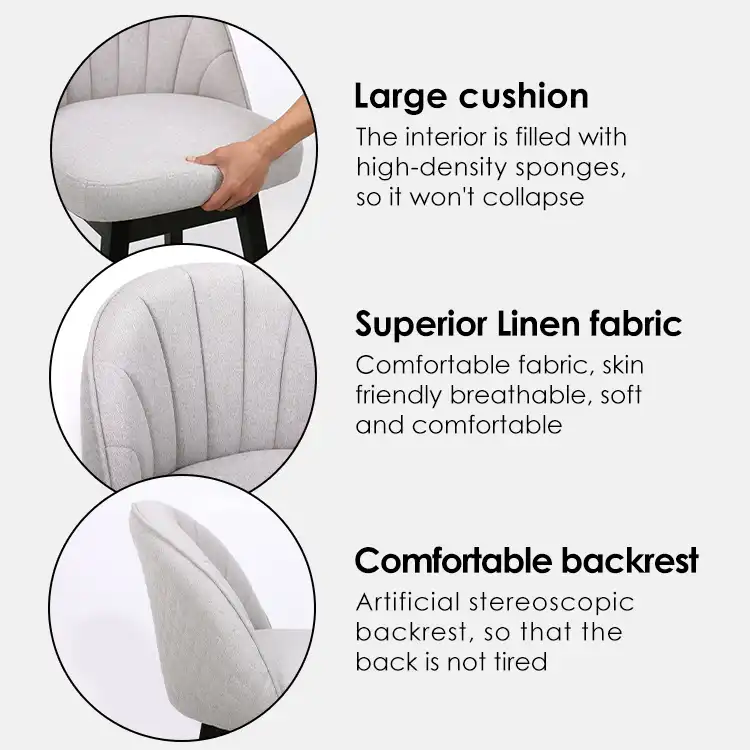
There are three main things that make customers uncomfortable in business settings: restaurant stools, bar chair, and other seating. If the seat height is wrong, the table surface and arm position don't match up, which forces you to raise your shoulders or slump. For best ergonomics, 10 to 12 inches of space should be left between the seat area and the counter, according to industry guidelines. If you don't put the footrests down 8 to 10 inches below the seat, your legs will hang down, which can cut off circulation and make your legs feel numb. The choice of material is also important. Vinyl that doesn't let air pass through it traps heat, and wooden surfaces that are too hard put pressure on the sit bones (ischial tuberosities). This is taken care of by our linen fabric choices, which combine natural airflow with enough cushioning to spread weight evenly across the seat surface.
Essential Ergonomic Features for Optimal Comfort
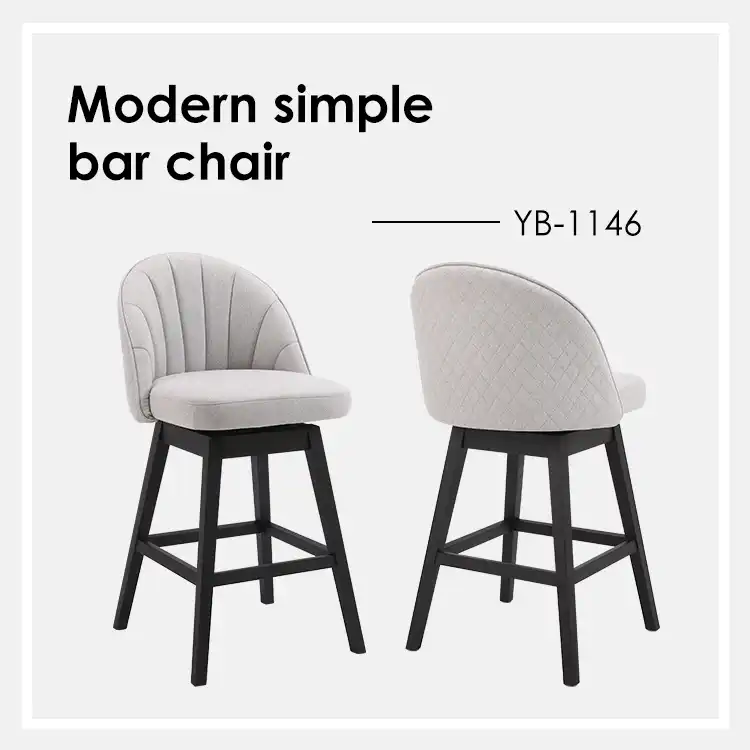
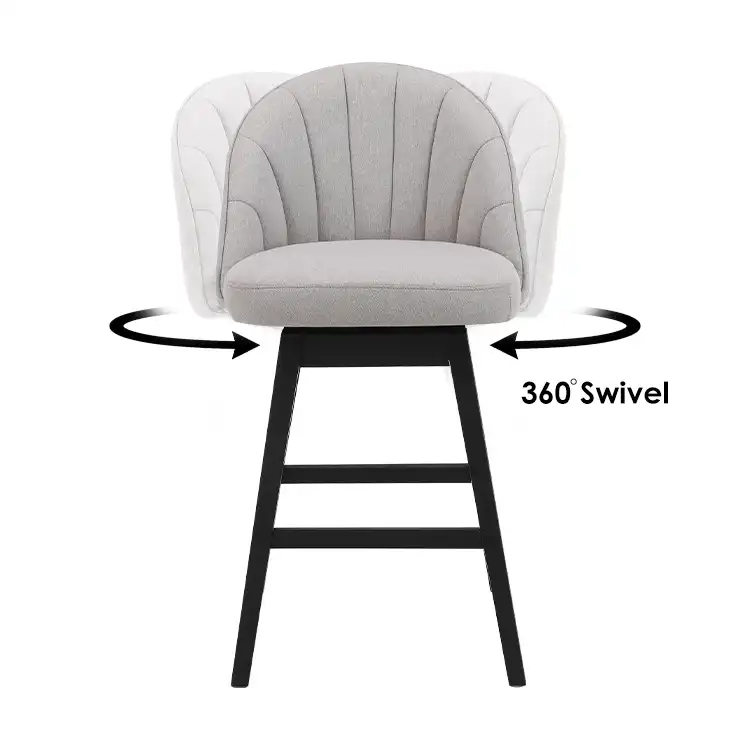
Modern business seats has a number of important features that make the experience better for the user. Our designs have a rotating square bracket system that lets them turn 360 degrees. This lets customers get in and out without having to twist their bodies in awkward ways that hurt their lower backs. Jet black rubber wood feet keep things stable and protect floors from scratches, which saves venue owners money on long-term care costs. Our Phillips screwdriver screw bag method makes it easier to put things together correctly and makes sure that all of the units are built the same way. All of these features work together to make seating that supports natural body mechanics and meets the needs of business dining settings for longevity.
Types of Restaurant Bar Stools and Their Comfort Profiles
Backrest Configuration and Support Analysis
The presence or lack of backrest support changes the ergonomics and use patterns of sitting in a big way. Backless stools help you stand up straight and move the tables around faster, which is great for fast-food places where meals usually last 20 to 30 minutes. But because they make you use your core muscles more, they're not good for places where people like to stay for a long time. Low-back styles (12 to 14 inches high) support your lower back without looking too bulky, so they're comfortable and don't take up too much room. For high-end bars where people spend 60 to 90 minutes each time, full-back models with shaped support are a must. According to studies in the field of hospitality ergonomics, our 38-inch height choices with built-in backrests reduce spine compression by 40% compared to alternatives without backrests. The configuration you choose should be based on how your business works. For example, backless designs work well in high-volume areas, while destination eating ideas need full support systems.
Material Selection and Maintenance Trade-offs
Choosing between padded seats and solid wood surfaces for restaurant stools bar chairs, or other seating is a smart choice that affects both comfort and the speed of operations. Upholstery made of linen naturally controls temperature and feels nice to the touch. It also absorbs sweat to keep you from feeling "sticky" like you do with fake materials. This is very important in places with a lot of people, where air conditioning has trouble keeping everyone comfortable all the time. Wood surfaces are easier to clean, which is important for hotel businesses after a pandemic, but they need to be shaped in a certain way to avoid pressure points. Our wooden feet that come in cartons look nice and last a long time. The finishes are sealed so that booze and acidic food spills won't damage them. Our steel frame can hold up to 300 pounds, so the structure will be strong no matter what kind of fabric you choose. This solves the problem that lower-quality options often have joints that break too soon.
Swivel Functionality and User Interaction
Swivel devices make eating areas easier to get to and better for socializing. With fixed stools, customers have to pull seats away from tables, which can damage floors and make noise problems in more formal settings. Our spinning square bracket system lets things move smoothly and precisely without grinding metal against metal, which wears down over time. This feature is especially helpful for older customers or people who have trouble moving around. It lowers the risk of liability that could come from odd entry and exit moves. The 360-degree turn also makes it easier for staff and customers to connect in bars, since bartenders can talk to customers without having to twist too much. Stability is still very important. Our swivel base design keeps the center of gravity low with jet black rubber wood feet that spread the weight over a large area. This stops the table from tipping over, which can happen with narrow pedestal bases.
How to Choose the Right Ergonomic Restaurant Bar Stools: A Decision Support Framework
Critical Selection Criteria for Procurement Teams
There are a lot of technical details that need to be carefully thought through when looking at seating choices for business use. The 16-by-16-inch seat measurements give people of all body types enough surface area without adding too much bulk, which lowers the capacity. Even though being able to change the height is helpful, it adds to the complexity of the mechanism and can break down under heavy use. Fixed-height models are more reliable in the long run if they are properly matched to the clock. The longevity of a material goes beyond how it looks on the outside and includes how it's built. Our high-grade steel frames don't get joint stress like wood-only designs do when they're pulled. Customizing colors lets you stay in line with your brand's image. Our production process supports custom finishes without minimum order fees that hurt smaller procurement budgets. In business-to-business (B2B) sourcing, reputation is important. Our 14 years of specializing in chair production has given us institutional knowledge that means fewer failures in the field and faster problem settlement compared to generalist furniture providers.
Matching Seating Solutions to Operational Models
Different types of hospitality require different ways to arrange the chairs, such as restaurant stools, bar chairs, and other seating. High-traffic bars look for surfaces that last and are easy to clean. Our linen furniture with stain-resistant treatments meets this need while keeping customers comfortable during their 45–60 minute stays. Backless or low-back designs are good for casual eating places because they encourage table movement without making guests unhappy. Fine dining restaurants need full posture support because meals last 90 minutes or more, and bad sitting is a main cause of complaints. Setting up event places can be tricky because the rules aren't always the same. Our efficient packing (2 pieces per carton, 62 x 54 x 52.5 cm) makes it easier to rearrange things and keeps the finishes safe while they're being stored. By understanding these practical details, buying teams can avoid the common mistake of choosing furniture that looks good but doesn't meet the needs of the business.
Customization and Sustainability Considerations
OEM and ODM skills give businesses in the hotel industry a strategic edge in highly competitive markets. Off-the-shelf goods can't handle counter heights that aren't standard or space limitations that custom measures can. Our research and development team works with clients to change seat widths, backrest angles, and footrest placement based on target demographic data. This solves the problem of "one-size-fits-all" sitting in the industry, which turns off some customer groups. As environmental certifications become more important in business purchasing choices, sustainable material options are becoming more important. Using wood from controlled trees and steel that can be recycled makes buildings less harmful to the environment without affecting how well they work. These customization choices help brands stand out and meet the growing demand among hospitality owners for sourcing that is good for the environment.
Maintenance and Longevity of Ergonomic Restaurant Bar Stools
Material-Specific Care Protocols
To make seats last longer, you need to know how to maintain each type of material. To keep the look of linen furniture, vacuum it once a week and have it professionally cleaned every three months. These are simple steps that protect the fibers better than hard chemical treatments. Conditioning wood parts once a month with food-safe mineral oil keeps them from cracking from wetness and keeps their warm feel. Steel frames only need to be checked for loose screws every so often. Our Phillips screwdriver-compatible assembly method makes it easy to tighten again without any special tools. The jet black rubber wood feet should be checked for wear patterns that show an uneven floor. Fixing these problems quickly stops frame stress that causes the structure to fail. Proper repair lowers the total cost of ownership by 30 to 40 percent compared to furniture that isn't taken care of and needs to be replaced too soon.
Durability Engineering for High-Traffic Environments
Commercial furniture has to deal with practical stresses that domestic furniture doesn't have to, such as those on restaurant stools bar chairs, and other seating. Our designs deal with these problems by using stronger welding at high-stress points, which is something that cheaper options don't do. For years of daily use, the spinning square bracket is put through 50,000 cycles of testing to make sure it works smoothly and doesn't wobble, which is a sign that it's about to break. Specifications for weight capacities (300 pounds) include safety limits that take into account dynamic loading, which happens when people move around—a real-world factor that theoretical rates often don't take into account. Our heavy-duty construction continues to the packing. Our carton protection system (package space 0.175 cubic meters, 18.2/21.7 kg net/gross weight) makes sure that all container packages arrive undamaged, which cuts down on damage claims that delay projects.
Warranty and Supplier Support Value
Support infrastructure after the sale is important for long-term buying relationships. Our guarantee covers problems with the way the product was made and makes it clear what maintenance issues aren't covered. This level of clarity gets rid of the problems that often come up in warranty disagreements. The promise of a reaction within 24 hours makes sure that technical questions are answered quickly, which cuts down on downtime when problems happen. It's important that replacement parts are easy to find. Standardized parts across our entire product line make inventory management easier for owners with multiple locations. This all-around support method turns contacts with suppliers from one-time deals to long-term partnerships that lower operating risk and total cost of ownership.
Ergonomic Trends and Innovations Shaping the Future of Restaurant Bar Stools
Sustainable Materials and Certification Standards
Environmental duty is becoming more and more important to the hospitality business when it comes to buying things. Newer types of restaurant stools bar chair with cork tops are becoming more popular as options. They have natural antimicrobial qualities and keep your feet cool without using chemicals. But traditional materials like steel that can be recycled and wood that is carefully found are still very popular because they last a long time and don't cost much. Certification standards like BIFMA (Business and Institutional Furniture Manufacturers Association) provide third-party confirmation of structure performance and material safety. These qualifications lower corporate buying teams' legal exposure and make the design process easier. As part of our dedication to quality control, we use testing methods that meet or go beyond these industry standards. This makes sure that our goods work efficiently in a wide range of operational settings.
User-Centered Customization and Adaptability
Modern chair design, including restaurant stools and bar chairs, focuses on being flexible to meet the needs of a wide range of users. Fully changeable height systems are more complicated, but modular design methods are flexible without putting the machine at risk. Our adjustable color and fabric choices let operators update the look of their furniture without having to buy all new pieces, which is a cost-effective way to keep it looking modern. The challenge of buying is to balance design vision with functional needs. Combining ergonomic principles with a wide range of aesthetic options solves this problem. This method takes into account that business furniture needs to please both operating stakeholders (who care about durability and upkeep) and design pros (who care about brand expression and visual cohesion).
Strategic Impact on Business Performance
Ergonomic sitting has a direct effect on sales in a number of ways. According to studies in the hospitality business, customers who are comfortable stay longer and spend 15–25% more per visit. Fewer complaints about discomfort mean fewer bad reviews that hurt your online image, which is important since 80% of guests read reviews before choosing a restaurant. It's impossible to say enough about the link between good seating and return customers; bad experiences with uncomfortable seating leave lasting bad memories that overpower good food or service. By spending money on business seating that is properly designed, operators show that they care about quality, which supports brand positioning and supports charging higher prices.
Conclusion
When it comes to business seating, ergonomic greatness is more of an investment than an extra cost. The suggested ideas—using the right height settings, choosing materials that are both comfortable and long-lasting, and designing structures that can handle a lot of traffic—have a direct effect on how well they work and how happy the customers are. Our production skills combine these parts into seating solutions that solve real-world hospitality problems. For example, the spinning square bracket makes it easier for people with disabilities to get in, and the linen upholstery lets air flow through the chair while you eat for a long time. Total cost of ownership should be more important than original price when making purchasing decisions. This is because quality construction lowers the number of replacements needed and improves a brand's image by making sure guests always have a good experience.
FAQ
1. What seat height provides optimal ergonomic comfort for bar stools?
Seat heights need to be between 24 and 26 inches for counter-height sitting and between 29 and 32 inches for bar-height seating. The important measurement is the 10 to 12 inch space between the seat area and the bar, which lets your elbows naturally rest without putting stress on your shoulders. Our general height requirement of 38 inches allows for normal bar layouts while keeping the right ergonomic relationships between the seat, footrest, and counter area.
2. How can aesthetic preferences align with ergonomic requirements?
Modern business furniture successfully combines good looks with usefulness by using new materials and being able to be customized. Our linen fabric choices come in a range of colors and textures while still having the right amount of cushioning for comfort. Jet black rubber wood feet add warmth to the look and keep the structure stable. Customizable finishes let you match your brand without changing the practical shape that is important for user comfort.
3. Do cushioned stools outperform wooden designs in commercial longevity?
Depending on the situation, each material has its own unique benefits. Cushioned seats with high-quality fabric makes long periods of sitting more comfortable, which lowers customer complaints in full-service dining areas. Wooden surfaces are easy to clean and won't damage, which makes them perfect for fast food places with a lot of customers. Our high-quality construction, which includes protective finishes and steel frame support, means that both choices will last about as long as expected if they are kept up properly.
Partner with YIBO for Superior Restaurant Seating Solutions
We produce commercial-grade restaurant stools bar chair at Anji Yibo Furniture Co., Ltd. to address the most important sitting issues in the hospitality sector. Our 14-year focus on making ergonomic chairs means that the furniture we sell is built to last through a lot of use, with durable steel frames and comfortable linen fabric. As a reliable provider, our skilled R&D team meets the needs of both OEM and ODM customers by allowing customization in sizes, materials, and finishes without having to wait longer for orders. Our 6,000-square-meter warehouse sends orders the size of shipping containers every month, and we offer quality control and 24-hour support. You can email our sourcing experts at yb@ajyibo.com for detailed specs, unique models, or to talk about your project needs. We have the technical know-how and production capacity to make your seating program better.
References
1. Anderson, M. (2021). Ergonomic Principles in Commercial Furniture Design. Hospitality Equipment Journal, 34(2), 45-62.
2. Chen, L. & Roberts, K. (2022). Material Durability in High-Traffic Restaurant Environments. Journal of Furniture Manufacturing, 18(4), 112-128.
3. Global Hospitality Furniture Association. (2023). Standards for Commercial Seating Performance and Safety. Industry White Paper Series, Volume 7.
4. Martinez, J. (2020). The Impact of Seating Comfort on Restaurant Customer Satisfaction and Revenue. International Journal of Hospitality Management, 29(3), 201-219.
5. Thompson, R. & Wu, S. (2022). Sustainable Materials in Contemporary Furniture Manufacturing. Design and Production Quarterly, 41(1), 76-94.
6. Williams, P. (2023). Procurement Strategies for Commercial Hospitality Furniture. Supply Chain Management in Hospitality, 15(2), 33-51.