

 (1)_1777442575043.jpg)
What Makes Metal Bar Stools Perfect for Your Bar or Cafe?
There's a good reason why metal bar stools are the most popular type of business seating today. It's likely that when you walk into a busy café or fancy cocktail bar, you'll see sleek metal seating that holds the room together. The shell shape metal bar stool is one of the classiest choices because it has a unique combination of industrial durability and ergonomic design. The curved backrest on these stools supports the lower back, and the strong metal frames can handle the daily wear and tear of busy hospitality places. The mix gives procurement managers what they want most: seating that looks classy, feels good, and can be used for years in a business setting without losing its style or structural integrity.
Understanding Shell Shape Metal Bar Stools: Features and Benefits
Ergonomic Design Meets Structural Durability
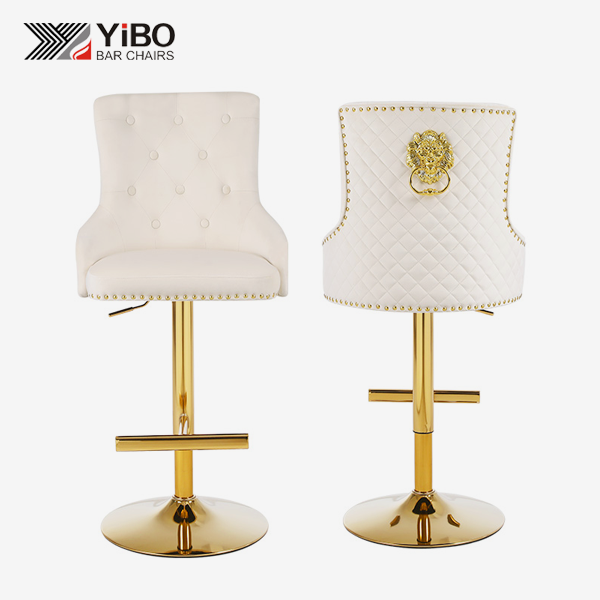
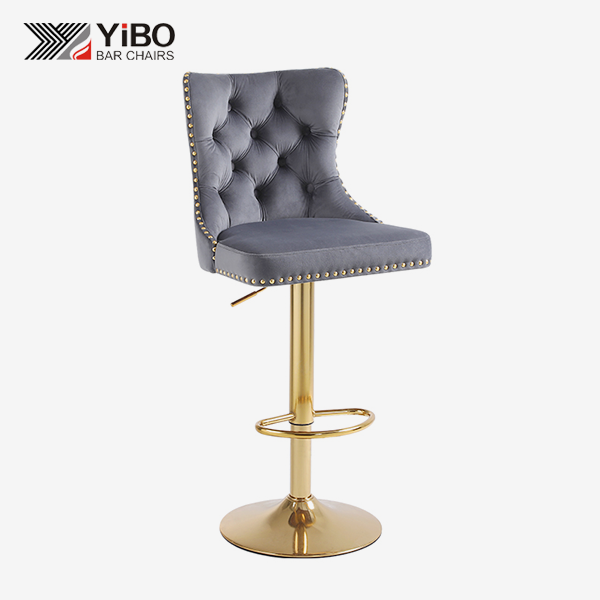
The curved backrest design of shell-shaped seating is what makes it unique. It follows the natural curves of the body to support the shoulders and lower back. Instead of a flat back like most chairs, this one wraps around the user's spine, making it comfortable to sit for long amounts of time. Our YB-1074 model is a good example of this method because its carefully sculpted shell strikes a balance between good looks and useful comfort.
The building of these stools uses tubular steel frames with wall thicknesses between 1.2 mm and 2.0 mm. This makes sure that they can hold more than 150 kg (330 lbs) of static weight. Our 74cm heightened model's cross-foot base design spreads the weight fairly across four contact points, which keeps it from tipping over like some top-heavy designs do. The black painted iron feet match the overall look and are long-lasting because they have powder-coated finishes that don't scratch, rust, or wear down over time.
Material Excellence and Finishing Options
For commercial-grade metal stools, the materials need to be able to stand up to a lot of use without losing their look. The base is made of high-quality steel frames that were chosen because they are strong for their weight and are cheap to buy in bulk. When you use powder coating, you make a protected layer that bonds at the molecular level. This makes it more resistant to chipping than regular paint.
In business settings, the fabric part is just as important. A normal velvet cloth and a normal density foam provide enough relaxation for most bar and cafe settings. This mix is a good balance between the cost at first and the time it lasts, especially when the fabric meets industrial abrasion standards of more than 30,000 Martindale cycles. To keep the channel stitching and sculptural purity that define the design aesthetic, the shell shape itself needs to be carefully molded from foam.
Maintenance Efficiency for High-Traffic Venues
People who work in the hospitality industry know that cleaning procedures have a direct effect on how well their business runs. Compared to wooden options that need special cleaners or fabric-only options that stain easily, metal construction makes daily care easier. Metal frames stay clean with a simple wipe-down with non-abrasive cleaners, and fabric protectants keep the velvet furniture from getting stained by common spills.
The way the building is built also helps meet cleanliness standards. Welded metal frames have smooth surfaces that keep germs from building up, unlike stools with complicated joints or cracks that catch dirt. The cross-foot base raises the stool high enough to make it easy to clean the floor underneath, which is useful in places with strict hygiene rules. These benefits of maintenance directly lead to lower labor costs and longer product lifecycles, which makes them a good investment for facility managers who are in charge of multiple places.
How to Choose the Best Shell Shape Metal Bar Stools for Your Bar or Cafe?
Dimensional Planning and Space Optimization
To choose the right sizes, you must first correctly measure the height of your counter or bar. Standard bar height stools have seat heights that range from 28 to 30 inches (71 to 76 cm), and they are made to fit areas that are 40 to 42 inches (102-107 cm) from the floor. Counter-height models are lower, at 24 to 26 inches (61 to 66 cm), and work with 36-inch (91 cm) surfaces like those in kitchen islands and casual dining areas. At 74 cm, our YB-1074 model's seat height is perfect for bar-height uses. The 25–30 cm of space between the seat and counter underside makes leg positioning comfortable.
Besides the height, think about the space each shell shape metal bar stool takes up. Shell-shaped designs with cross-foot bases usually need 18 to 20 inches (46 to 51 cm) of straight room between each stool so that people can sit comfortably without being crowded. Stackability is very important for places that want to have flexible layouts. Our models can be stacked up to two units high, which makes storage easier during off-peak times or special events when you don't need a separate room for storage.
Material Comparison: Metal, Wood, and Plastic Alternatives
When procurement teams look at purchases in seating, the choice of material has a big effect on the total cost of ownership over 5 to 10 years. It has been shown that metal stools last longer in business settings than wooden ones, which can loosen joints, lose their finish, and get damaged by water. Metal is more stable than wood and can be used over and over again without needing to be tightened or refinished. Wood is warmer and has a more classic look.
The upfront costs of plastic alternatives are cheaper, but they rarely hold up in busy hospitality settings. UV light fades and breaks down materials, weight limits limit the types of people who can use the venue, and the way people think about quality hurts the premium venue's placement. When you combine metal frames with upholstered shells, you get the sturdiness of industrial materials with a softer look. This makes the furniture look more expensive, which is good for food and drink with higher price points.
When you figure out replacement cycles, the financial situation becomes easier to understand. Bar stools made of metal from well-known brands usually last 7 to 10 years in heavy-use business settings. Wooden options only last 3 to 5 years, and plastic ones only last 2 to 3 years. Metal is the most cost-effective choice for businesses that care more about long-term value than initial buy economics because it lasts longer and needs less maintenance.
Feature Selection: Backrests, Cushioning, and Functional Elements
The shell seat is much more comfortable than designs without backs, which make people tired after 15 to 20 minutes of sitting. This ergonomic benefit has a direct effect on how long customers stay in a business, which is a key metric for beverage-focused businesses where income is linked to guest duration. According to studies in the hospitality industry, the curved support makes it easier for guests to relax, which could lead to an increase in per-visit spending of 15 to 25 percent.
The density of the cushions affects both how comfortable they feel and how much upkeep they need. Standard foam with a density of 35 to 45 kg/m³ is strong enough for most uses and keeps its form through repeated compression cycles. There are options with higher densities for venues that hope to get a lot of use, but the costs of the materials go up proportionally. The upholstery fabric should be both comfortable and easy to clean. For example, velvet cloth feels rich and doesn't stain easily when treated properly.
In some situations, extra features like swivel systems or footrests make the chair more useful. Swivel seats make it easy to get in and out of a chair. This is especially helpful in small areas where users can't easily pull stools away from counters. Footrests keep your legs from getting tired after long periods of sitting, but they make the frame design more complicated and raise the cost of production. Instead of thinking that all features are useful in all hospitality situations, you should look at these additions based on how your venue is set up and how your customers usually use it.
Procurement Guide: How to Buy Shell Shape Metal Bar Stools at Scale?
Strategic Supplier Selection and Verification
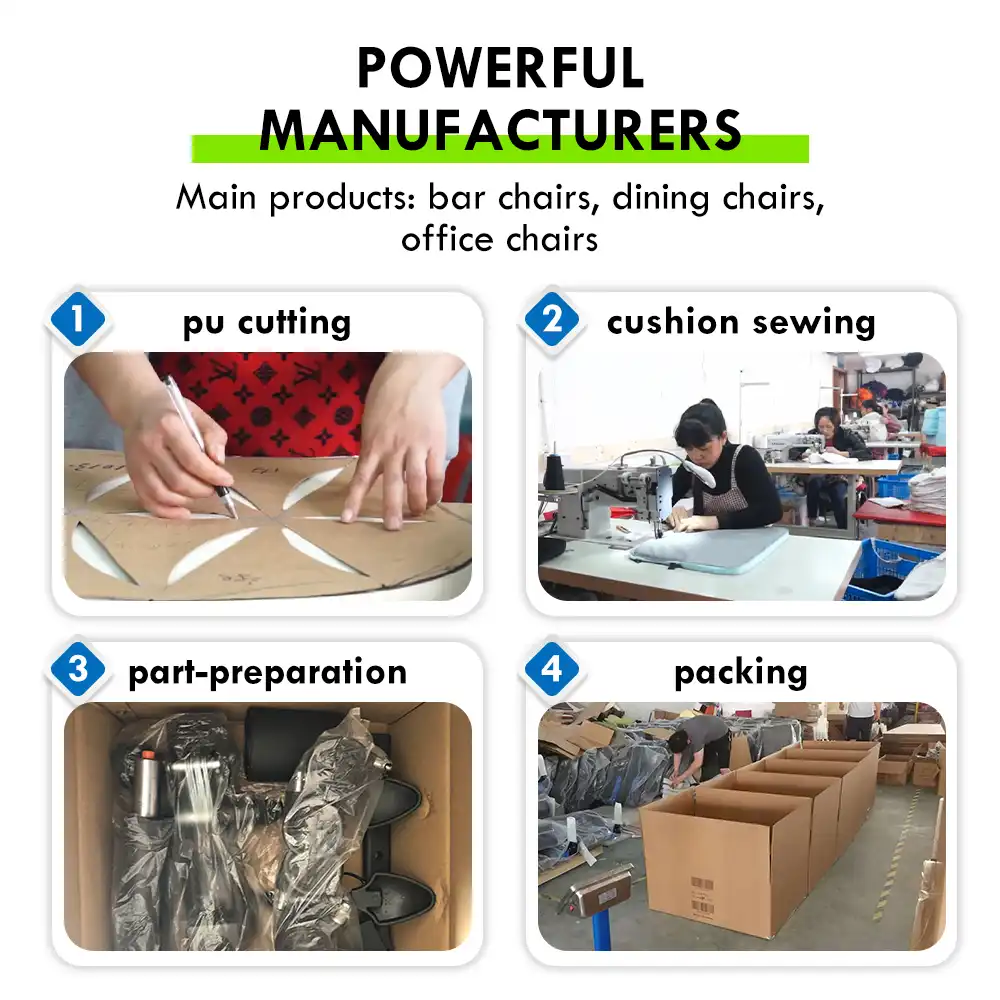
Finding trustworthy manufacturing partners is the first step to successful bulk buying. We've been in business for 14 years in Anji, Zhejiang, which is known as China's furniture manufacturing hub. During that time, we've learned a lot about making industrial seating and shipping goods around the world. Our building is more than 6,000 square meters and has separate lines for making metal frames, putting together upholstery, and checking for quality. This lets us make steady output that meets the needs of container-level orders.
In addition to price quotes, verification methods should look at a number of other signs of credibility of metal bar stool. A manufacturing capacity assessment shows that the supplier can meet your volume needs within the timeframes you set. For example, our monthly output moves many containers around the world, showing that our production can be scaled up or down as needed. Quality certifications show that the product meets international safety standards, and customer examples from buyers in similar hospitality industries show that the product works well in real life. We've sold furniture in North America, Europe, and the Asia-Pacific region, and we've built relationships with importers, wholesalers, and project contractors who value both dependability and low prices.
Communication responsiveness is an important selection factor that is often ignored but has a big effect on the success of a project. Because of the different time zones between China and the West, suppliers need to keep up with structured contact protocols and quick response systems. Our sales team promises to answer all questions within 24 hours. This makes sure that buying managers get answers quickly when they need to make important decisions or deal with issues after the shipment.
Customization Opportunities: OEM and ODM Capabilities
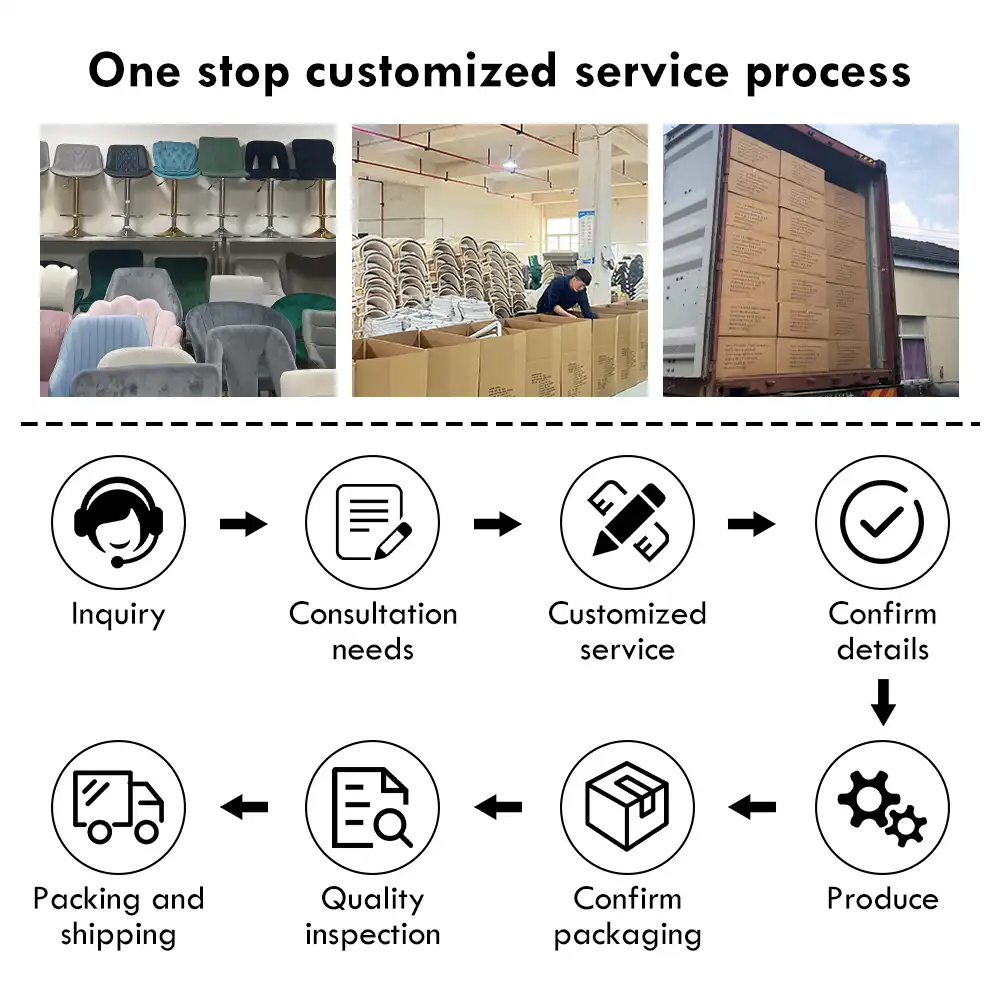
Large buyers often need products to be changed to fit the tastes of local markets or to fit their own private label plans. Our skilled research and development team, which is made up of more than 10 designers and engineers, helps with all aspects of customization from the initial idea to production. OEM (Original Equipment Manufacturer) services let you ask for changes to be made to designs that are already out there. For example, you can change the size or color of the upholstery or add branded elements like names that are embossed on the backrests or custom packaging inserts.
Original Design Manufacturer (ODM) relationships let buyers work together more closely when they want to find unique designs that set their product lines apart. For clients who are making their own seating collections, we've made custom shell profiles, unique base configurations, and unique finish combos. The sampling process usually goes through three steps: an initial prototype based on technical drawings, an updated sample that takes into account feedback, and finally, a final pre-production unit that needs to be approved before full production runs can begin.
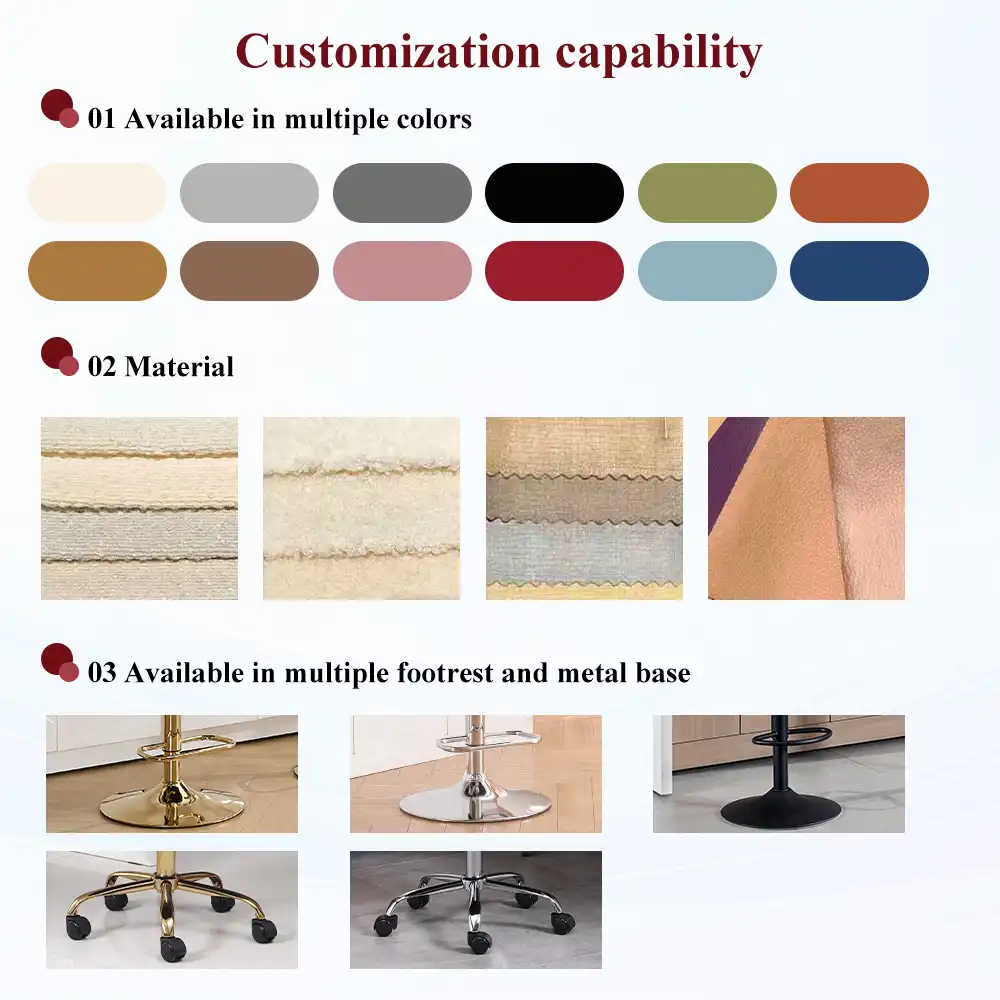
Material and finish choices give you a lot of ways to customize. We don't just paint iron feet black; we also offer chrome plating, brushed nickel, gold tones, and custom color matching through powder coating recipes that are made just for that purpose. Upholstery includes a lot more than just regular velvet cloth. In our sample room, we show off high-end choices like Abner, Jaegar, Galotti, and Case fabrics that range in performance from commercial-grade durability to high-end looks. Each choice affects both the price of the product and its suitability for different types of venues. This means that buyer needs and manufacturing skills need to be carefully matched.
Logistics Coordination and Delivery Management
International shipping costs make up a big part of the total cost of importing furniture. Our skilled logistics team makes sure that containers are loaded as efficiently as possible by using space-efficient packing. For example, our shell stools are packed two to a carton, which has dimensions of 75.5 x 43 x 65 cm and a volume of 0.211 cubic meters. When compared to inefficient packaging that wastes cargo room, this configuration makes the most of each container, which lowers the cost of freight per unit.
Keeping track of delivery times needs coordination between manufacturing, clearing customs, and delivering the last few items. Standard production wait times for container orders are between 25 and 35 days after the deposit is confirmed. These times can change depending on how complicated the order is and what customizations need to be made. We keep clear production tracking systems that let procurement managers know on a daily basis about how production is going, when quality checks are done, and shipping plans. Because buyers can see what's going on, they can plan how to receive goods and keep track of inventory for store distribution or project installations.
Professional suppliers are different from transactional vendors because they offer warranties and help after the delivery. Our chairs come with a guarantee that covers structural defects and manufacturing flaws. This way, if problems arise during the first use, you can get them fixed. In addition to official warranty terms, we keep in touch with long-term clients to offer ongoing support. This includes technical advice for questions about assembly, best practices for maintenance, and the availability of replacement parts to ensure long-term operational continuity.
Conclusion
Metal bar stools, particularly shell-shaped designs, represent the optimal intersection of durability, comfort, and aesthetic versatility for commercial hospitality applications. Their robust construction withstands the demanding conditions of high-traffic venues while ergonomic contours enhance customer experience, directly supporting business objectives around guest satisfaction and operational efficiency. Procurement success requires evaluating suppliers based on manufacturing capacity, customization flexibility, and communication responsiveness rather than focusing narrowly on initial unit costs. As hospitality markets continue evolving toward design-forward environments that balance sustainability with style, partnerships with experienced manufacturers provide the foundation for competitive advantage. The strategic approach to furniture procurement recognizes seating as a long-term investment in venue identity and customer perception, demanding careful selection processes that align product specifications with operational requirements and brand positioning goals.
FAQ
What weight capacity should commercial bar stools support?
Commercial-grade metal bar stools should support static loads of at least 300 lbs (136kg) to accommodate diverse guest populations safely. Our shell shape metal bar stool models meet 330 lbs (150kg) capacity standards, exceeding minimum requirements to provide safety margins for dynamic loading conditions common in hospitality environments. This specification aligns with ANSI/BIFMA standards for commercial seating.
Can I customize the upholstery and frame finishes for large orders?
Customization forms a core service for bulk procurement projects. We offer extensive material selections including premium fabric brands like Abner, Jaegar, Galotti, and Case, along with custom color matching for powder-coated metal finishes. Our OEM and ODM capabilities support dimensional modifications, branded elements, and exclusive design development through our professional R&D team, ensuring your seating perfectly aligns with venue aesthetics and operational requirements.
How do metal stools compare to wooden alternatives in maintenance requirements?
Metal frames require significantly less maintenance than wooden construction. Simple cleaning with damp cloths maintains metal surfaces, while wood demands specialized cleaners, periodic refinishing, and joint tightening as materials expand and contract with humidity changes. Metal's inherent moisture resistance prevents the warping and finish degradation common in wooden stools exposed to spills and cleaning chemicals in busy bars and cafes.
Partner With YIBO for Your Commercial Seating Solutions
Anji Yibo Furniture Co., Ltd. stands ready to support your shell shape metal bar stool procurement needs with 14 years of manufacturing expertise and proven international supply chain capabilities. Our 6,000+ square meter facility in China's furniture capital produces commercial-grade seating that balances competitive economics with uncompromising quality standards. We understand the complex requirements facing furniture importers, wholesalers, and hospitality project contractors—from container optimization to customization coordination—and we've built our operations around delivering seamless procurement experiences.
Our commitment extends beyond transaction completion to long-term partnership development. Whether you require turnkey catalog selections or fully customized designs developed through ODM collaboration, our responsive team provides 24-hour inquiry response and transparent project management from sample approval through final delivery. As an established shell shape metal bar stool manufacturer serving markets across North America, Europe, and Asia-Pacific, we bring the production scale, quality control systems, and logistics coordination that professional buyers demand. Contact our team at yb@ajyibo.com to discuss your specific requirements and discover how YIBO can become your trusted sourcing partner for commercial seating solutions that enhance your competitive positioning in demanding hospitality markets.
References
1. Henderson, K. (2021). Commercial Furniture Selection for Hospitality Design: Balancing Aesthetics and Durability. New York: Hospitality Design Publishers.
2. Morrison, J. & Chen, L. (2020). Ergonomic Seating in Food Service Environments: Impact on Customer Experience and Revenue. Journal of Hospitality Management Research, 44(3), 287-304.
3. Patterson, R. (2022). Sustainable Materials in Contract Furniture: Lifecycle Analysis and Procurement Strategies. Chicago: Commercial Interiors Press.
4. Thompson, A. (2019). Metal Finishing Technologies for Commercial Applications: Durability and Maintenance Considerations. International Journal of Furniture Technology, 12(2), 156-173.
5. Williams, S. & Zhang, M. (2023). Global Furniture Supply Chains: Strategic Sourcing from Asian Manufacturing Centers. London: International Trade Publications.
6. Yu, H. (2020). Design Evolution in Bar and Restaurant Seating: Historical Influences on Contemporary Commercial Furniture. Design Studies Quarterly, 38(1), 92-118.